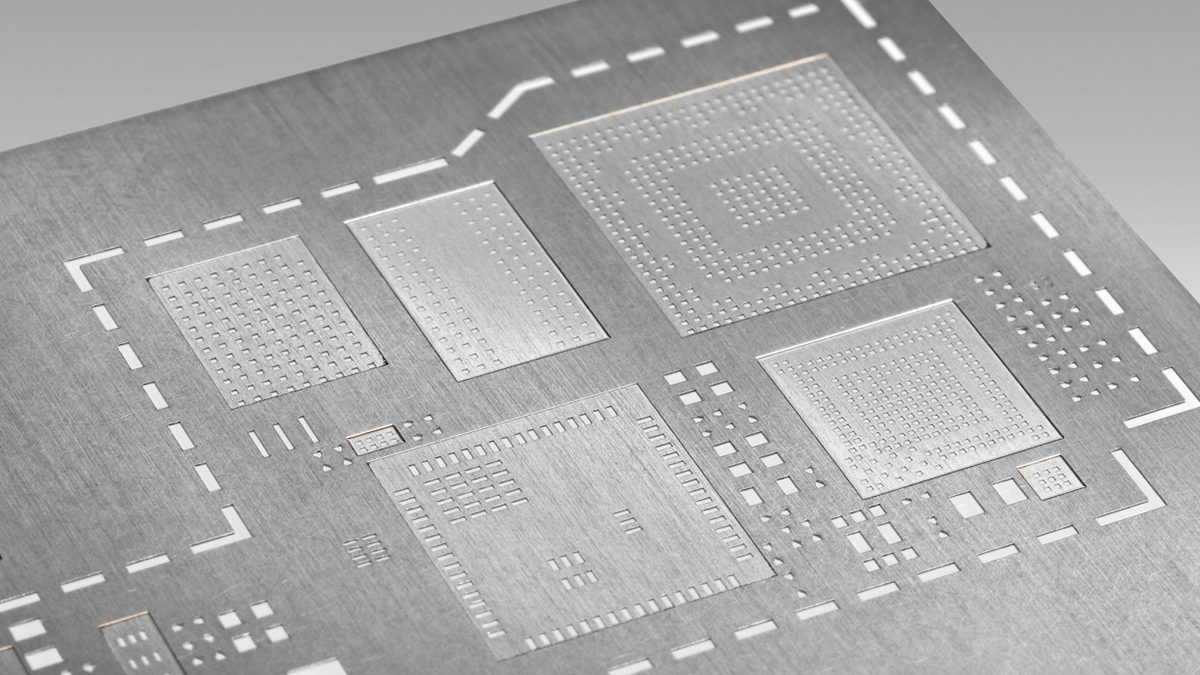
The right solder paste stencil cleaning method depends on three things: the residue you need to remove, where that residue is located and what condition the stencil must be in before its next use.
Fresh solder paste on the stencil underside may only require in-printer wiping during production. Dried solder paste inside fine apertures usually requires a more controlled offline cleaning process. Depending on the approved chemistry and factory utilities, offline cleaning may use solvent spray, water-based washing or ultrasonic immersion.
This guide compares the main SMT stencil cleaning methods by cleaning performance, aperture access, drying, repeatability, capacity and factory requirements. It also explains when to use each method and how to select a stencil cleaning machine.
The four main offline methods compared here are manual cleaning, pneumatic solvent spray, water-based cleaning and ultrasonic immersion. In-printer underside wiping is discussed separately because it controls fresh contamination during printing rather than replacing complete offline stencil cleaning.
Cleaning Method Comparison
Method
Primary use
Main limitation
In-printer wiping
Fresh paste on the stencil underside during printing
Does not completely clean the foil, frame or aperture walls
Manual cleaning
Local residue and emergency correction
Results depend on the operator and are difficult to repeat
Pneumatic solvent spray
Complete offline cleaning without water rinsing
Requires approved solvent, compressed air and extraction
Water-based spray
Controlled washing, rinsing and heated drying
Requires power, water, drainage and wastewater management
Ultrasonic immersion
Compatible contamination suitable for cavitation cleaning
Stencil bonding, coatings and chemistry require validation
In-Printer Wiping and Manual Cleaning
Under-stencil wiping removes fresh solder paste from the stencil underside while production continues. It helps control smearing and contamination around aperture openings but does not replace complete offline cleaning.
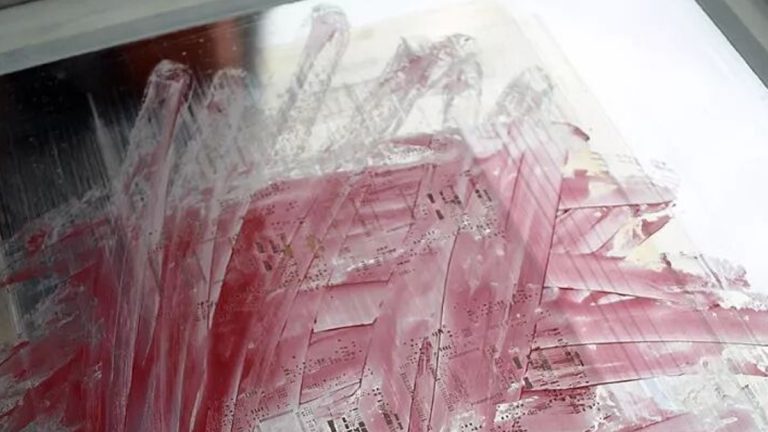
Manual wiping or brushing can remove a local mark or fresh residue. It becomes unreliable when paste has dried inside fine apertures. Cloth fibres, inconsistent pressure and repeated wiping may leave contamination or spread dissolved paste across the foil.
These methods remain useful for production control and local correction. They are less suitable when the factory needs repeatable cleaning before stencil storage, product changeover or fine-pitch printing.
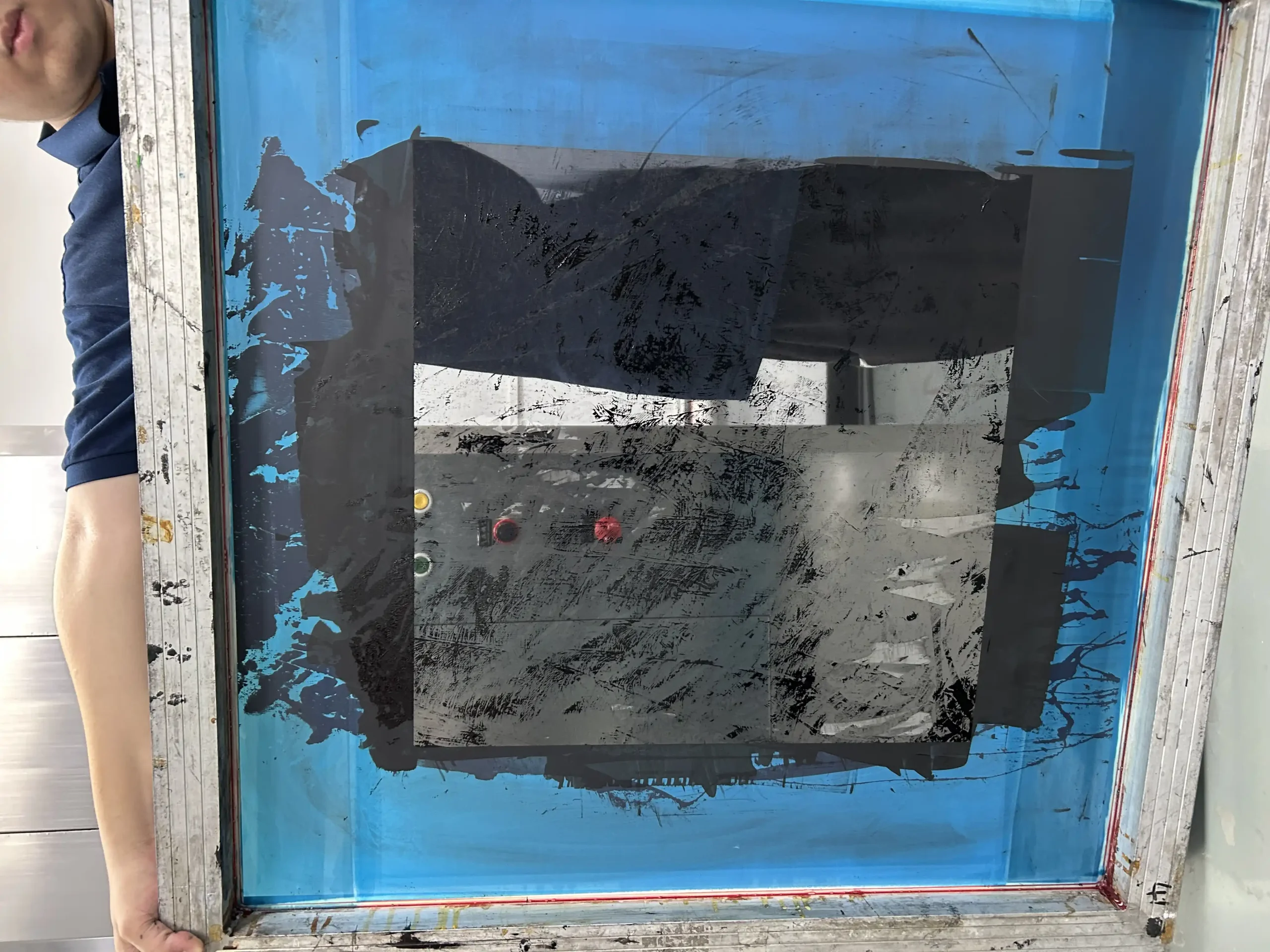
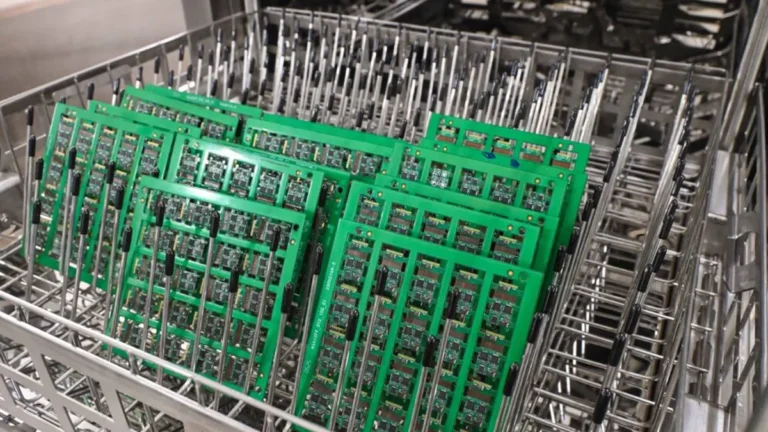
The employees responsible for hand-washing the steel mesh shown below couldn’t handle the workload anymore, which is why they turned to us for a solution.
Pneumatic Solvent Spray Cleaning
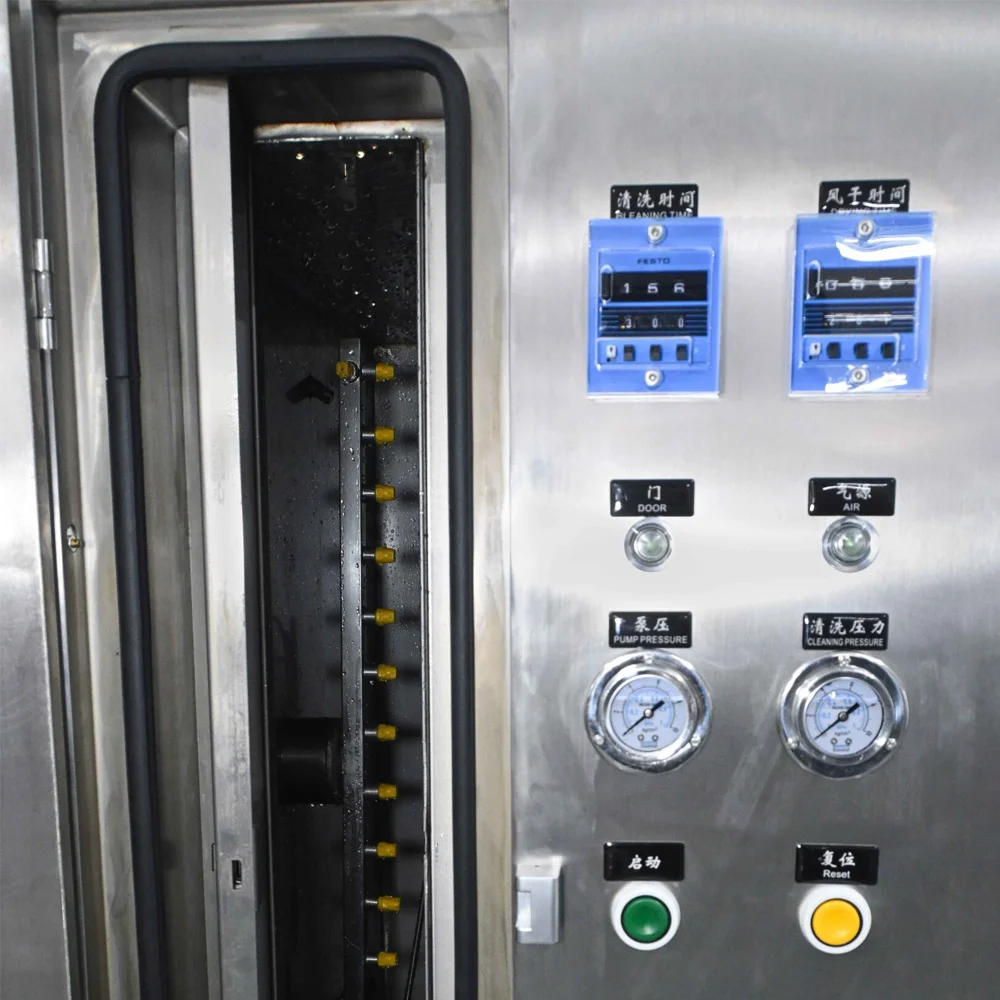
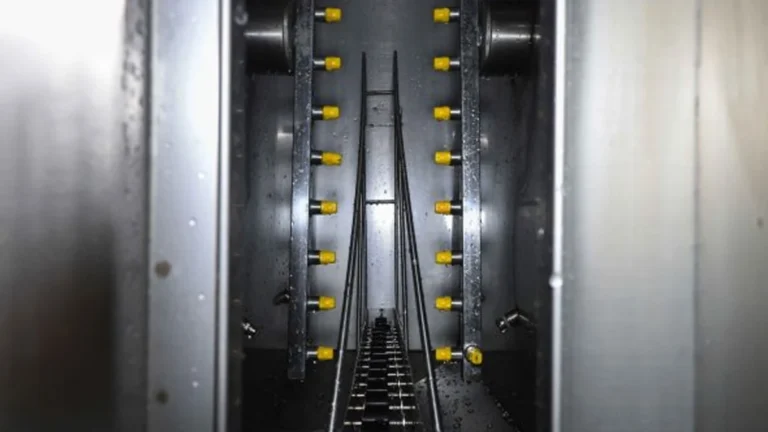
Pneumatic cleaning uses compatible solvent and rotating spray nozzles to clean both stencil surfaces. The liquid passes through the apertures, dissolves suitable solder paste or adhesive residue and then returns through a filtration system. Compressed air dries the stencil inside the same chamber.
This process directly addresses problems caused by inconsistent manual cleaning. The enclosed cycle controls spray coverage, cleaning time, filtration and drying more consistently than operator wiping.
The DEZ-C730 pneumatic stencil cleaning machine processes one compatible stencil measuring up to 750 × 750 × 40 mm. Cleaning takes 2–4 minutes and drying takes 2–5 minutes.
The DEZ-C780 pneumatic stencil cleaning machine processes up to two stencils of the same maximum size during one cycle. It is intended for production environments where one-stencil processing creates a queue during frequent changeovers.
Both machines require 400–600 L/min of compressed air, suitable extraction and controlled solvent handling. The cleaning result still depends on solvent compatibility, residue age, nozzle coverage and aperture geometry.
Water-Based Wash, Rinse and Dry
Water-based cleaning uses compatible aqueous chemistry to separate solder paste, red glue or flux residue from the stencil. A separate clean-water or DI-water rinse removes the cleaning agent and released contamination. Heated air then dries the foil, apertures and frame.
Rinsing is necessary because a visually clean stencil may still carry a chemical film after washing. Incomplete drying can also delay inspection, contaminate storage or interfere with the next printing process.
The DEZ-C750 water-based stencil cleaning machine completes washing, rinsing and heated drying in one enclosed chamber. It processes one stencil up to 740 × 740 × 40 mm. Each process stage is adjustable from 2–8 minutes.
This method fits factories that require an aqueous process and can provide AC 380 V power, compressed air, water, drainage, exhaust and suitable wastewater management.
Ultrasonic Immersion Cleaning
Ultrasonic cleaning immerses the stencil in liquid and uses cavitation to act on contamination. It may be suitable for fine features when the chemistry and stencil construction are compatible.
The process must be evaluated against the foil, frame bonding, adhesive, coatings and labels. Rinsing and drying may also be necessary after immersion. Higher ultrasonic power does not automatically produce a better or safer result.
Ultrasonic cleaning should therefore be approved through sample testing rather than treated as a universal replacement for spray cleaning.
Blocked Apertures and Paste-Release Variation
Dried solder paste inside aperture walls can restrict paste transfer even when the outer foil appears clean. The next printing cycle may then produce insufficient or inconsistent deposits.
The first checks should be residue age, chemistry compatibility, cleaning access and liquid condition. Extending the cycle without correcting unsuitable chemistry or contaminated recirculated liquid may not solve the blockage.
A solvent-cleaned stencil must be dry after the compressed-air stage. A water-based process must first rinse away the cleaning chemistry and then remove retained water.
Smears, chemical films or moisture indicate an imbalance between cleaning, rinsing and drying. The correction may require different chemistry, cleaner rinse water, improved filtration or adjusted airflow. Increasing the total cycle time should not be the only response.
Changeover Delays and Stencil Queues
Cleaning capacity must be calculated from the complete cycle, including loading, cleaning, rinsing where required, drying and unloading.
The DEZ-C730 is designed for one-stencil processing. The DEZ-C780 processes two compatible stencils together and is the better pneumatic option when frequent changeovers create waiting stencils.
The DEZ-C750 processes one stencil through a complete aqueous wash–rinse–dry cycle. It is selected for process requirements rather than maximum pieces per cycle.
Machine selection should be based on a representative contaminated production stencil. The test must confirm residue removal from the smallest relevant apertures, complete drying and compatibility with the foil, frame, adhesive, coating and labels.
The same result should be repeated over consecutive cycles. Cleaning chemistry, cycle settings and inspection criteria should then be recorded for production use.
FAQ
Best Cleaning Method for Dried Solder Paste
Pneumatic solvent or water-based spray cleaning may remove dried paste when the chemistry and process settings are compatible. Test the smallest production apertures before selecting the machine.
Solvent and Water-Based Cleaning Differences
Solvent machines clean and dry without a dedicated water-rinsing stage. Water-based machines separate the process into washing, rinsing and heated drying.
Fine-Aperture Spray Cleaning
Double-sided spray can clean fine apertures when the chemistry, nozzle coverage, pressure and residue condition are suitable. Surface appearance alone is not sufficient evidence.
DEZ-C730 and DEZ-C780 Selection
Use the C730 for one-stencil processing. Use the C780 when two compatible stencils must be cleaned in the same cycle.
Solder Paste and Red Glue Compatibility
The same machine may clean both residues when the selected chemistry is compatible. Aged or cured adhesive should be tested before the final process is approved.