Remove Residue from Stencil Apertures
Manual wiping is useful for cleaning the underside of a stencil during production, but it may not remove dried solder paste or red glue from the aperture walls.
Complete offline cleaning is required after production runs, material changes or before long-term stencil storage. The cleaning liquid must reach both stencil surfaces and pass through the apertures instead of removing only visible surface residue.
Fine-pitch stencils used for BGA, QFN, CSP and small passive components require particular attention because a small amount of dried material can significantly restrict paste release.
Learn more about the causes and corrective actions in How to Prevent Blocked SMT Stencil Apertures.
Choose the Correct Stencil Cleaning Process
Pneumatic Solvent Stencil Cleaning
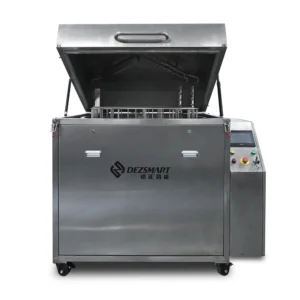
Pneumatic stencil cleaning machines use compatible solvent, rotating spray arms and compressed-air drying. The cleaning liquid is filtered and recirculated, and the process does not require a separate water-rinsing stage.
This method is suitable when the factory already uses an approved stencil-cleaning solvent and has sufficient compressed air, exhaust and solvent-management procedures.
The solvent must be compatible with the solder paste, red glue, stencil, frame, adhesive and identification labels. Local requirements for ventilation, storage, operator protection and waste-liquid handling must also be followed.
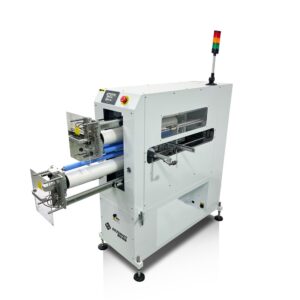
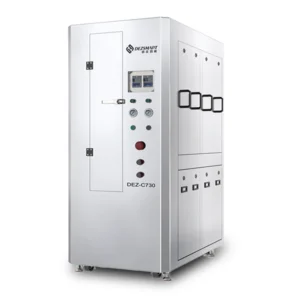
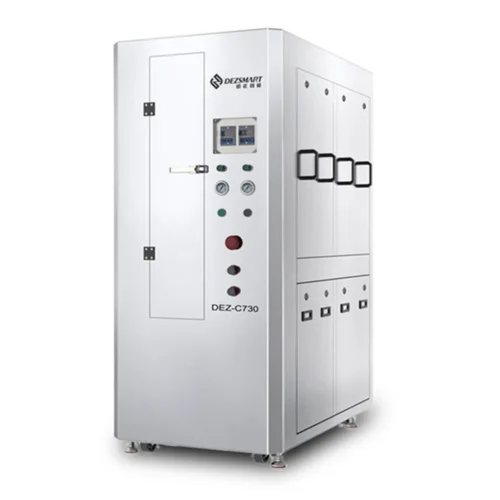
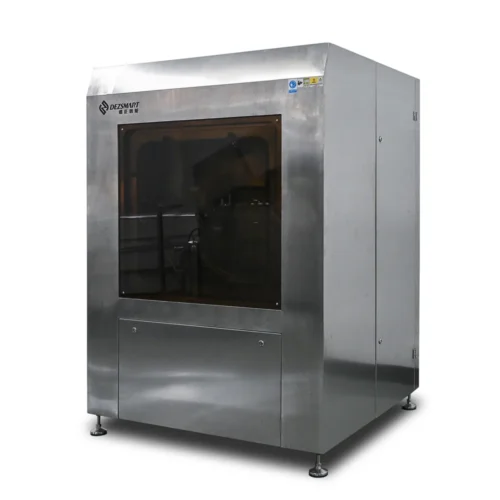
Choose Pneumatic Stencil Cleaning Machine – DEZ-C730
The Pneumatic Stencil Cleaning Machine for SMT and Silk Screens – DEZ-C730 processes one compatible stencil measuring up to 750 × 750 × 40 mm.
Rotating nozzles spray both stencil surfaces at equal pressure, forcing compatible solvent through the apertures. Removed solder paste, red glue and particles pass through three-stage filtration before the cleaning liquid returns to the tank.
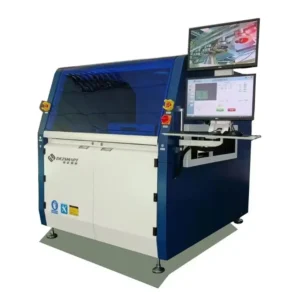
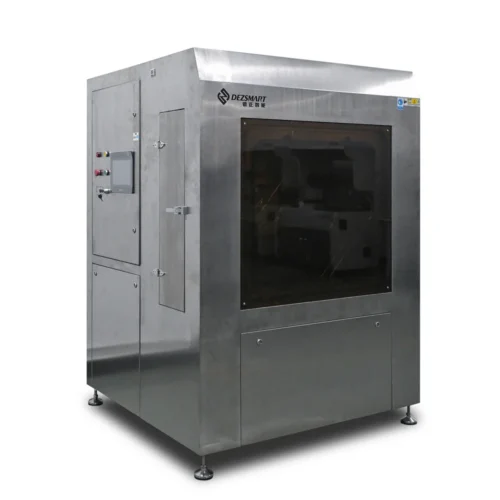
Pneumatic Stencil Cleaning Machine – DEZ-C780
The Pneumatic Stencil Cleaning Machine for Solvent Spray Cleaning – DEZ-C780 processes up to two compatible stencils measuring 750 × 750 × 40 mm in one cycle.
Like the DEZ-C730, it uses 360-degree rotating double-sided spray, filtered solvent recirculation and compressed-air drying. It does not require electrical power or a water-rinsing stage during normal operation.
Choose the DEZ-C780 when two stencils need to be cleaned together and the available compressed-air supply, solvent system, floor space and extraction can support the process.
Automatic Water-Based Stencil Cleaning
A water-based stencil cleaning machine uses compatible aqueous chemistry to remove solder paste, red glue, flux and printing residue.
After washing, a separate clean-water or DI-water rinse removes cleaning-agent residue. Heated high-pressure air then removes retained water from the stencil surfaces, frame and apertures.
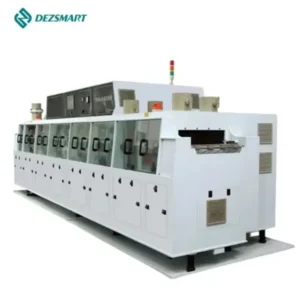
Choose this process when automatic washing, rinsing and drying are required in one chamber or when the factory wants to reduce its dependence on volatile solvent cleaning. It requires electrical power, compressed air, water, drainage and appropriate wastewater handling.
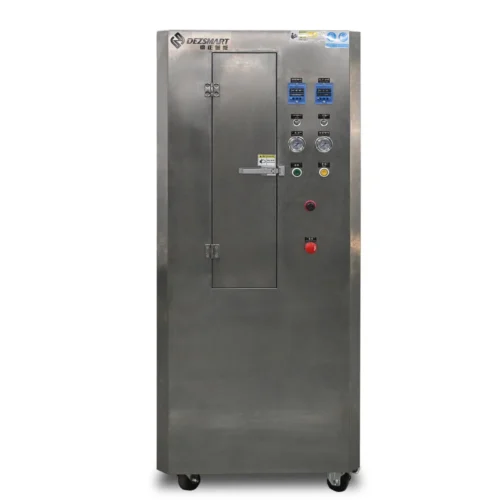
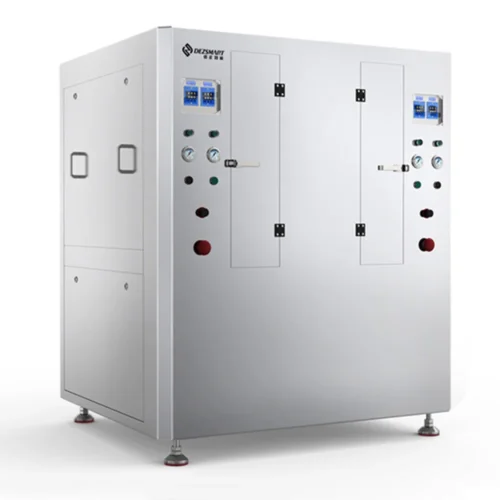
Choose Automatic Water-Based Stencil Cleaning Machine – DEZ-C750 automatically washes, rinses and dries compatible SMT stencils in one enclosed chamber. The machine processes stencils and screens up to 740 × 740 × 40 mm. It can also clean compatible squeegees, printing tools and fixtures when their dimensions, materials and contamination suit the selected chemistry.
Stencil Cleaning Process
Pneumatic solvent cleaning follows this sequence:
Load Stencil → Double-Sided Solvent Spray → Liquid Filtration and Recirculation → Compressed-Air Drying → Inspection
Automatic water-based cleaning follows this sequence:
Load Stencil → Water-Based Spray Cleaning → Clean-Water or DI-Water Rinse → Heated Air-Knife Drying → Inspection
The stencil should not return to printing until the apertures are clean, the frame and mesh are dry, and no cleaning-agent residue remains.
Typical Stencil Cleaning Solutions
Solder Paste Stencil Cleaning
Solder paste remaining inside stencil apertures can dry between production runs and restrict the next print.
The cleaning chemistry must match the solder-paste formulation. Lead-free and leaded pastes, water-soluble fluxes and no-clean flux systems may require different chemistry, temperature and cleaning time.
The cleaning result should be checked inside the smallest and most critical apertures, not only on the stencil surface.
Red Glue and SMT Adhesive Cleaning
Red glue and SMT adhesive can be more difficult to remove after curing or extended exposure.
Both pneumatic solvent cleaning and water-based cleaning may be suitable when the selected chemistry is compatible with the adhesive and stencil materials. Sample testing is recommended for heavily dried or partly cured adhesive.
Increasing spray pressure alone may not remove incompatible residue and could place unnecessary stress on the stencil or frame.
Fine-Pitch Stencil Cleaning
Fine-pitch apertures used for BGA, QFN, CSP, 0201 and other small components can retain solder paste that is difficult to see during a surface inspection.
Double-sided spray directs cleaning liquid through the openings and along the aperture walls. After cleaning, the stencil should be inspected using the factory’s approved visual or automated stencil-inspection method.
Utilities Required for Stencil Cleaning
The DEZ-C730 and DEZ-C780 require an external compressed-air supply and factory extraction. They use compatible solvent and compressed-air drying without a separate water connection or electrical supply for normal cleaning.
The DEZ-C750 requires AC 380 V power, compressed air, water supply, drainage and suitable ventilation. DI water can be used for the rinse stage when required by the process.
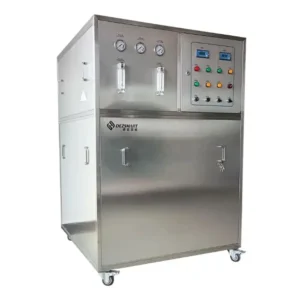
When a dedicated rinse-water source is needed, the Deionized Water System for PCBA and Stencil Cleaning – DEZ-CS300 can be evaluated against the machine’s actual water demand.
Industries Using Stencil Cleaning Machines
Automotive Electronics Manufacturing
Stencils used in Automotive Electronics Manufacturing may contain both fine-pitch apertures and larger openings for connectors or power components. Complete cleaning helps prevent dried paste from creating uneven deposit volume across these different areas.
Medical Device Electronics
Medical Device Electronics Manufacturing often requires controlled process procedures and repeatable cleaning settings. An automatic water-based process may be selected when washing, rinsing and drying need to follow a defined programme.
Telecommunications Equipment
High-density communication boards use stencils with small apertures for fine-pitch packages. Stencil cleaning in Telecommunications Equipment Manufacturing focuses on removing residue that restricts paste release around BGA, QFN and compact components.
EMS and Contract Electronics Manufacturing
EMS and Contract Electronics Manufacturing involves frequent product and solder-paste changes. Offline stencil cleaning prevents residue from one production order remaining on a stencil before storage or reuse.
An SMT stencil cleaning machine does not clean inside pick-and-place nozzles. For low vacuum, mispicks or dropped components caused by nozzle contamination, use the Automatic SMT Nozzle Cleaning Machine – DEZ-C700.
Wave-solder pallets, selective-solder fixtures, carriers, trays and printer squeegees may require a larger tooling-cleaning process. The Automatic SMT Fixture Cleaning Machine – DEZ-C756 washes, rinses and dries compatible production tooling.
FAQs for Stencil Cleaning Equipment
Can the cleaning liquid be reused?
The cleaning liquid is filtered and recirculated. It must still be replaced when its contamination level or cleaning performance reaches the factory’s process limit.
Can stencil cleaning machines also clean PCBAs?
The DEZ-C750 may process selected compatible products, but routine post-solder PCBA flux cleaning should use equipment from the PCBA Cleaning Machines category.
Can DEZ test our stencils before ordering?
Yes. Send representative contaminated stencils together with the solder paste or adhesive information. DEZ can evaluate chemistry compatibility, aperture cleaning and drying before confirming the machine.
Select a Stencil Cleaning Machine
Send DEZ the stencil dimensions, minimum aperture, solder paste or adhesive type, cleaning quantity, current cleaning agent and available factory utilities.
We will compare pneumatic solvent and automatic water-based cleaning, confirm the appropriate model and arrange sample testing when needed.