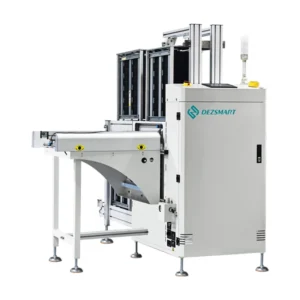
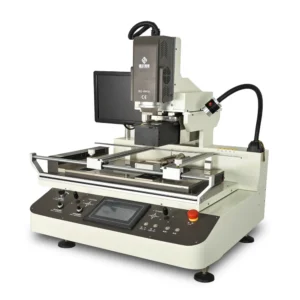
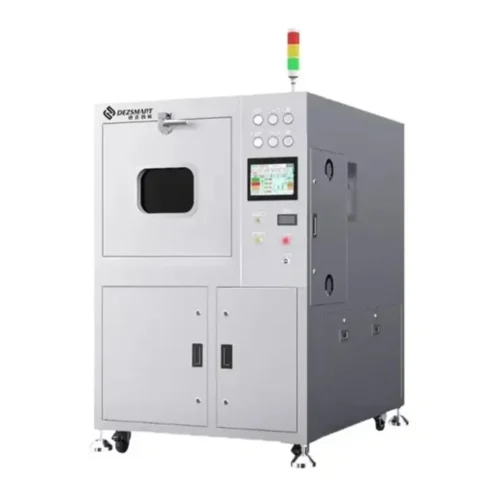
DEZ manufactures PCBA cleaning machines for assembled circuit boards after reflow, wave and selective soldering. The range covers single-side brush cleaning for accessible solder-side residue, offline batch aqueous cleaning and continuous inline aqueous cleaning.
Many buyers use PCB cleaning machine as a broad purchasing term even when the boards already contain components and solder joints. For equipment selection, the actual workpiece and production stage must remain clear.
If the board contains components, connectors or solder joints, use this PCBA cleaning range. If the requirement is to remove dust, fibres or static-attracted particles from a bare PCB before solder paste printing, see the PCB Cleaning Machine category.
Remove flux residue, ionic contamination and loose solder balls from assembled PCBAs after soldering. View the PCBA cleaning equipment below.
The correct equipment depends on where the contamination is located, whether mechanical contact is acceptable and how the cleaning operation must fit production.
Production Requirement
Cleaning Route
DEZ Equipment
Visible flux marks or loose solder balls concentrated on one accessible solder side
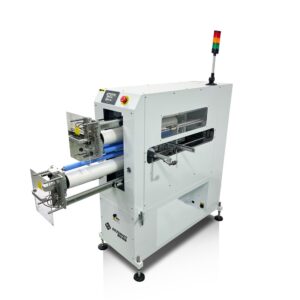
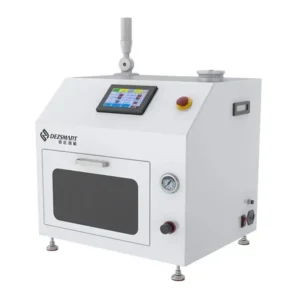
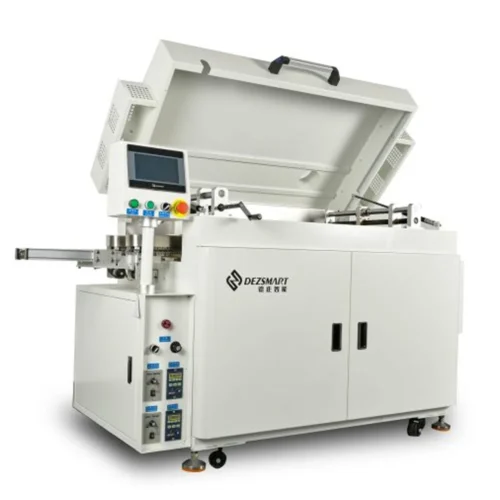
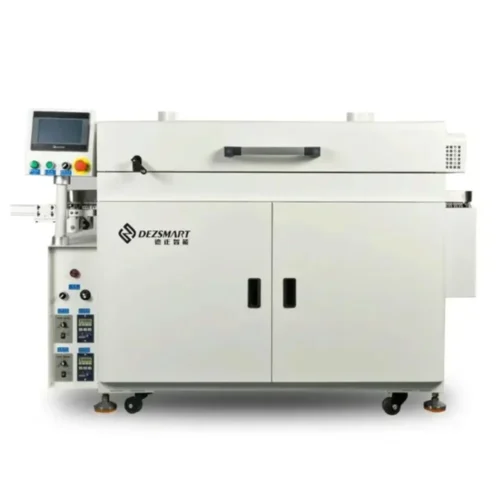
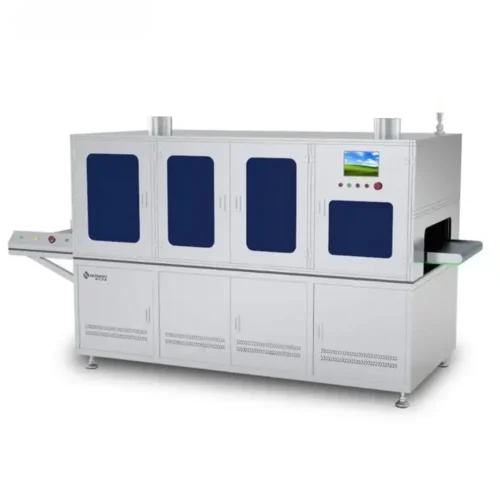
C758 and C760 both require direct brush access to the contaminated surface. C758 uses wet brushing, dry brushing and fan drying, while C760 uses one rotary brush and two roller brushes. Final selection should be based on PCBA dimensions, component clearance, board-edge access and a representative sample.
Brush cleaning targets contamination that can be physically reached. It must not be presented as full-board aqueous cleaning or as proof that an ionic-cleanliness requirement has been met.
How the Cleaning Processes Work
Single-Side Brush Cleaning
Cleaning-Agent Application → Mechanical Brushing → Residue Removal and Drying
The brushes contact one accessible solder-side surface to remove visible flux marks, loose solder balls and surface debris. Component layout, protruding leads and board-edge clearance determine whether mechanical brushing is suitable.
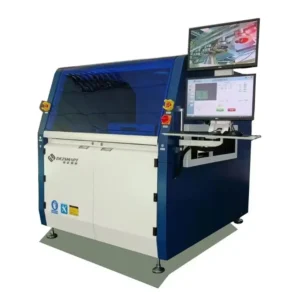
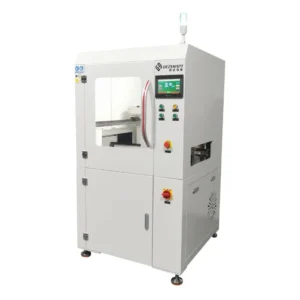
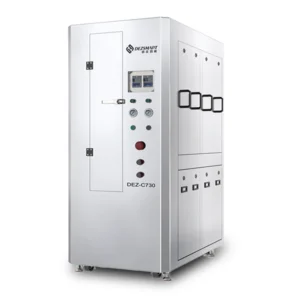
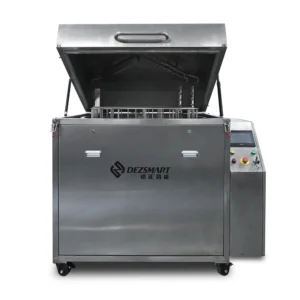
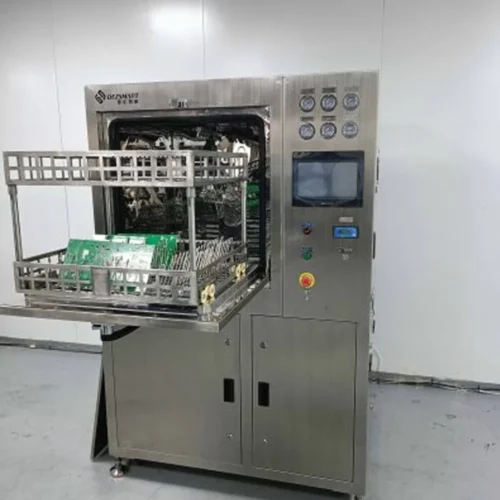
The C743 holds multiple PCBAs in a two-level basket inside an enclosed chamber. The batch remains inside the machine throughout washing, rinsing and drying, making the process suitable for high-mix production that does not require continuous line integration.
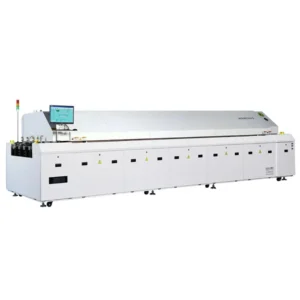
Inline Aqueous Cleaning
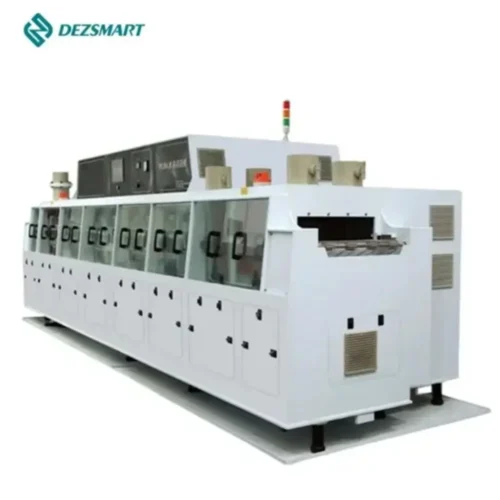
Chemical Wash → DI-Water Rinse → Hot-Air Dry
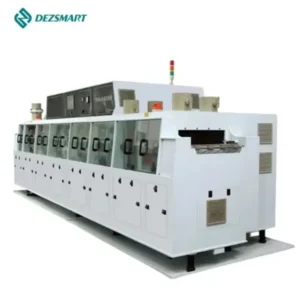
The C1360 moves PCBAs continuously through separate process sections. Conveyor speed, cleaning chemistry, spray conditions, rinsing and drying must be configured around the actual flux, assembly construction and required production rate.
DI water performs the rinsing stage after chemical washing. It should not be described as the primary cleaning process.
What DEZ Needs Before Recommending a Machine
Information to Provide
Why It Is Required
PCBA dimensions
Confirms conveyor, basket or chamber compatibility
Contamination photographs
Shows its location and whether it is accessible
Flux and process chemistry
Determines cleaning-agent compatibility
Component layout
Identifies areas that may be difficult to wash or brush
Defines whether visible residue removal or measured cleanliness is required
Production quantity and takt requirement
Determines batch or continuous production needs
Upstream and downstream processes
Confirms whether inline integration is required
Available factory utilities
Confirms power, DI water, drainage, compressed air and exhaust requirements
Cleaning Test and Process Confirmation
When the cleaning route has not already been established, representative PCBAs can be reviewed and tested before the final machine configuration is confirmed.
For brush cleaning, testing determines whether the contamination can be reached without applying unsuitable mechanical contact to the assembly. For aqueous cleaning, testing evaluates the proposed chemistry, washing, rinsing and drying conditions against the actual flux, materials and component layout.
A visually clean PCBA does not automatically meet an ionic-cleanliness requirement. When measured cleanliness is required, the customer’s test method and acceptance limit must be agreed before process confirmation.
Where PCBA Cleaning Fits in Production
PCBA cleaning is normally evaluated after soldering and before a downstream operation that requires a defined level of board cleanliness:
Reflow, Wave or Selective Soldering → PCBA Cleaning → Inspection, Conformal Coating or Downstream Assembly
Typical cases include mixed SMT/THT assemblies after wave or selective soldering, PCBAs requiring post-reflow residue removal and assemblies prepared for conformal coating. The flux system, assembly construction and customer requirement determine whether cleaning is necessary; soldering alone does not automatically mean every PCBA requires aqueous washing.
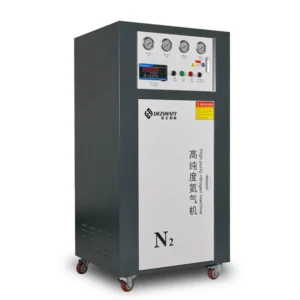
Batch and inline aqueous cleaners can require a controlled DI-water supply after the chemical-washing stage.
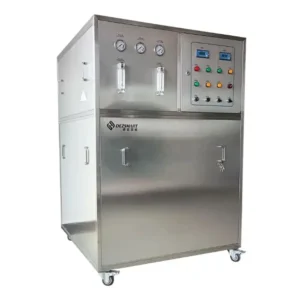
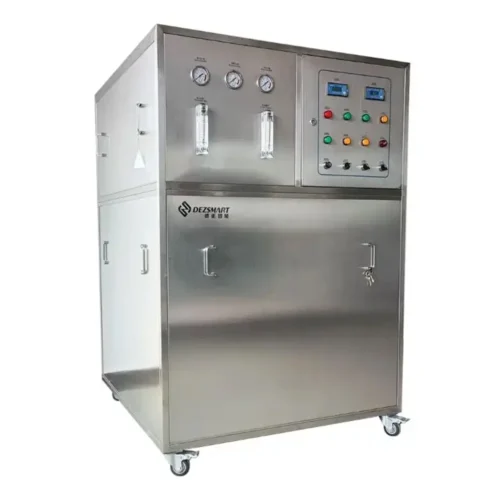
The DEZ-CS300 Deionized Water System combines RO and mixed-bed purification in one enclosed cabinet. Its suitability must be calculated from the cleaning machine’s rinse-water demand and the incoming-water condition rather than selected independently.
Buyer FAQ
Can the same cleaning process remove every type of flux?
No. The cleaning chemistry and process conditions must be compatible with the actual flux, PCB materials, component packages and coatings. Provide the flux information and a representative assembly before the cleaning recipe is confirmed.
Does no-clean flux always need to be removed?
No-clean flux can remain when the soldering process and product requirement have been validated for it. Cleaning may still be required before conformal coating, for cosmetic acceptance, after process changes or when the customer specifies a cleanliness limit.
Can brush cleaning confirm ionic cleanliness?
No. Brush cleaning can remove reachable visible residue and loose solder balls, but appearance does not measure ionic contamination. A defined test method is required when ionic cleanliness is part of the acceptance requirement.
Can aqueous cleaning remove residue underneath components?
That depends on component standoff, board layout, flux chemistry, spray or fluid access and the required result. Low-clearance components are an important reason to review and test the actual PCBA before confirming the process.
What utilities does a PCBA cleaning machine require?
Requirements vary by model. Aqueous systems can require compatible cleaning chemistry, DI water, drainage, exhaust and model-specific electrical power. Brush machines may require cleaning fluid, compressed air and exhaust or waste collection. Confirm the installation conditions before ordering.
Send Your PCBA for Cleaning Review
Do not select a PCBA cleaning machine only from its external dimensions or stated capacity.
Send DEZ a representative PCBA or contamination photographs together with the board dimensions, flux information, required cleaning result and production quantity. DEZ will review the applicable cleaning process, equipment model and factory utility requirements.
Send your workpiece dimensions, production problem and required throughput to receive a free application review, equipment recommendation and project quotation. Free sample testing is available for qualified projects.
An equipment specialist will contact you within one hour during business hours.
Get a Free Recommendation and Request Sample Testing Email:[email protected] Phone: +86 138 2338 9052