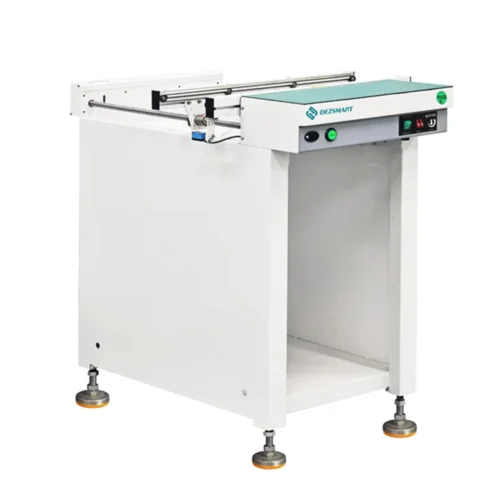
Control PCB Movement Between SMT Processes
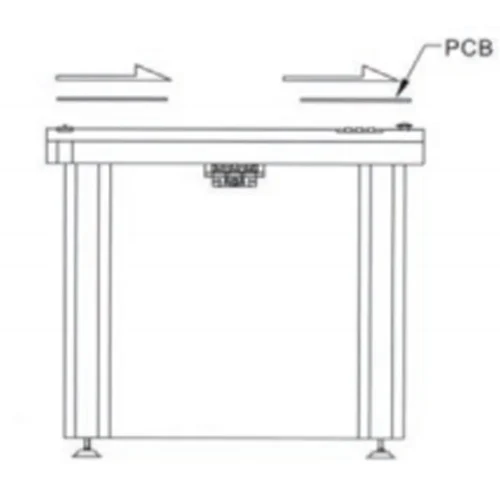
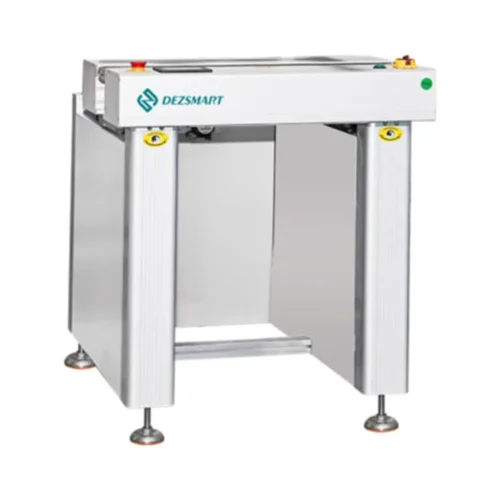
A loader feeds bare PCBs from magazines into the beginning of the line. Conveyors transfer boards between production stages or provide an operator inspection position. Unloaders receive completed boards and store them in magazines.
Specialised conveyors can also support dual-lane production, wave-soldering infeed or forced-air cooling after soldering.
A standard transfer conveyor does not automatically provide accumulation buffering. If the line requires temporary PCB storage, provide the required buffer capacity and operating logic separately.
PCB Magazine Loaders
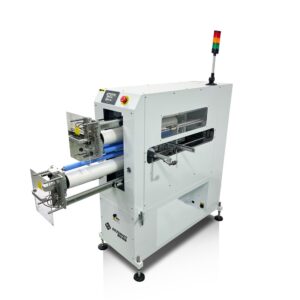
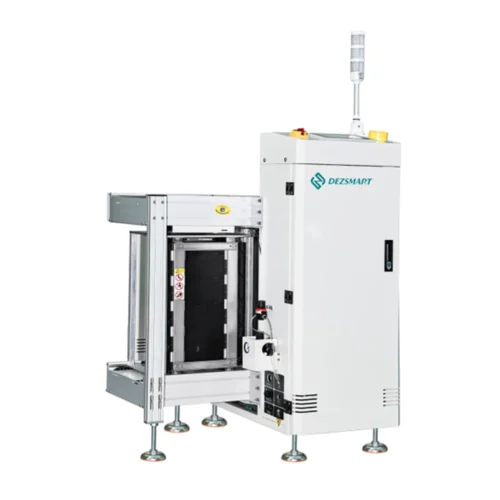
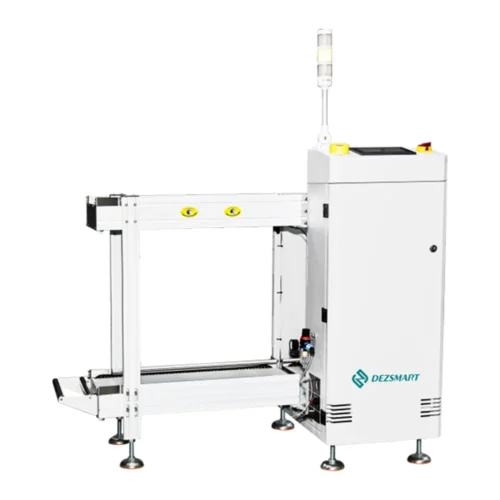
1. The Compact PCB Magazine Loader for SMT Lines automatically feeds bare PCBs into the beginning of an SMT production line.
Its compact magazine arrangement requires less line length than a standard multi-position loader. Choose this configuration when automatic loading is required but the available space before the first production machine is limited.
It can connect to a PCB cleaning machine, solder paste printer, marking system or other compatible downstream equipment.
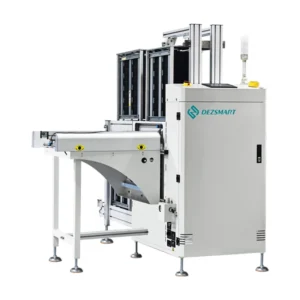
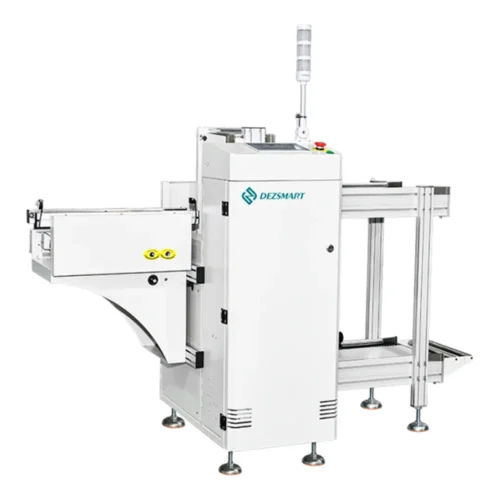
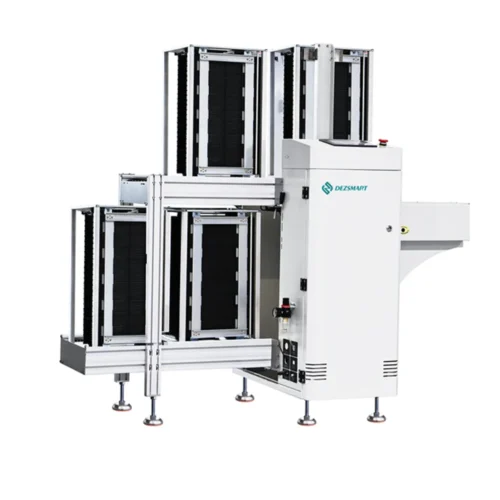
2. The PCB Magazine Loader for SMT Production Lines uses a multi-position magazine arrangement to maintain PCB supply during magazine changes.
Choose the standard loader when continuous board feeding and larger PCB formats are more important than minimising the machine’s length along the production line.
The magazine dimensions, slot pitch and PCB thickness must be checked together. An incompatible magazine pitch can cause boards to contact each other or prevent correct indexing.
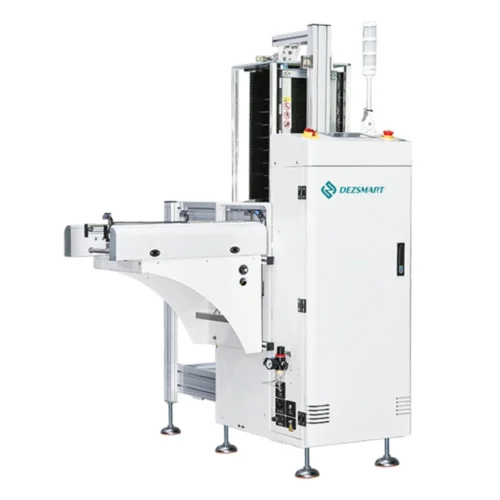
3. The Automatic L-Type PCB Loader for SMT Lines positions the magazine-handling section at 90 degrees to the outgoing PCB flow.
This layout is suitable for workshop corners or non-linear production areas where a conventional straight loader would occupy too much length along the SMT line.
Choose the L-type loader according to the available installation direction, maintenance access and magazine replacement space—not only the PCB size.
PCB Magazine Unloaders
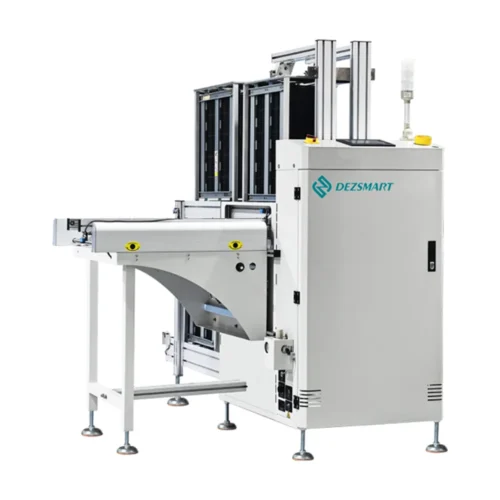
1. The Standard PCB Magazine Unloader for SMT Production Lines receives bare PCBs or assembled boards from upstream equipment and stores them sequentially in slotted magazines.
It is commonly installed after reflow, AOI, manual inspection or another completed production stage. Select the magazine pitch according to PCB thickness, component height and required separation between assemblies.
2. The Automatic L-Type PCB Unloader for SMT Lines uses a 90-degree magazine-transfer arrangement to reduce the installation length required at the end of the line.
Choose this configuration when the production line ends near a wall, aisle or another machine and a straight magazine unloader would obstruct the available space.
The magazine loading direction and operator access must be included in the line layout before configuration.
3. The Dual Lane PCB Unloader for SMT Production Lines receives boards from two parallel production lanes and transfers them into compatible magazines.
It is intended for SMT lines that maintain dual-lane transport through printing, placement, reflow or inspection. Do not use a dual-lane unloader merely to increase storage capacity on a single-lane line.
Both incoming lanes must be checked for PCB range, spacing, line height, transfer timing and communication logic.
PCB Transfer and Inspection Conveyors
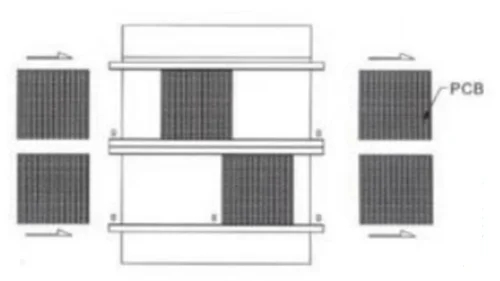
1. The Dual Rail PCB Conveyor for SMT Lines transfers boards through two parallel lanes between compatible dual-lane production machines.
It can be installed between solder paste printers, pick-and-place machines, inspection equipment, reflow ovens and downstream handling equipment.
Choose it when the upstream and downstream processes use the same dual-lane structure. Rail spacing, lane separation, fixed edges and independent or linked control requirements must be confirmed.
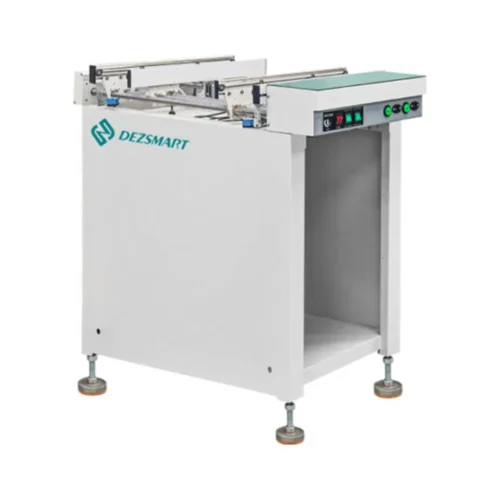
2. The PCB Inspection Conveyor for SMT Lines combines PCB transfer with a manual visual-inspection or processing position.
Integrated lighting and adjustable transport allow an operator to inspect solder paste, component placement, solder joints or other visible conditions without moving the board to a separate table.
This equipment provides manual inspection access. It does not replace SPI, AOI or X-ray inspection systems.
3. The ESD PCB Inspection Conveyor for SMT Lines provides a controlled position for visual inspection, verification or compatible manual assembly work.
An ESD flat belt helps reduce electrostatic-discharge risk while the workstation holds the board at the configured operating position. Automatic mode allows it to work as a transfer section when operator intervention is unnecessary.
Choose this configuration when the process requires repeated operator access, an ergonomic work area or controlled PCB positioning.
Wave-Soldering PCB Conveyors
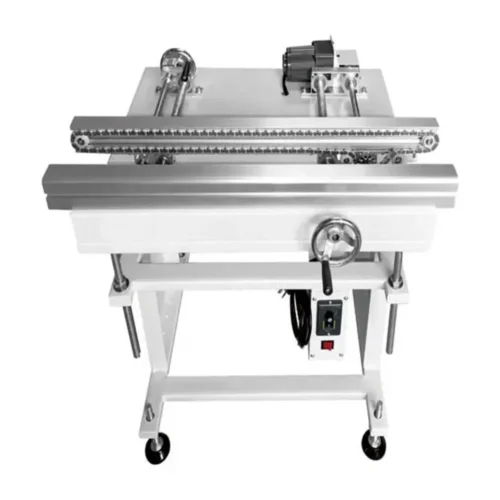
1. The Wave Soldering Infeed Conveyor for PCB Transfer moves PCBs, PCBAs or compatible soldering pallets from an upstream assembly stage into a wave-soldering machine.
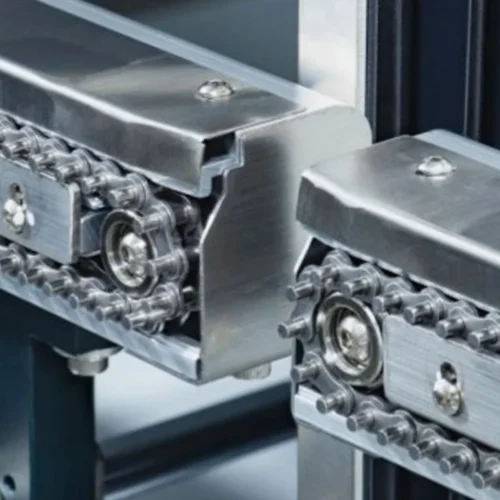
Its transport width, height, speed and chain structure must match the wave-soldering entrance and the PCB or carrier edges.
Choose it when a stable transition is required between manual insertion, assembly equipment or a conveyor and the wave-soldering process.
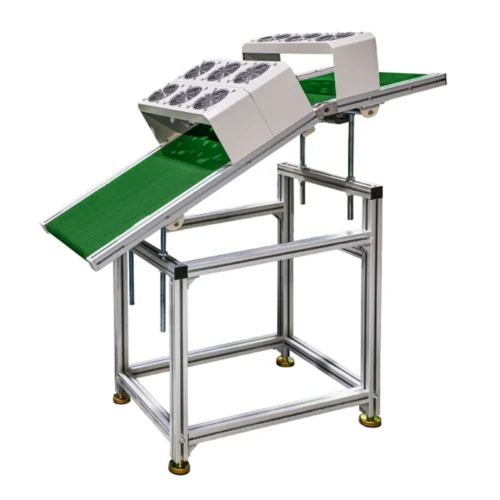
2. The Wave Soldering Cooling Conveyor with Forced-Air Fans receives hot PCB assemblies from the output of a wave-soldering machine.
Overhead fans provide forced-air cooling while an inclined ESD flat belt transfers the PCBA towards inspection, touch-up or unloading.
The cooling requirement depends on the PCB thermal mass, outlet temperature, conveyor speed and downstream handling limit. The conveyor should not be selected only by its physical length.
A Typical SMT Handling Process
A standard SMT production flow may use the following arrangement:
PCB Magazine Loading → PCB Surface Preparation → Solder Paste Printing → Component Placement → Reflow Soldering → Inspection → Magazine Unloading
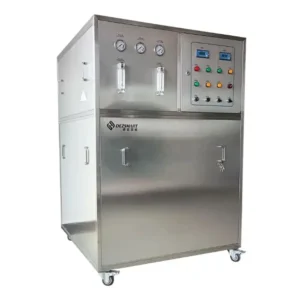
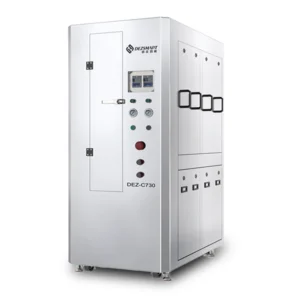
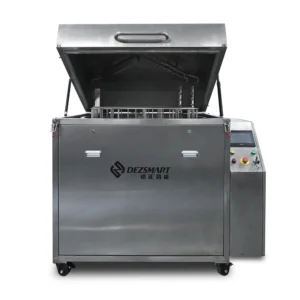
The exact layout depends on the product and process. A loader may feed the Double-Sided PCB Cleaning Machine – DEZ-C753S before solder paste printing when bare-board dust and loose particles must be removed.
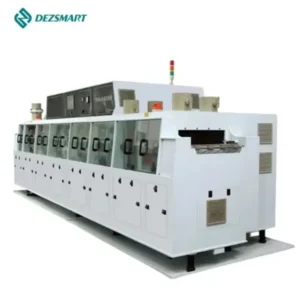
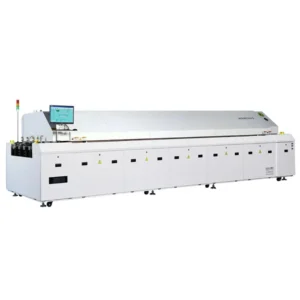
After placement, a suitable SMT Reflow Oven completes preheating, soaking, solder-paste reflow and cooling. An inspection conveyor and magazine unloader can then manage downstream verification and board collection.
PCB Handling Equipment Requirements
PCB Size & Weight
PCB dimensions alone aren't enough. Check board thickness, weight, warpage, component clearance and available transport edges.
Thin, heavy or irregular boards may require additional support, special rails, belts or carriers. For palletized boards, provide the complete pallet or carrier dimensions and weight.
Line Height & Direction
Confirm the PCB transport height and transfer direction before installation.
The loader, conveyor and connected machines must share a compatible line height. Also specify left-to-right or right-to-left transfer and the fixed rail side.
Conveyor Speed & Takt Time
Conveyor speed doesn't directly equal production throughput.
Consider PCB length, transfer distance, stop time and the cycle time of upstream and downstream equipment. For magazine systems, also include magazine loading or indexing time.
Single or Dual Lane
Dual-lane production requires compatible lane centres, rail adjustment, PCB range, timing and control logic across the entire line.
Magazine & Pitch
Check magazine dimensions, slot width, pitch and usable depth.
The selected pitch must allow sufficient clearance for PCB thickness and components. When compatibility is uncertain, provide a magazine drawing or sample and confirm whether existing or new magazines will be used.
Machine Communication
PCB handling equipment must exchange signals such as ready, busy and board transfer with connected machines.
Confirm the communication protocol, connectors and interface requirements for equipment such as printers, placement machines, reflow ovens and AOI systems.
ESD & Board Handling
Use suitable ESD belts, grounded structures and approved PCB contact areas to reduce handling risks.
Rails, belts, stoppers and magazine guides should avoid components near the board edge. Provide component keep-out zones when required.
Industries Using SMT PCB Handling Equipment
Automotive Electronics Manufacturing
Automotive Electronics Manufacturing uses loaders, conveyors and unloaders to move controller, sensor, lighting and power assemblies between controlled production stages.
Consumer Electronics Manufacturing
Consumer Electronics PCBA Manufacturing often requires continuous transfer between printing, placement, reflow and inspection. Compact or dual-lane configurations may be considered according to available floor space and output.
LED and Power Electronics
Boards used in LED and Power Electronics Manufacturing may be long, heavy or thermally demanding. Conveyor support, rail contact and post-solder cooling must be checked against the actual assembly.
EMS and Contract Electronics Manufacturing
EMS and Contract Electronics Manufacturing frequently changes PCB formats and production orders. Adjustable rails, selectable magazine pitch and saved machine settings help accommodate different customer products.
SMT Line Handling Application
The correct handling system starts with the complete production flow rather than an isolated loader or conveyor.
Explore SMT Line Handling, PCB Buffering and Transfer for equipment selection according to process position, line balance and transfer requirements.
Request an SMT PCB Handling Equipment Recommendation
Send your PCB range and production-line layout. DEZ will recommend the appropriate loading, transfer, inspection, cooling and unloading equipment.