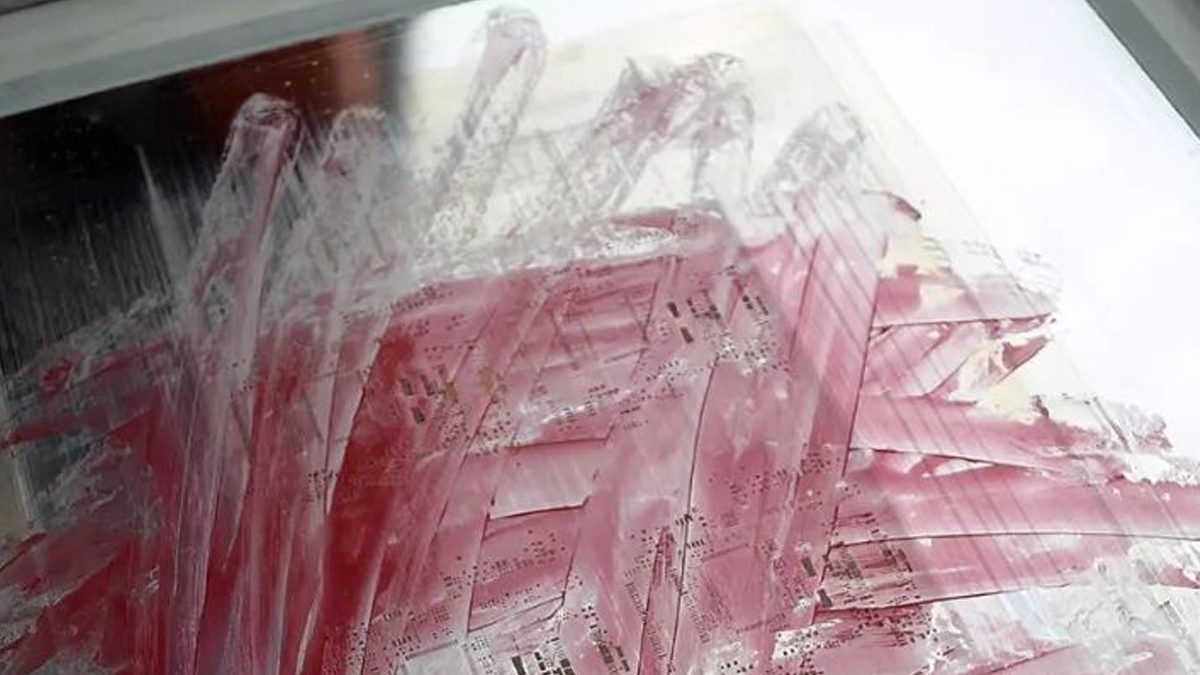
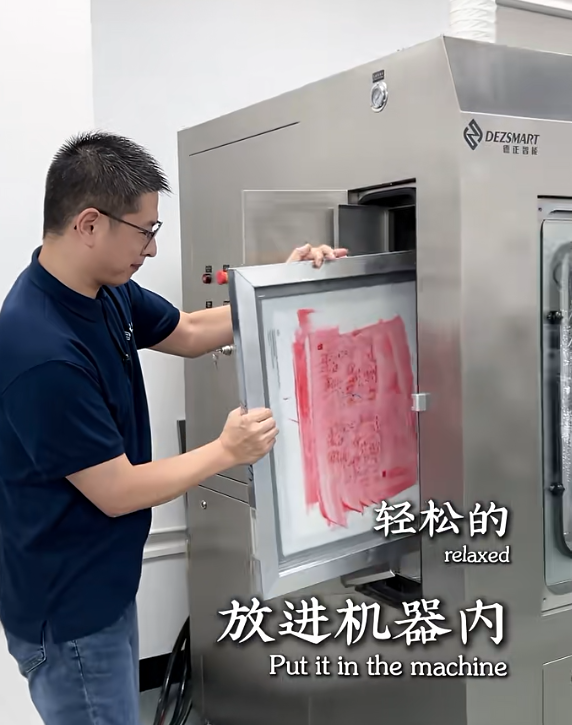
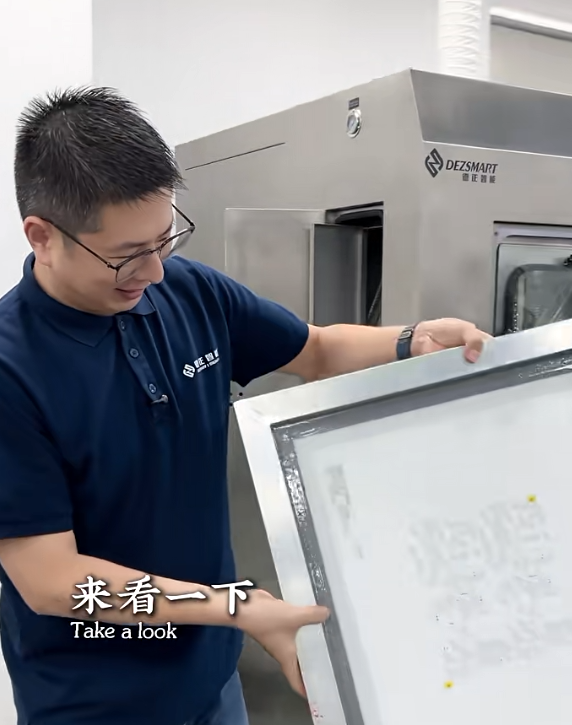
Red glue stencil cleaning equipment removes uncured SMT adhesive from stencil surfaces, aperture walls and frames after adhesive printing.
The cleaning process must act before the residue becomes heavily dried or heat-cured. A machine cannot compensate for incompatible chemistry, excessive cleaning delay or adhesive that has already formed a cured epoxy deposit.
DEZ provides pneumatic solvent and water-based cleaning systems for compatible red glue stencils. The correct machine depends on adhesive chemistry, stencil size, quantity per shift, rinsing requirements and available factory utilities.
Table of Contents
Red Glue Contamination in SMT Printing
SMT red glue is commonly a heat-curing adhesive used to hold surface-mounted components on a PCB before wave soldering. It may be dispensed directly or printed through an adhesive stencil.
During printing, adhesive accumulates on the foil, squeegee contact area and aperture walls. As the residue ages, its viscosity and surface condition change. Apertures may begin to release uneven adhesive deposits or become partially blocked.
Manual wiping can remove visible adhesive from the foil while leaving material inside the apertures. It can also spread softened glue across the stencil or leave fibres on the printing surface. Recurring blockage therefore requires a controlled offline cleaning process rather than repeated surface wiping.
Uncured and Cured Red Glue
Red colour does not determine cleaning performance. The important factors are the adhesive resin, curing mechanism, residue age and approved cleaning chemistry.
Uncured SMT adhesive can normally be removed with a compatible solvent or water-based cleaner. Cleaning becomes more difficult after the residue skins, dries or begins to cure. Fully heat-cured epoxy should not be treated as routine stencil contamination, and its removal cannot be guaranteed without testing.
Red glue stencils should therefore be cleaned promptly after production or changeover. Extending the machine cycle is not a reliable correction for unsuitable chemistry or cured deposits.
Pneumatic Solvent Spray Cleaning
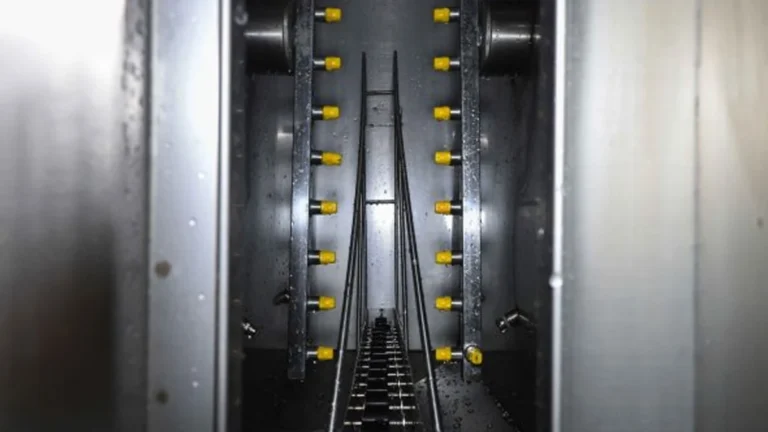
Pneumatic red glue stencil cleaners circulate compatible solvent through rotating spray nozzles. Double-sided spray acts on the foil and drives cleaning liquid through accessible apertures. Filtration separates removed adhesive and particles before the liquid returns to the tank.
Compressed air dries the stencil after cleaning, so the process does not require a water connection or separate water-rinsing stage. The factory must still provide stable compressed air, extraction and suitable controls for solvent storage, use and disposal.
The DEZ-C730 pneumatic stencil cleaning machine processes one compatible stencil up to 750 × 750 × 40 mm. Cleaning takes 2–4 minutes and compressed-air drying takes 2–5 minutes.
The DEZ-C780 pneumatic stencil cleaning machine processes up to two compatible stencils of the same maximum size in one cycle. It suits production with frequent adhesive-stencil changeovers or queues that exceed one-stencil capacity.
Water-Based Wash, Rinse and Dry
Water-based equipment uses compatible aqueous chemistry to remove uncured red glue from the stencil. Cleaning is followed by a separate clean-water or DI-water rinse, which removes the cleaning agent and released adhesive. Heated air then dries the foil, frame and apertures.
This process is appropriate when the approved adhesive cleaner requires rinsing or when the factory wants to replace its existing solvent process. It requires more infrastructure than a pneumatic cleaner, including electrical power, water, drainage, exhaust and wastewater management.
The machine uses two 42 L tanks to separate cleaning liquid from rinse water. Its 10 μm, 5 μm and 1 μm filtration system removes released contamination before liquid recirculation.
Red Glue Cleaning Problems
Adhesive Remaining in Apertures
Residue remaining on aperture walls usually indicates unsuitable chemistry, delayed cleaning, insufficient spray access or excessive contamination in the cleaning liquid.
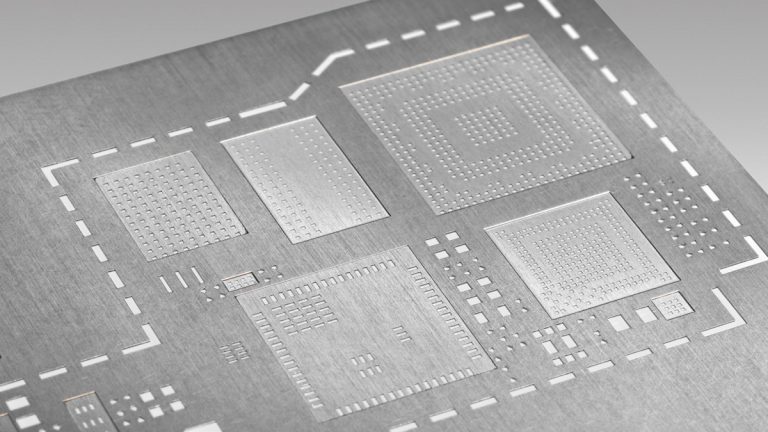
The stencil surface may appear clean while adhesive remains inside smaller openings. Inspection must therefore cover the apertures used to form the smallest adhesive deposits, not only the surrounding foil.
Adhesive Smearing After Cleaning
Smearing indicates that the red glue has softened but has not been fully removed. Possible process causes include weak chemistry, insufficient liquid exchange, overloaded filters or incomplete rinsing.
Repeating the same cycle may spread the residue further. The cleaning agent, bath condition and process time should be reviewed together.
Retained Solvent or Rinse Water
Pneumatic machines must remove solvent during compressed-air drying. Water-based machines must rinse away the cleaning agent before heated drying.
Liquid remaining in apertures can delay inspection and stencil storage. Drying performance should be checked on the actual aperture geometry and frame, not only on a flat test panel.
Stencil Queues During Changeover
Capacity depends on the complete cycle rather than cleaning time alone. Loading, cleaning, rinsing where applicable, drying and unloading all affect output.
The C730 provides one-stencil processing. The C780 processes two compatible stencils during the same cycle. The C750 provides one-stencil aqueous washing, rinsing and drying where process completeness is more important than two-stencil capacity.
The C730 requires 0.45–0.6 MPa compressed air at 400–600 L/min and uses 1 mm, 5 μm and 1 μm filtration.
The C780 requires 0.4–0.6 MPa compressed air at 400–600 L/min and uses 10 μm, 5 μm and 1 μm filtration.
The C750 requires AC 380 V, compressed air at 0.45–0.7 MPa and water at 0.2–0.3 MPa. Drainage, exhaust and wastewater handling must be included in the installation plan.
A cleaner labelled for solder paste does not automatically remove SMT adhesive. Red glue formulations can use different resin systems, fillers and curing behaviour.
The selected cleaner must be compatible with the adhesive, stainless-steel foil, frame, mesh, bonding adhesive, coatings and identification labels. Its safety data and factory-handling requirements must also match the intended machine.
For pneumatic equipment, confirm that the solvent is suitable for spray circulation and compressed-air drying. For the C750, confirm that the aqueous cleaner can be rinsed effectively and that the required rinse-water quality is available.
Sample Cleaning Validation
Testing should use a production stencil contaminated with the actual red glue. A clean demonstration stencil or substitute adhesive does not provide a reliable result.
The test must confirm that adhesive is removed from the smallest relevant apertures, no smear remains on the foil and the stencil is dry after the specified cycle. Frame bonding, coatings and labels must remain compatible, and the result should be repeatable across consecutive cycles.
Send DEZ the red glue brand or technical data, stencil dimensions, smallest aperture, time between printing and cleaning, required quantity per shift and available factory utilities. Representative contaminated stencils can then be tested before the final configuration is approved.