Remove Residue from Stencil Apertures
A reflow oven does more than reach a selected temperature. It must control how quickly the PCBA heats, how long it remains within each thermal stage and how it cools after peak reflow.
During preheating, the assembly temperature rises at a controlled rate. The soaking stage reduces temperature differences between components and activates the solder-paste flux. The reflow stage raises the solder joints above the alloy’s liquidus temperature before controlled cooling solidifies the joints.
Learn how to develop and verify the process in How to Create a Reflow Oven Temperature Profile.
Choose Reflow Oven for SMT PCB Assembly
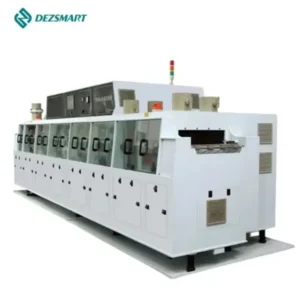
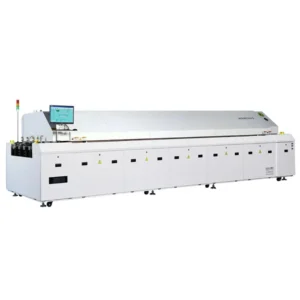
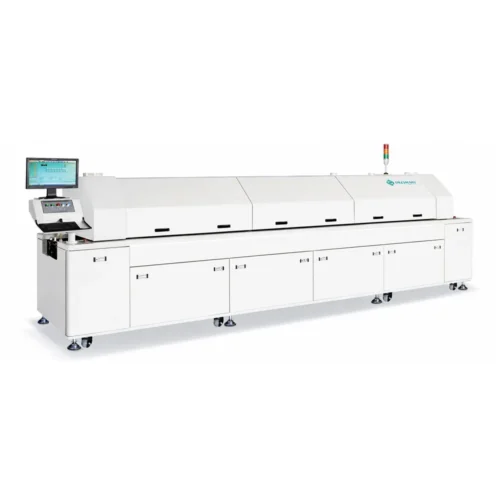
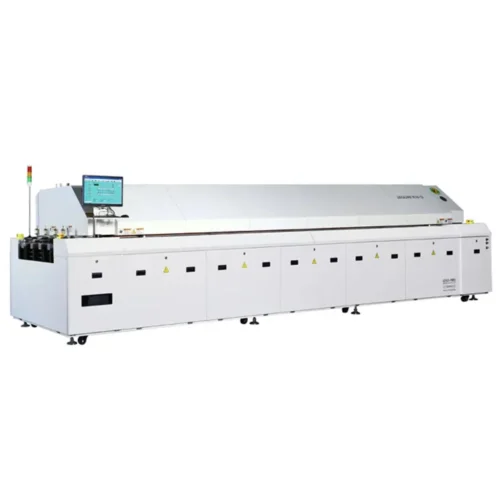
1. The Reflow Oven for SMT PCB Assembly – DEZ-R800PC is an inline hot-air reflow oven with eight upper and eight lower heating zones.
Its 3140 mm heating section provides controlled preheating, soaking and solder reflow, followed by two forced-air cooling zones. Mesh-belt and chain transport support continuous single- or double-sided PCBA production.
The oven supports lead-free and leaded soldering and includes three-channel online temperature profiling. The measured PCB curve can be used to adjust zone temperatures and conveyor speed according to the actual assembly.
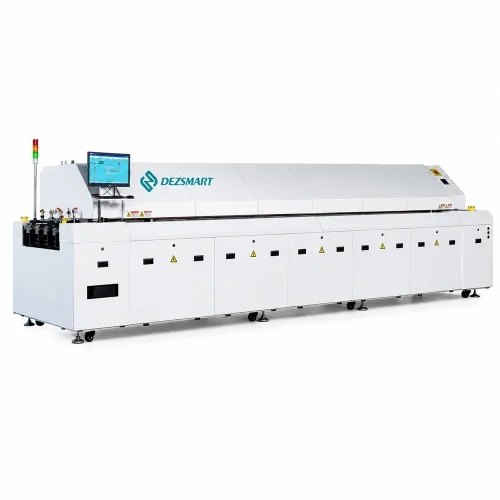
2. The Reflow Oven for SMT Production – DEZ-R1000PC uses ten upper and ten lower independently controlled hot-air heating zones.
The longer 3890 mm heating section provides more adjustment points for PCB assemblies with different thermal masses, component sizes and soldering requirements. Two forced-air cooling zones control the temperature reduction after reflow.
The machine supports PCBs up to 400 mm wide, with mesh-belt and chain transport available for different product and line requirements. Its integrated three-channel profiling system records actual PCB temperatures for recipe development and production checks.
3. The Nitrogen Reflow Oven for SMT Production – DEZ-1000PC-N combines ten upper and ten lower heating zones with a sealed nitrogen atmosphere.
Nitrogen reduces oxygen exposure during heating and solder reflow. It may be selected when oxidation affects solder wetting, the acceptable process window is narrow or the PCB assembly specification requires a controlled low-oxygen atmosphere.
The oven includes real-time oxygen monitoring and can reach an oxygen concentration of approximately 150 PPM under the specified nitrogen conditions. Optional closed-loop oxygen control supports an adjustable range from 50 to 200 PPM.
Match the Oven to PCB Thermal Mass
Thin consumer-electronics boards, copper-heavy power boards and assemblies containing large connectors do not absorb heat at the same rate.
Large components and heavy copper areas may heat more slowly, while small passive components can reach peak temperature quickly. Excessive temperature differences can narrow the available process window.
Independent upper and lower hot-air circulation allows the profile to be adjusted according to component distribution and PCB construction. Send DEZ the PCB thickness, layer count, copper weight, largest components and solder-paste datasheet for evaluation.
Air Reflow or Nitrogen Reflow
Air reflow is suitable for many lead-free and leaded PCB assemblies when the solder paste, surface finish and thermal profile provide acceptable wetting and joint formation.
Nitrogen reflow should be evaluated when oxidation contributes to poor wetting, exposed copper is difficult to solder, fine-pitch components require a wider process window or the product specification defines a maximum oxygen level.
The DEZ-1000PC-N requires nitrogen with at least 99.999% purity and at least 0.5 MPa incoming pressure. The total supply must be sized according to the oven’s real consumption and production schedule.
On-Site Nitrogen Supply
Factories that operate nitrogen reflow regularly may consider an on-site nitrogen supply instead of depending entirely on delivered cylinders.
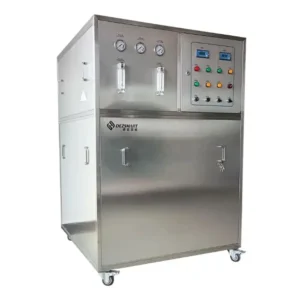
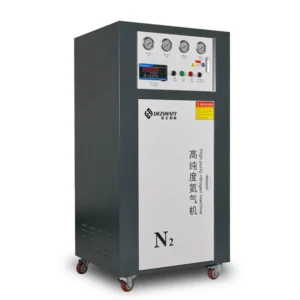
The SMT Nitrogen Generator for Soldering – DEZ-D59-2N provides a standard output of 3 Nm³/h. Do not assume this capacity is sufficient for a full-size nitrogen reflow oven.
SMT Production Line Integration
The reflow oven is installed after solder paste printing, solder paste inspection and component placement. Cooling, inspection, unloading and any required PCBA cleaning follow the oven.
Conveyor height, direction, fixed rail side, PCB width and communication requirements must match the surrounding equipment.
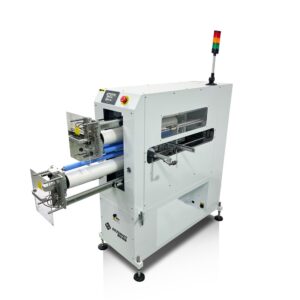
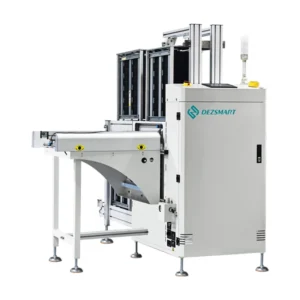
Explore SMT Line Handling, PCB Buffering and Transfer when loaders, conveyors, inspection stations, cooling conveyors, buffers or unloaders are required around the reflow process.
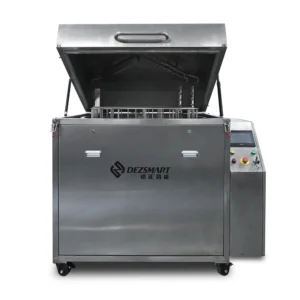
When compatible flux residue must be removed after soldering, select the appropriate process from PCBA Cleaning Machines.
Industries Using SMT Reflow Ovens
Automotive Electronics Manufacturing
Automotive Electronics Manufacturing includes control modules, sensors, lighting assemblies and power electronics with different component masses and copper distribution. The reflow profile must control temperature differences across the complete PCBA.
Telecommunications Equipment
Telecommunications Equipment Manufacturing uses high-density PCBAs containing BGA, QFN and fine-pitch components. Profile measurement is required to confirm that hidden and visible joints pass through the correct thermal stages.
LED and Power Electronics
LED and Power Electronics Manufacturing often involves aluminium substrates, large copper areas or heavy components. These assemblies may require a longer heating process and carefully controlled cooling.
EMS and Contract Electronics Manufacturing
EMS and Contract Electronics Manufacturing processes different board designs and solder pastes. Recipe storage and temperature profiling help manage changeovers without assuming that one oven programme fits every product.
Select an SMT Reflow Oven
Send your PCB, solder-paste and production-line requirements. DEZ will recommend the appropriate air or nitrogen reflow oven configuration.