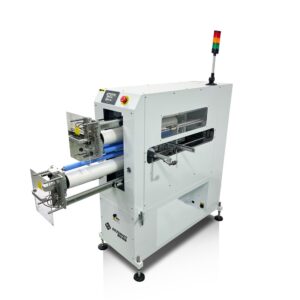
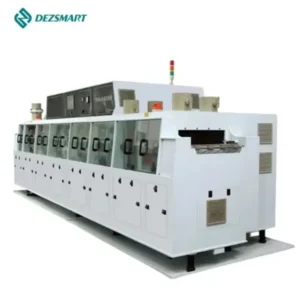
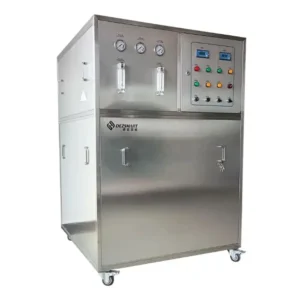
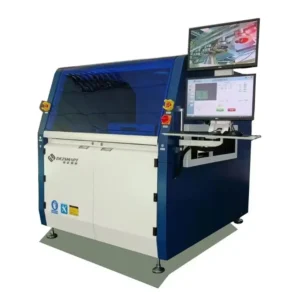
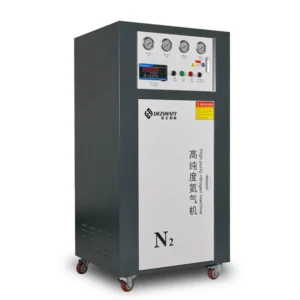
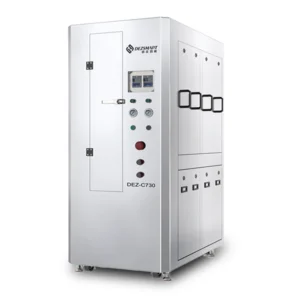
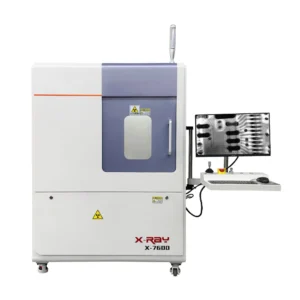
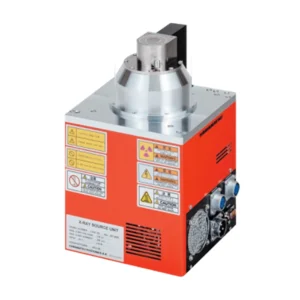
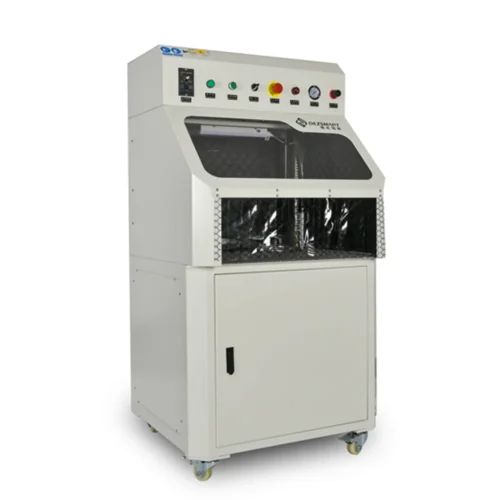
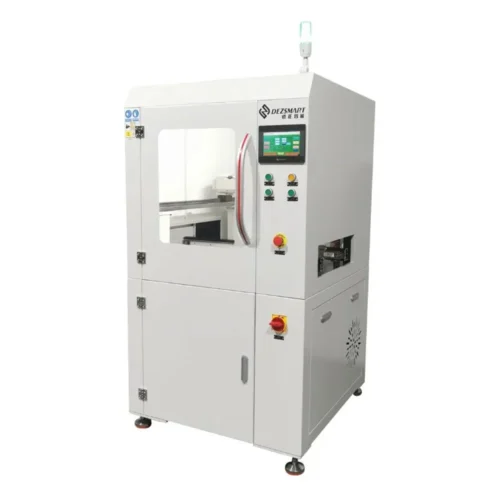
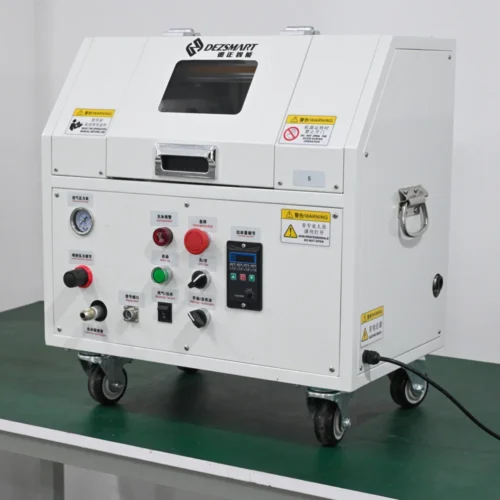
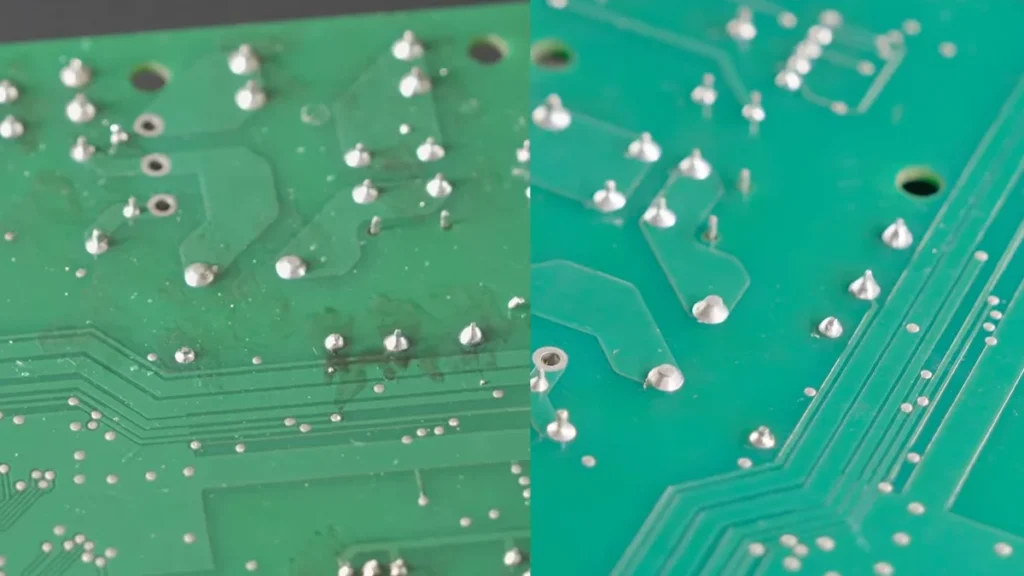
DEZ dry ice cleaning machines use compressed air to project dry ice particles onto contaminated surfaces. The impact, rapid cooling and sublimation help separate compatible flux, resin, oil, grease, carbon deposits and production residue from PCBAs, fixtures, moulds and industrial parts.
Because the dry ice changes directly from solid to gas, no spent dry ice remains on the workpiece. The process does not require a water rinse or separate hot-air drying stage, allowing suitable parts to move directly to inspection, repair, coating, assembly or the next production process.
DEZ dry ice cleaning machines remove compatible flux, resin, oil, grease and production deposits from PCBAs, fixtures, moulds and industrial parts without water-based rinsing.
Some PCBAs, installed fixtures, moulds and machine parts are difficult to wash with an aqueous process. Water may enter openings or assemblies, while dismantling large equipment for chamber cleaning can increase maintenance time.
A dry ice blasting machine directs the cleaning process only at the contaminated area. It does not use a liquid cleaning agent, DI-water rinse or hot-air drying system.
How Dry Ice Cleaning Works
Compressed air accelerates dry ice particles through the selected nozzle. When the particles strike the contaminated surface, their impact and low temperature weaken the bond between the deposit and the workpiece.
The dry ice then sublimates into carbon dioxide gas. Loosened residue is separated from the surface and collected by the machine extraction system or the cleaning-area extraction arrangement.
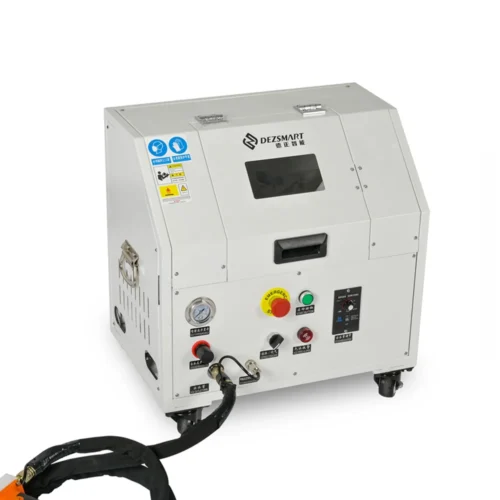
Choose this model when moulds, installed fixtures, production equipment or large industrial parts are difficult to move into a fixed cleaning chamber. The portable structure also supports local cleaning of compatible PCBAs and electronic assemblies during production or maintenance.
The operator can adjust the dry ice output, air pressure, nozzle and working distance according to the surface and contamination. Its mobility makes it suitable for factories that need to clean different workpieces in different locations.
It can remove compatible flux, rosin, coating residue, carbon deposits, oxidation and loose contamination from PCBAs, electronic assemblies and industrial parts. Adjustable dry ice feed and spray pressure allow the process to be matched to different components, surface materials and residue levels.
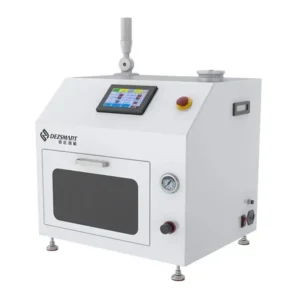
Choose the DEZ-C7310 when cleaning is performed at a fixed workstation and the process requires local control, interchangeable nozzles and integrated extraction of loosened contamination.
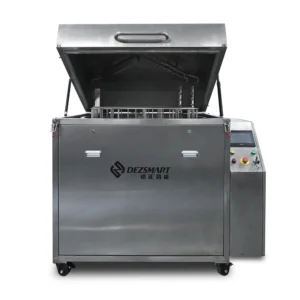
It processes PCBAs, electronic parts, moulds and compatible industrial components without a subsequent water rinse or hot-air drying stage. The maximum cleaning area is 400 × 350 mm, while dry ice feed and spray pressure can be adjusted for different contamination levels.
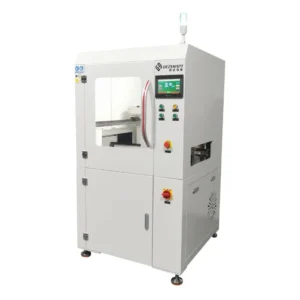
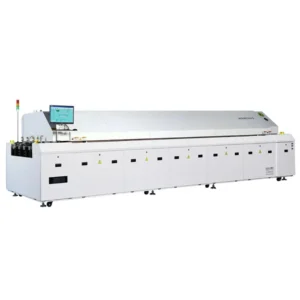
Choose the DEZ-C7320 when products need to move through a controlled dry ice cleaning process as part of continuous production. Before configuration, DEZ checks the workpiece dimensions, transfer direction, conveyor height, cycle time and upstream or downstream equipment.
Dry Ice Cleaning for PCBA Flux and Rework Residue
Dry ice cleaning can remove accessible flux and loose production residue from PCB surfaces, solder joints, component leads and connectors after soldering or component rework.
It is especially useful for local cleaning when the assembly should not enter a complete aqueous wash, rinse and drying process. The nozzle can be directed at the contaminated area instead of immersing or spraying the entire PCBA.
The process must be tested when the assembly contains delicate components, flexible materials, protective coatings, labels or mechanically sensitive structures. Spray pressure, dry ice feed, nozzle shape, distance and cleaning time all affect the result.
Dry Ice Cleaning for Moulds and Production Fixtures
Resin, release agents, oil, grease, carbonised deposits and production residue can accumulate on mould inserts, soldering fixtures, pallets and machine components.
The portable DEZ-C1650 brings the cleaning gun to installed equipment, reducing the need to transfer large workpieces to a separate cleaning chamber. Focused nozzles can treat local deposits, corners and detailed surfaces, while wider nozzles cover larger accessible areas.
Dry Ice Cleaning Before Inspection, Coating or Assembly
Residual flux, oil, dust and loose particles can interfere with visual inspection, coating preparation, bonding or later assembly.
Dry ice cleaning removes compatible surface contamination without adding water or liquid cleaning-agent residue. The cleaned workpiece can proceed after the surface condition and temperature have been checked.
Because dry ice lowers the workpiece temperature, condensation can occur in a humid environment. Allow the workpiece to return to a stable temperature before electrical testing, conformal coating, bonding or packaging.
Choose Another Cleaning Process
Dry ice cleaning is suitable when the main requirement is waterless removal of accessible surface contamination. It is not automatically the correct method for every PCB, PCBA or fixture.
When an entire PCBA requires chemical washing, DI-water rinsing and controlled drying, compare the available PCBA Cleaning Machines.
DEZ recommends sample testing whenever the contamination, substrate, component structure or coating compatibility is uncertain.
Compressed Air, Dry Ice and Ventilation
Dry ice cleaning requires sufficient compressed-air pressure and airflow. A compressor may show the correct pressure while still providing insufficient airflow during continuous spraying, resulting in weak or unstable cleaning.
The compressed air must also be dry. Moisture can cause dry ice to agglomerate and restrict the hopper, feed hose or nozzle.
A reliable local dry ice supply is required because dry ice gradually sublimates during storage. Store it in an approved insulated and ventilated container, never in a sealed container.
Dry ice becomes carbon dioxide gas during use. The cleaning area therefore requires appropriate ventilation, extraction and CO₂ monitoring, particularly in enclosed or low-level workspaces.
Sample Testing Before Machine Selection
Cleaning results depend on the actual contamination and the surface beneath it. A setting that removes oil from a metal mould may be unsuitable for a populated PCBA or coated plastic component.
Send DEZ a representative contaminated sample whenever possible. We will evaluate the suitable nozzle, pressure, dry ice output, working distance and cleaning time.
For inline projects, also provide the workpiece dimensions, required cycle time, transfer direction and production-line height. This allows the cleaning process and equipment interface to be evaluated together.
Industries Using Dry Ice Cleaning
In Automotive Electronics Manufacturing, dry ice cleaning can be evaluated for compatible controllers, connectors, production fixtures, moulds and mechanical components affected by flux, oil or production deposits.
EMS and Contract Electronics Manufacturing may use dry ice cleaning for local PCBA residue removal, rework cleaning and different high-mix products that cannot share one aqueous process.
In Semiconductor Packaging, dry ice cleaning should only be selected after testing the package surface, carrier, coating and contamination response.
FAQs for Dry Ice Cleaning
What can a dry ice cleaning machine remove?
Dry ice cleaning can remove compatible flux, rosin, resin, oil, grease, carbon deposits, release agents, dust and loose production contamination. Actual removal depends on the residue, surface material, nozzle, pressure, dry ice feed and working distance.
Is dry ice cleaning safe for every PCBA?
No. PCBAs can contain delicate components, coatings, labels, flexible materials and mechanically sensitive structures. DEZ recommends sample testing before confirming pressure, nozzle and dry ice feed settings.
Does dry ice cleaning remove ionic contamination?
It can remove accessible flux and surface residue, but visible cleanliness does not prove that an ionic contamination requirement has been achieved. If ionic cleanliness is specified, test the cleaned PCBA using the required method or consider a validated aqueous cleaning process.
Does the workpiece require rinsing and drying?
Dry ice cleaning does not apply water or liquid cleaning agents, so a separate rinse and hot-air drying stage is normally unnecessary. The workpiece may still need time to return to a stable temperature before testing, coating or packaging.
What happens to the dry ice after cleaning?
The dry ice sublimates into carbon dioxide gas. It does not remain as blasting media on the workpiece. The contamination removed from the surface still needs to be captured or collected.
Why does dry ice feeding become unstable?
Moisture, partially sublimated dry ice, blocked hoses or restricted nozzles can interrupt feeding. Check the compressed-air quality, dry ice condition, hopper, feed hose and nozzle before continuing.
Can DEZ test my products before I order?
Yes. Send representative PCBAs, fixtures, moulds or industrial parts with their actual contamination. DEZ can evaluate whether dry ice cleaning is suitable and identify the required process settings.
Find the Right Dry Ice Cleaning Process
Send DEZ the product material, dimensions, contamination, daily quantity and available compressed-air conditions. We will recommend the suitable dry ice cleaning machine and arrange sample testing when required.
Send your workpiece dimensions, production problem and required throughput to receive a free application review, equipment recommendation and project quotation. Free sample testing is available for qualified projects.
An equipment specialist will contact you within one hour during business hours.
Get a Free Recommendation and Request Sample Testing Email:[email protected] Phone: +86 138 2338 9052