SMT Line Handling, Buffering & Transfer

SMT machines cannot operate as one production line without controlled PCB loading, transfer, temporary storage and unloading.
DEZ SMT handling equipment moves bare PCBs and assembled boards between printing, placement, reflow, inspection, soldering and downstream processes. PCB loaders, unloaders and conveyors can be configured for different board sizes, line directions, cycle times and factory layouts.

Problems Solved by SMT Line Handling

Repeated Manual PCB Loading

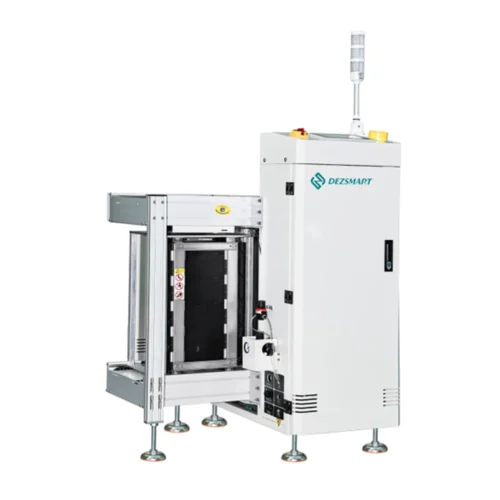
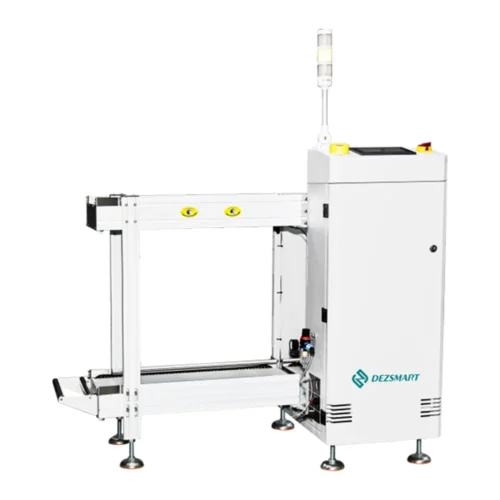
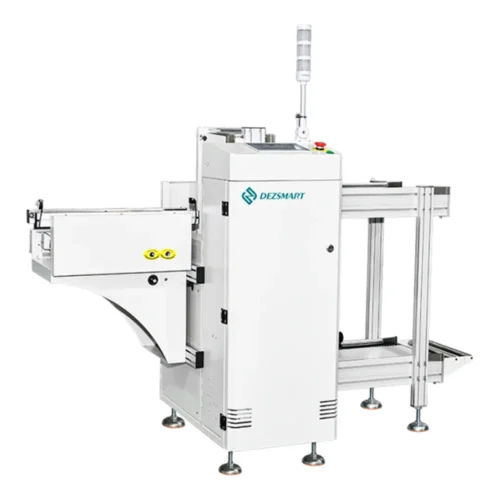
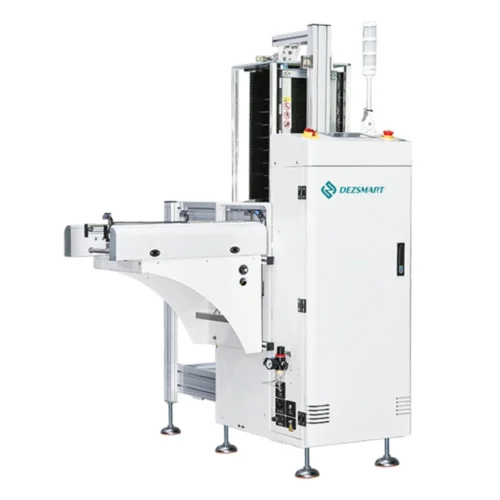
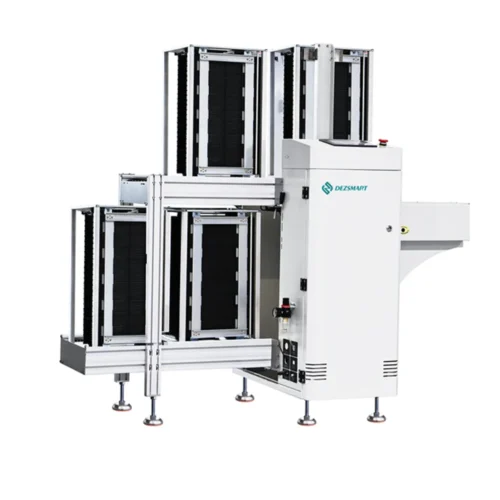
Magazine loaders feed boards individually into the production line without requiring an operator to place every PCB manually.

Manual Collection at the End of the Line

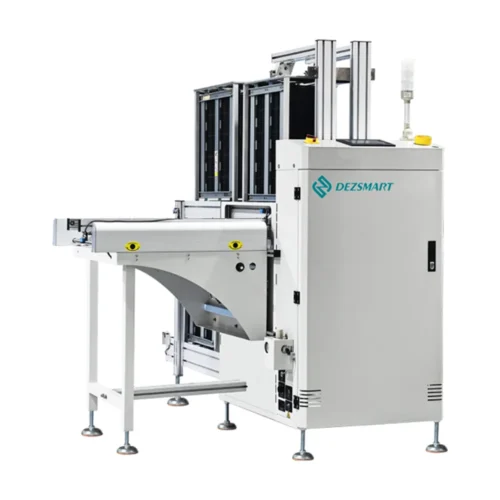
PCB unloaders receive finished boards and place them sequentially into magazines for storage or the next production process.

Cycle-Time Differences Between Machines

Transfer and buffering sections prevent short processing delays from immediately stopping connected upstream or downstream equipment.

Gaps Between SMT Equipment

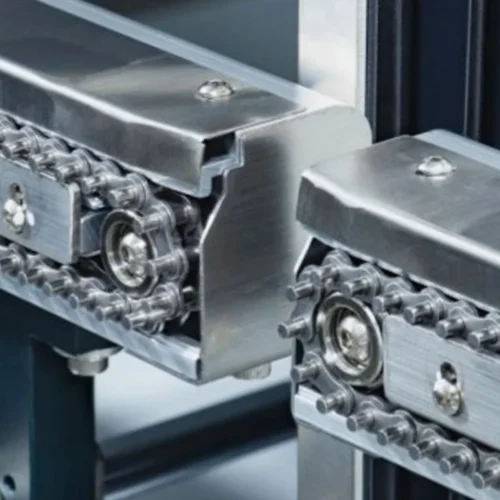
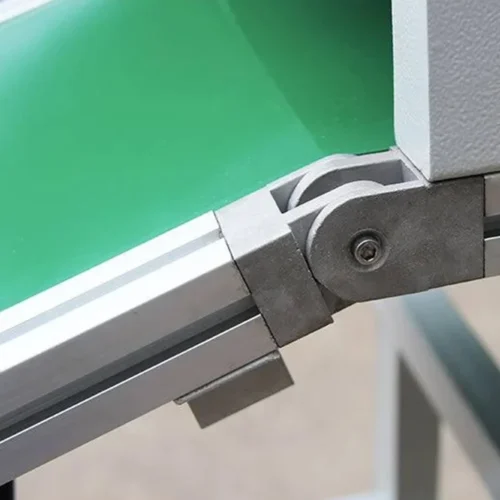
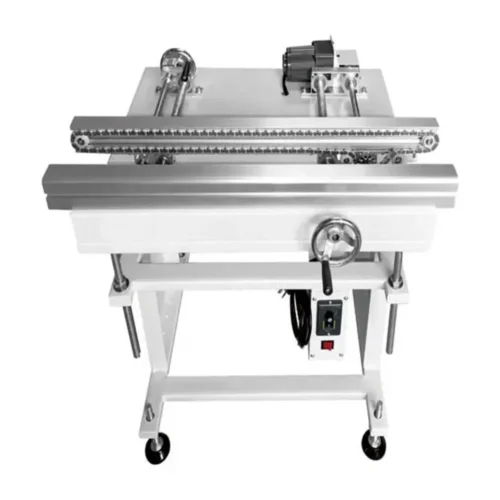
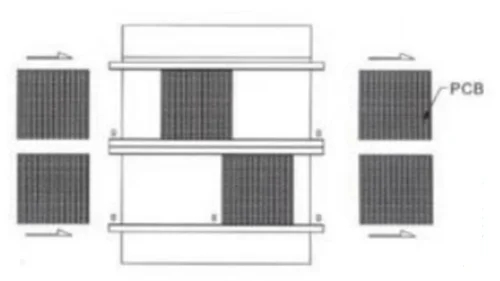
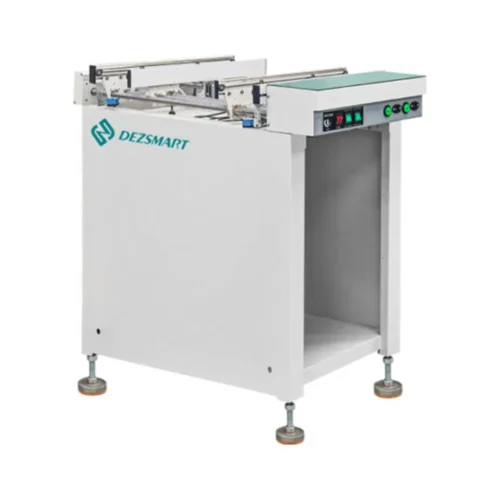
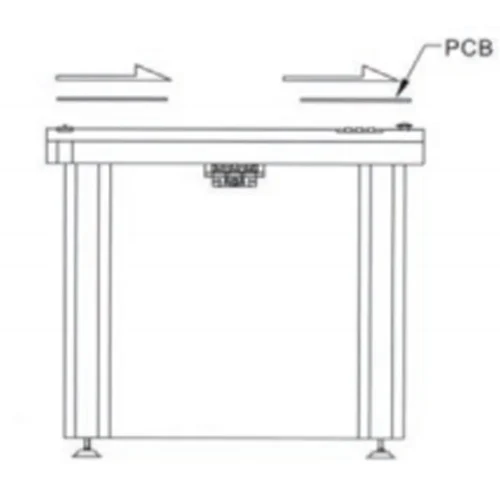
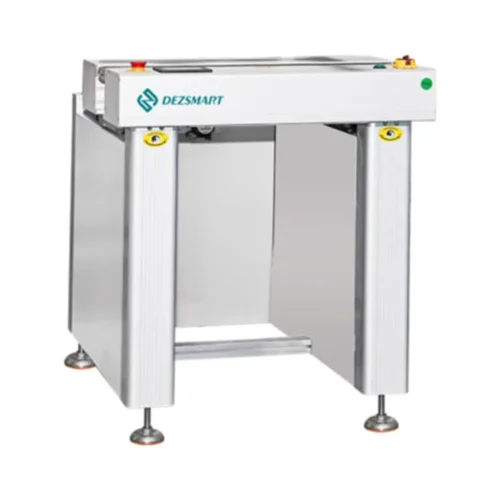
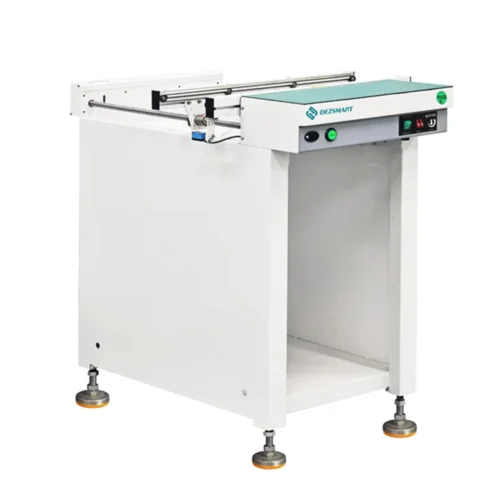
PCB conveyors connect printers, placement machines, reflow ovens, AOI systems and other equipment while maintaining the required transfer height and direction.

Inspection Interrupting Production

Inspection conveyors provide a defined workstation for visual inspection, verification or manual operations without moving the board to a separate table.

Limited Production Floor Space

Compact and L-shaped loaders or unloaders reduce the line length required for magazine handling.

Dual-Lane Production Transfer

Dual-rail conveyors and dual-lane unloaders maintain two parallel PCB paths through compatible production equipment.

Hot PCBAs After Wave Soldering

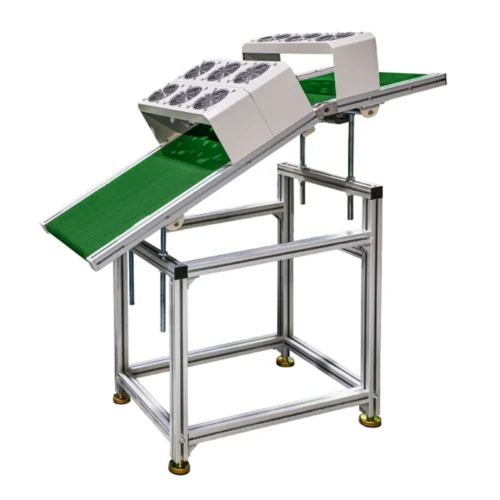
Cooling conveyors transfer and cool assemblies before inspection, touch-up or unloading.

Recommended SMT Line Handling Equipment

Complete your SMT line with reliable PCB loading, transfer, buffering, inspection, unloading, and wave soldering equipment.

SMT Line Handling FAQ

What is the difference between a PCB conveyor and a buffer?

A conveyor transfers a PCB between machines. A buffer temporarily stores one or more boards when connected machines operate at different cycle times or stop briefly.

A loader is normally installed at the beginning of the line before PCB cleaning, solder paste printing or another first production process.

An unloader is installed after reflow, AOI, inspection or another completed production stage where boards must be collected in magazines.

Yes, depending on the conveyor structure, board dimensions, component clearance, weight and required edge support.

Yes. PCB dimensions, conveyor height, transfer direction, fixed edge, speed and communication interface must match the existing equipment.

PCB Assembly Applications & SMT Process Solutions DEZ SMT

Explore More Electronics Manufacturing Applications

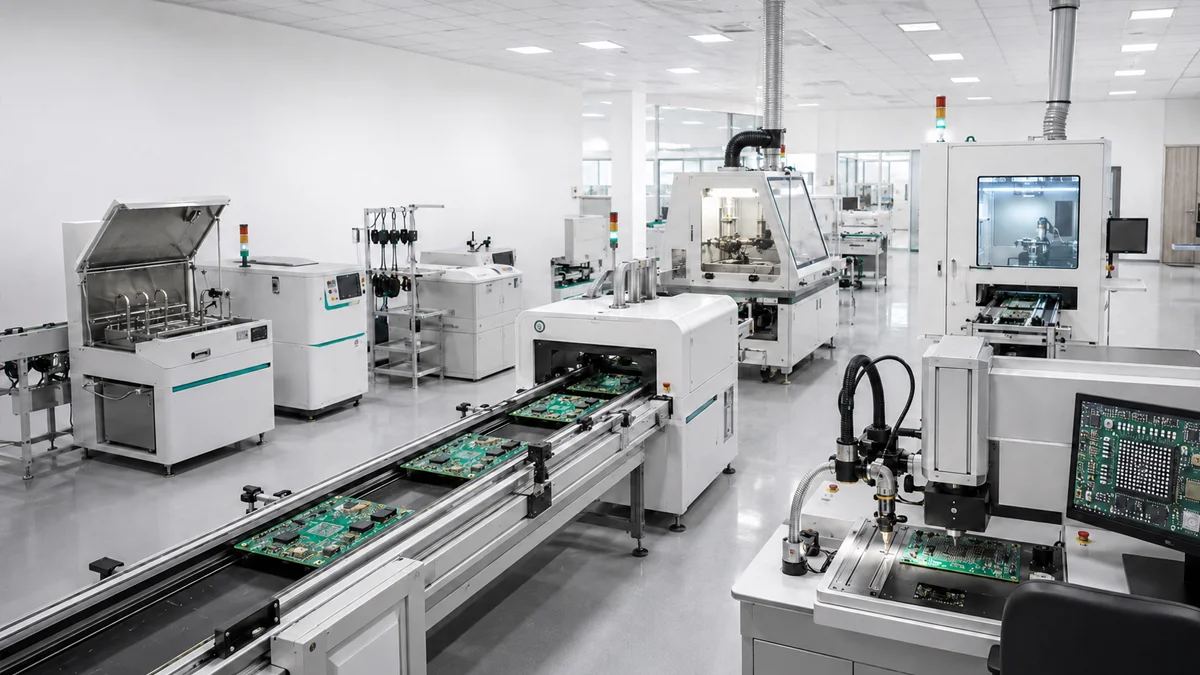
SMT handling equipment connects PCB surface cleaning, solder paste printing, component placement, reflow soldering, inspection and downstream assembly into one production flow.

Explore all DEZ applications for PCB cleaning, PCBA flux cleaning, stencil cleaning, selective soldering, reflow soldering, X-ray inspection and BGA rework.

Discuss Your SMT Line Layout

Send us the PCB dimensions, board weight, production cycle time, transfer direction, fixed edge, conveyor height, magazine size and a layout showing the upstream and downstream equipment.

DEZ will identify the required loading, transfer, inspection, buffering, cooling and unloading positions and recommend a compatible SMT handling configuration.

Drag & Drop Files, Choose Files to Upload, or Capture With Your Camera

Related SMT Process Articles

We share our SMT manufacturing expertise to help you optimize soldering, PCBA cleaning, inspection, and production efficiency.