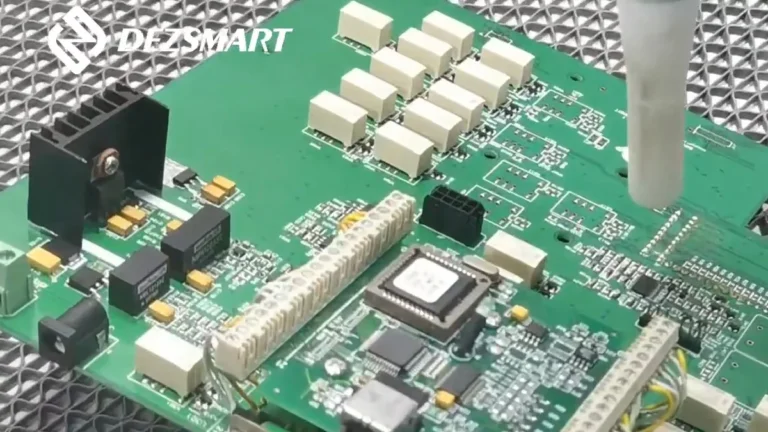
The correct PCBA cleaning process depends on what must be removed, where the contamination is located and how the finished assembly will be used.
Visible flux marks, ionic contamination and loose solder balls require different cleaning methods. Production volume, component clearance, material compatibility and factory utilities must also be considered.
Identify the Contamination
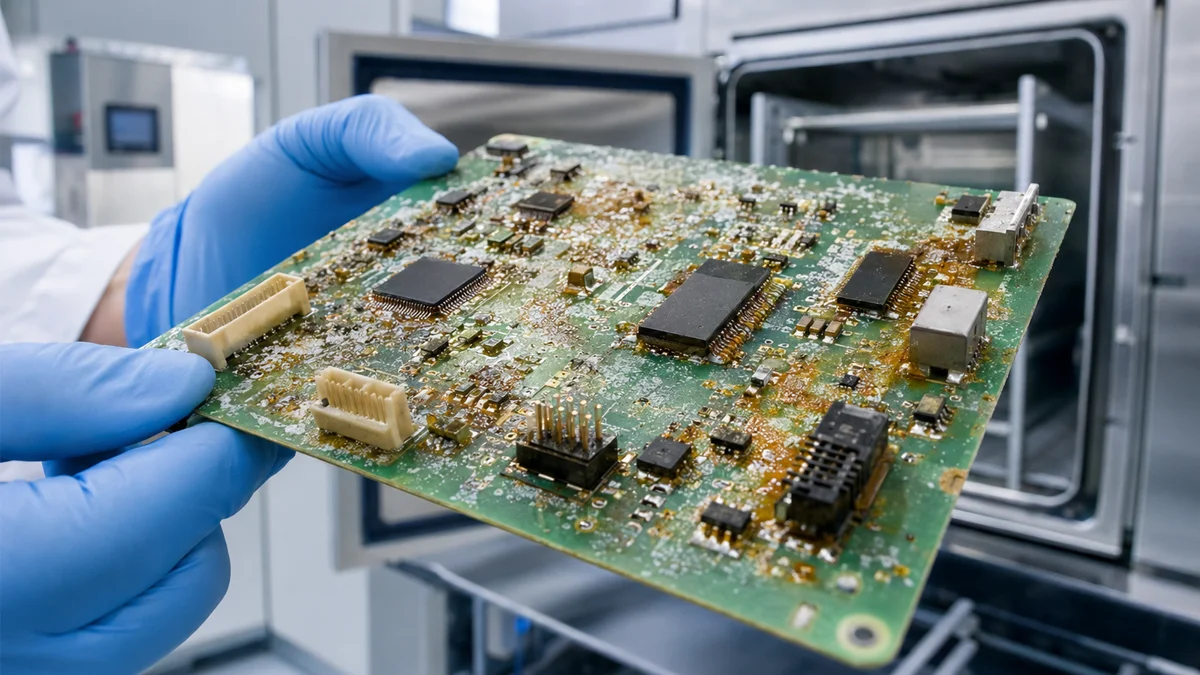
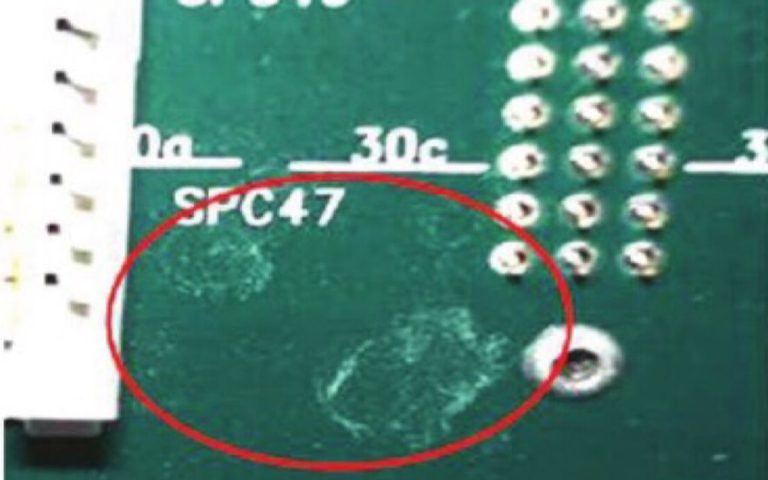
Visible Flux Residue
Flux marks can remain around solder joints after reflow, wave or selective soldering.
Visible residue may affect appearance, inspection, electrical testing or conformal coating. It does not automatically indicate the amount of ionic contamination present.
Ionic Contamination
Ionic contamination can remain from flux, handling, processing chemicals and other production sources.
It may contribute to leakage current, reduced insulation resistance or electrochemical migration under moisture and electrical bias.
Ionic contamination must be evaluated using a defined test method. It cannot be confirmed by visual inspection alone.
Loose Solder Balls
Loose solder balls can remain on the solder side after wave or selective soldering.
They should be removed before final assembly because they may move across the board and create an electrical short.
Cleaning-Agent Residue
An incomplete cleaning process can leave dissolved flux, cleaning agent or contaminated rinse water on the assembly.
The process must remove both the original contamination and the cleaning chemistry used to dissolve it.
Define the Required Cleaning Result
A PCBA may require cleaning for appearance, electrical testing, conformal coating or a specified cleanliness limit.
If only visible marks on one accessible solder side must be removed, complete aqueous washing may be unnecessary.
If the assembly requires controlled removal of ionic contamination, washing, effective rinsing and complete drying are normally more important than surface brushing alone.
Confirm Whether Cleaning Is Required
No-clean flux residue may remain when the soldering process has been qualified and the finished assembly meets the customer’s appearance, electrical and reliability requirements.
Cleaning may still be required before conformal coating, for high-impedance circuits, in humid operating environments or when customer specifications define a cleanliness limit.
The decision should be based on the finished PCBA requirement rather than the flux label alone.
Single-Sided Brush Cleaning
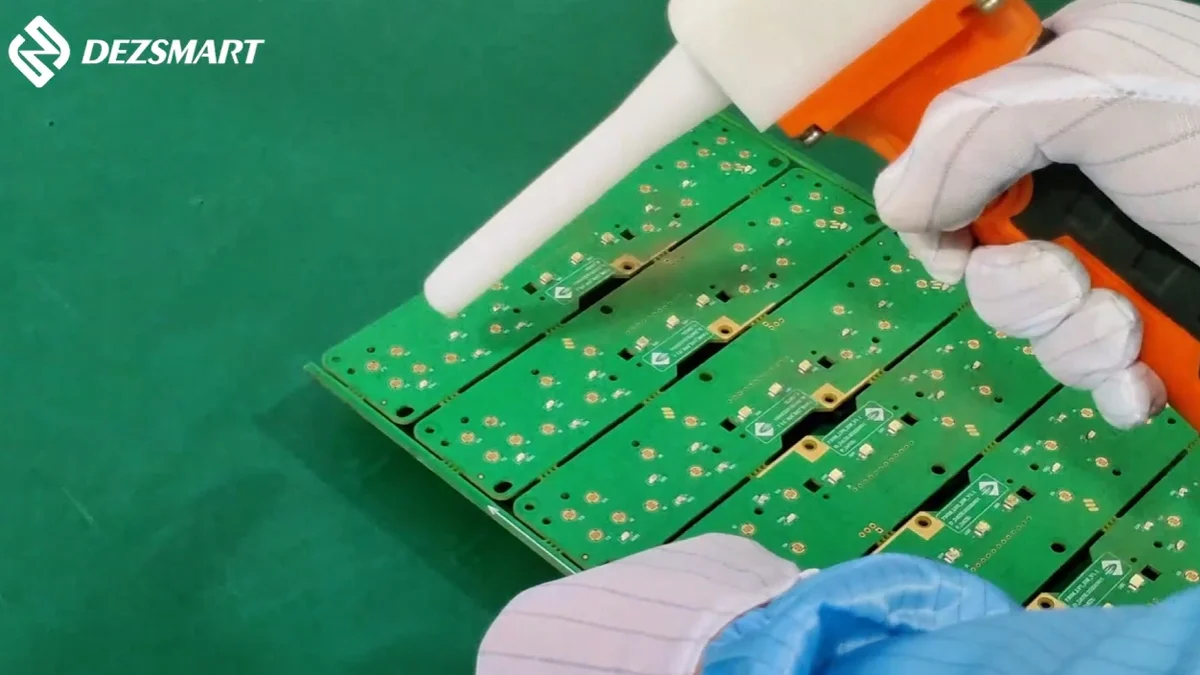
Brush cleaning treats one accessible solder side using compatible cleaning agent and mechanical brushing.
It is suitable for removing visible flux marks and loose solder balls after wave or selective soldering.
The DEZ-C758 and DEZ-C760 provide continuous single-sided PCBA brush cleaning.
Brush cleaning is not intended for complete washing beneath components or controlled ionic-contamination removal across the entire assembly.
Offline Batch Water-Based Cleaning
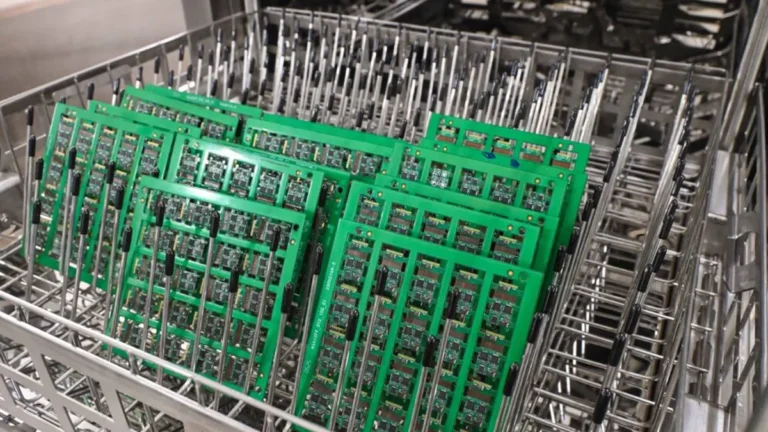
Batch cleaning loads multiple PCBAs into a basket inside a sealed chamber.
The DEZ-C743 Offline PCBA Batch Cleaner completes water-based washing, DI-water rinsing and hot-air drying in one chamber.
It suits high-mix production, frequent model changes and factories that do not require the cleaning machine to connect directly to a conveyor line.
Confirm the basket capacity, component height, PCB spacing and material compatibility before processing different assemblies together.
Inline Water-Based Cleaning
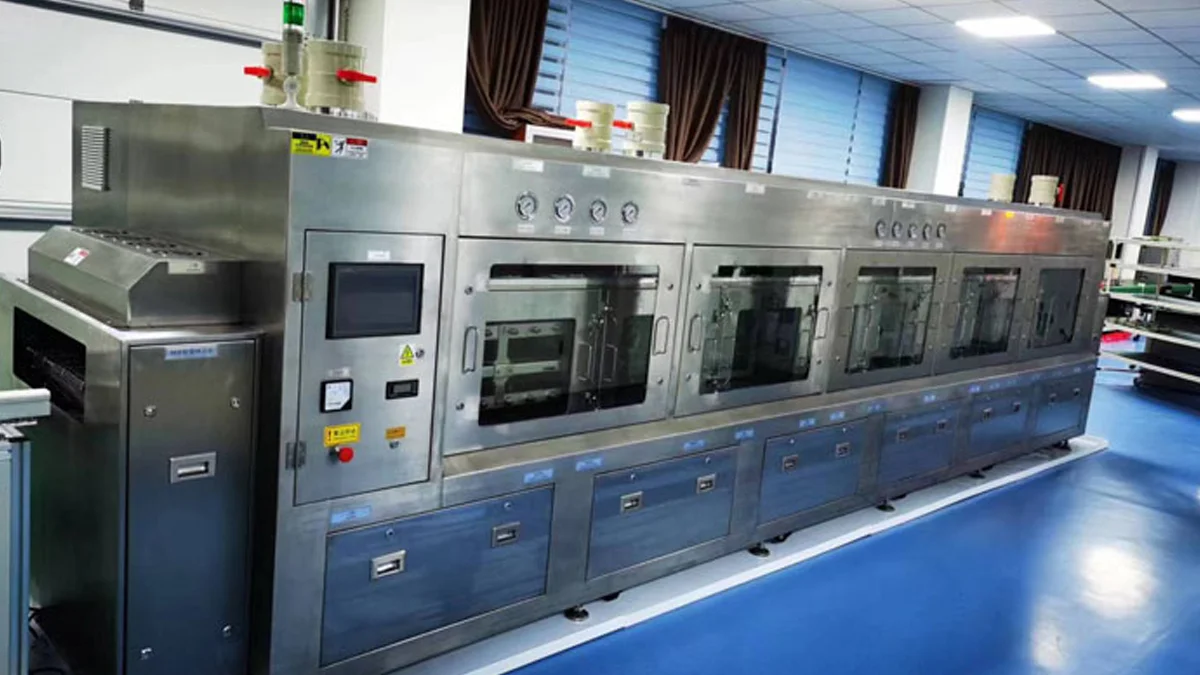
Inline cleaning continuously transfers PCBAs through separate washing, DI-water rinsing and drying sections.
The DEZ-C1360 Inline Water-Based PCBA Cleaning Machines are used when cleaning must support continuous production.
This method requires suitable cleaning chemistry, DI water, drainage, exhaust and sufficient drying capacity.
The required machine length and process sections depend on the board, contamination and production cycle.
Solvent Cleaning
Solvent cleaning may be suitable when the approved solvent dissolves the flux residue and is compatible with the PCB, components, labels and coatings.
The process must consider solvent filtration, recovery, ventilation, flammability and operator safety.
Solvent cleaning should be tested on the actual assembly. A solvent that removes one flux may be ineffective or damaging on another PCBA.
Dry Ice Cleaning
Dry ice cleaning directs solid carbon-dioxide particles towards accessible contaminated surfaces.
It does not require water, cleaning agent or a separate moisture-drying process. It may be used for compatible flux, resin and production deposits on PCBAs, fixtures and industrial parts.
Dry ice cleaning is a surface process. It may not remove dissolved ionic contamination beneath low-clearance components.
The PCBA materials, coatings, sensitive components, contamination and cleaning pressure must be tested before use.
Manual Cleaning
Manual cleaning may be sufficient for local rework residue or a small number of assemblies.
Results depend on the operator, cleaning tool, chemistry and access to the contaminated area. Manual wiping can also move dissolved residue to another part of the PCB.
It is difficult to maintain consistent results when production volume increases.
Check Component and Material Compatibility
Cleaning chemistry and process energy can affect plastics, labels, adhesives, markings, connectors, switches, microphones and other sensitive components.
Review the component supplier’s restrictions before testing. Also confirm whether liquid can enter unsealed parts or remain trapped beneath low-clearance packages.
A process that cleans the flux successfully is still unsuitable if it damages the assembly.
Consider Contamination Accessibility
Surface contamination is easier to remove than residue trapped beneath BGA, QFN, connectors or low-standoff components.
Complete cleaning requires the cleaning liquid to reach the contamination, dissolve it, carry it out and rinse the area.
Spray pressure, flow direction, cleaning time, temperature and component clearance all affect access.
Match the Process to Production Volume
Use manual or offline processing for low-volume production, samples or local rework.
Use batch cleaning for multiple product types that can be loaded and processed together.
Use inline cleaning when assemblies must move continuously from soldering or inspection into washing, rinsing and drying.
Required throughput should be calculated from the complete cleaning cycle rather than the conveyor speed alone.
Check Factory Utilities
Water-based cleaning may require cleaning chemistry, DI water, compressed air, drainage and exhaust.
Solvent systems require compatible chemistry, filtration and appropriate ventilation and safety controls.
Dry ice cleaning requires compressed air, exhaust and a stable supply of suitable dry ice.
Confirm the electrical supply, installation area and waste-handling requirements before selecting the process.
PCBA Cleaning Process Selection
Choose Brush Cleaning When
Only one accessible solder side contains visible flux marks or loose solder balls.
Choose Offline Batch Cleaning When
Different PCBAs require washing, DI-water rinsing and drying in separate production batches.
Choose Inline Water-Based Cleaning When
PCBAs must pass continuously through washing, rinsing and drying during production.
Choose Solvent Cleaning When
An approved solvent is required for the flux and assembly, with suitable filtration, ventilation and safety controls.
Choose Dry Ice Cleaning When
Accessible surface deposits must be removed without introducing water or liquid cleaning agent.
Request PCBA Cleaning Testing
Send your PCBA samples, flux information and required cleaning result. DEZ can compare the relevant process and recommend brush, batch or inline cleaning equipment.
Free sample cleaning is available for qualified projects.