How to Clean High-Mix PCBAs Before Conformal Coating
Build a controlled high-mix PCBA cleaning process before conformal coating using validated chemistry, DI-water rinsing, drying and cleanliness testing.
High-mix PCBAs should be cleaned before conformal coating through a controlled set of validated cleaning recipes—not one aggressive process applied to every assembly.
Group the PCBAs by flux chemistry, contamination, component geometry, material compatibility and cleanliness requirement. Each group can then use a defined wash, DI-water rinse, drying and verification process.
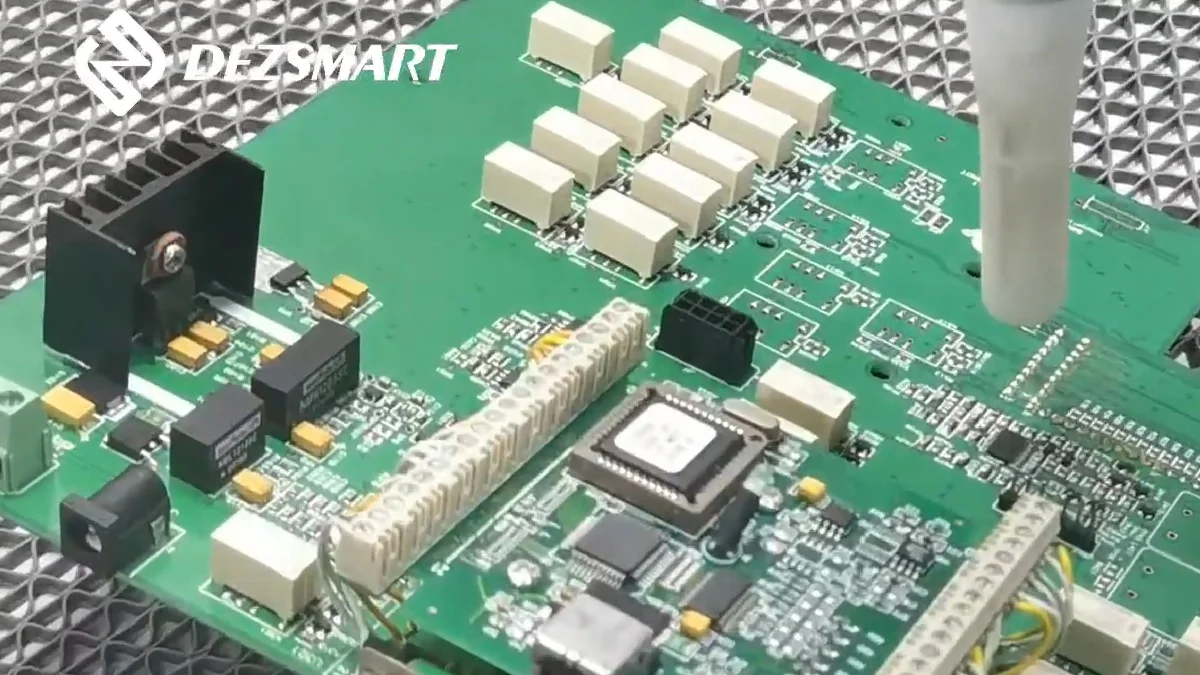
Determine the appropriate cleaning method based on the surface condition of the assembled PCB, taking into account factors such as the chemical nature of residues, component standoff height, shadowed areas, connectors, labels, coatings, and moisture-sensitive materials.
Table of Contents
Why Cleaning Before Conformal Coating Matters
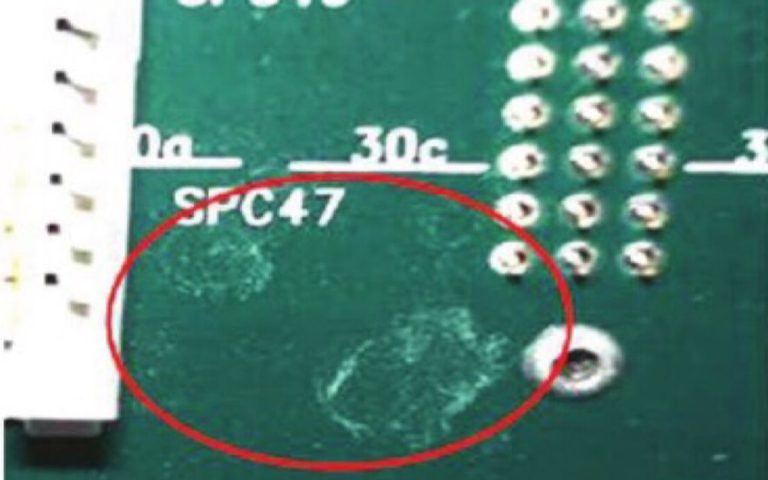
Conformal coating must bond to the PCBA surface. Flux residue, oil, fingerprints, dust, adhesive and remaining cleaning agent can interfere with wetting, curing and adhesion.
Surfaces should be free from moisture, dirt, wax, grease, flux residue and other contaminants before coating.
Contamination beneath the coating is not removed or neutralised by covering it. Depending on its chemistry and the operating environment, it may contribute to:
Poor coating wetting
Local dewetting or fisheyes
Reduced adhesion
Delamination
Bubbles or voids around contaminated areas
Ionic leakage under humidity and electrical bias
Corrosion beneath the coating
Failure of coating, bonding or masking processes
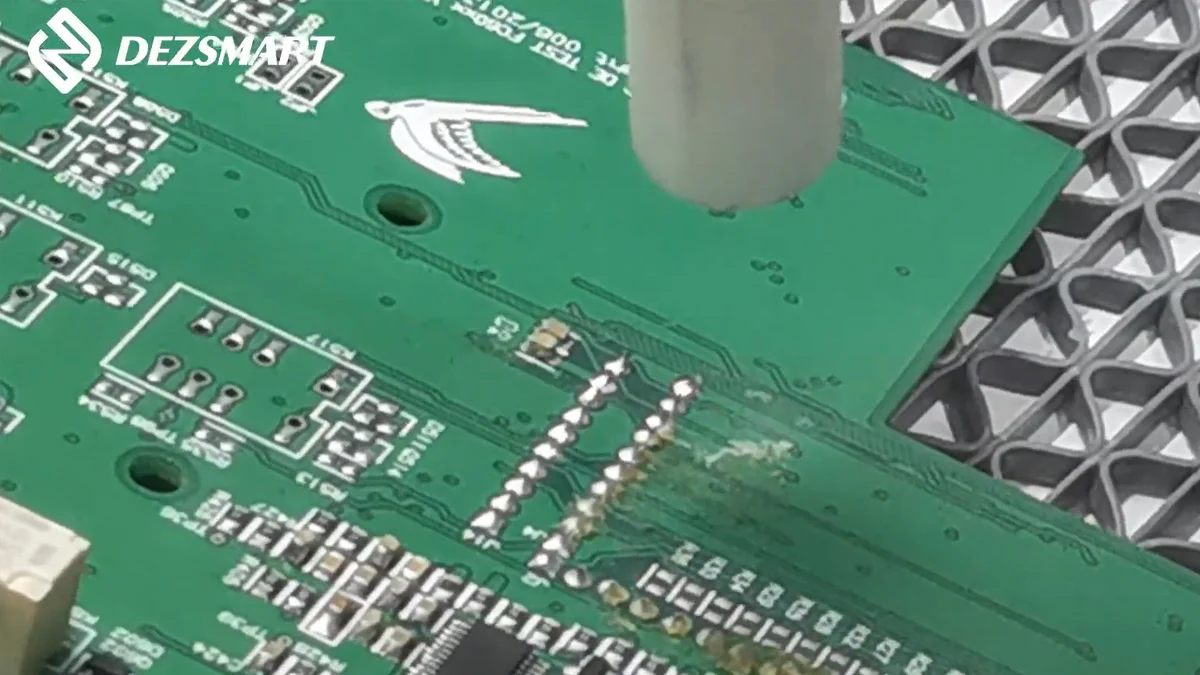
Some contamination is invisible. Visual inspection can identify particles and visible flux, but it cannot establish the ionic cleanliness of an assembly. Potentially harmful ionic and non-ionic contamination may not be visible, even under magnification.
Build Cleaning Families for High-Mix Production
High-mix production usually contains multiple PCB sizes, flux systems, soldering processes and component layouts. Creating a separate cleaning process for every part number is difficult to control, while using one recipe for everything may produce incomplete cleaning or material damage.
Process-family factor
Why it matters
Flux or solder-paste type
Determines which cleaning chemistry can dissolve or separate the residue
Reflow, wave, selective or manual soldering
Changes the amount, location and thermal condition of the residue
PCBA dimensions and component height
Determines basket loading and spray access
BGA, QFN and other low-standoff packages
Restrict liquid exchange beneath components
Connectors, switches and open components
May trap liquid or impose washing and drying restrictions
Labels, adhesives, plastics and coatings
Require chemical and temperature compatibility
Visible residue or defined ionic limit
Determines how the cleaning result must be verified
Conformal-coating material
Determines required surface condition and compatibility
Batch quantity and product-change frequency
Determines whether offline batch or continuous inline cleaning is appropriate
Assemblies may share one recipe only when the cleaning chemistry, process parameters and drying conditions are compatible with every product in that family.
Use a Complete Wash, Rinse and Dry Process
For full-board cleaning before conformal coating, the normal process is:
The wash stage combines suitable cleaning chemistry with temperature, time and mechanical spray action.
The chemistry must be selected according to the actual flux or contamination. Do not specify acetone, IPA, alkaline cleaner, acid or another chemical solely from the appearance of the residue.
For example, a cleaner that removes one no-clean flux may be ineffective against another formulation. Excessive heat exposure during soldering can also harden or polymerise residue, changing the required cleaning window.
Run sample tests with the actual PCBA, flux and cleaning agent before establishing the production recipe.
DI-Water Rinsing Removes Dissolved Contamination
DI water is the rinse medium, not the primary cleaning stage.
After chemical washing has dissolved or separated the contamination, the DI-water rinse removes:
Dissolved flux material
Ionic contamination released during washing
Remaining cleaning agent
Suspended process contamination
Insufficient rinsing can leave cleaning chemistry or redistributed contamination on the PCBA. Control the rinse process through water quality, flow, temperature, coverage and replacement or discharge conditions.
Drying Must Reach Retained Moisture
A surface that looks dry may still contain water beneath components, inside connectors or between closely spaced structures.
Drying conditions must consider:
Component temperature limits
Labels and adhesives
Connectors and switches
BGA and QFN standoff
Board thickness and thermal mass
Basket loading density
Time between cleaning and coating
There is no universal drying temperature for every high-mix PCBA. Establish the temperature and time from the most sensitive material in each cleaning family, then verify that retained moisture has been removed.
Prevent Recontamination Before Coating
After cleaning, handle PCBAs with clean gloves and controlled fixtures. Do not return cleaned boards to contaminated trays, worktops or packaging.
If coating cannot begin immediately, define the permitted waiting time and storage condition. HumiSeal guidance recommends controlled storage when cleaned assemblies cannot proceed directly to coating.
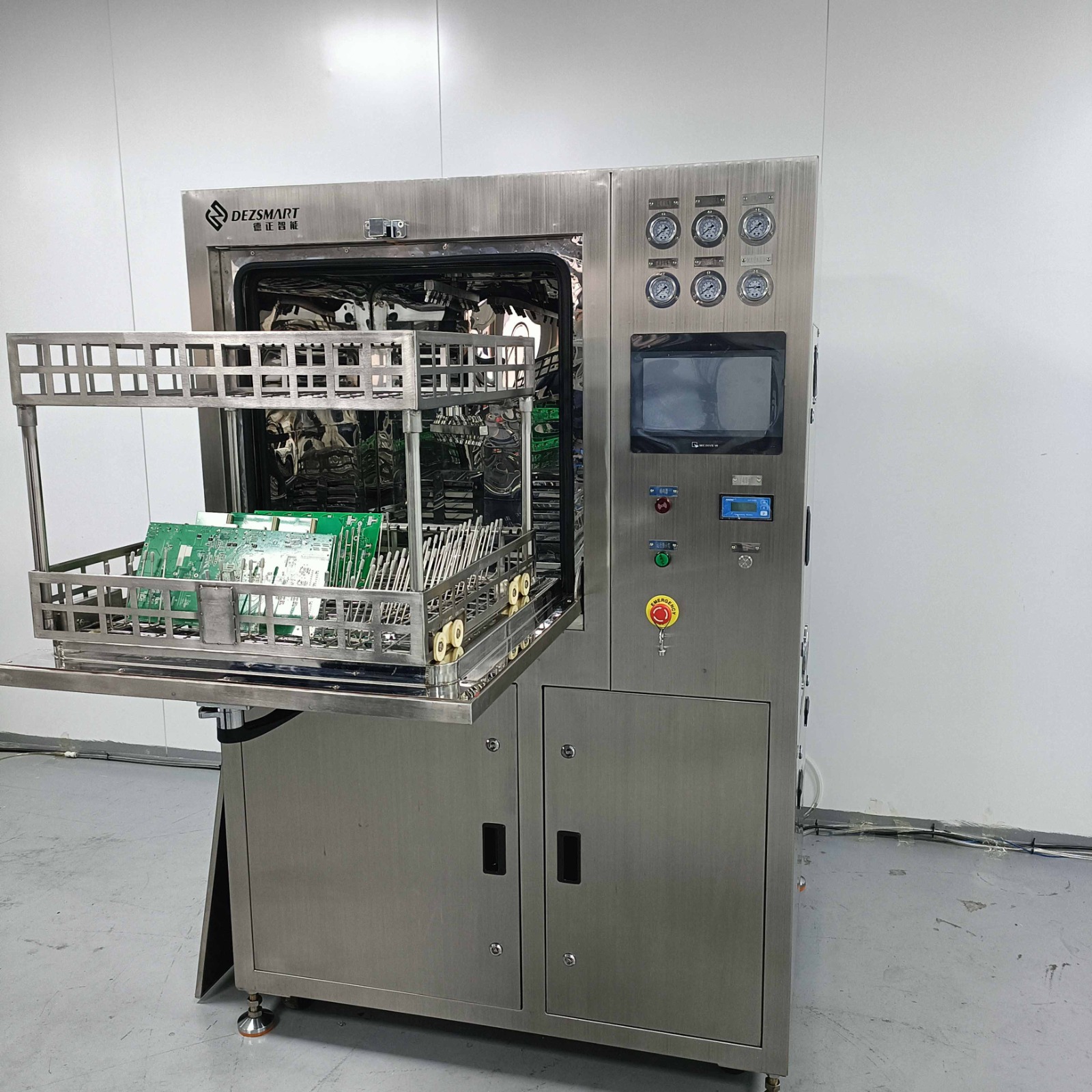
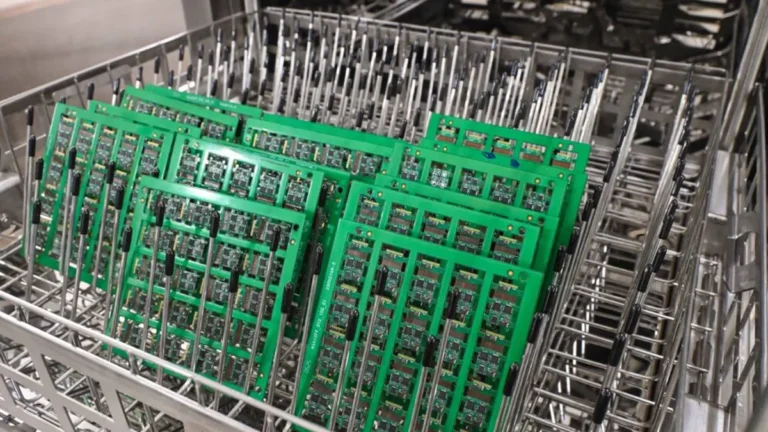
Different PCBAs can be loaded into its two-level basket and processed using validated settings for their cleaning family. Chemical spray washing, DI-water rinsing and hot-air drying take place inside the same enclosed SUS304 chamber.
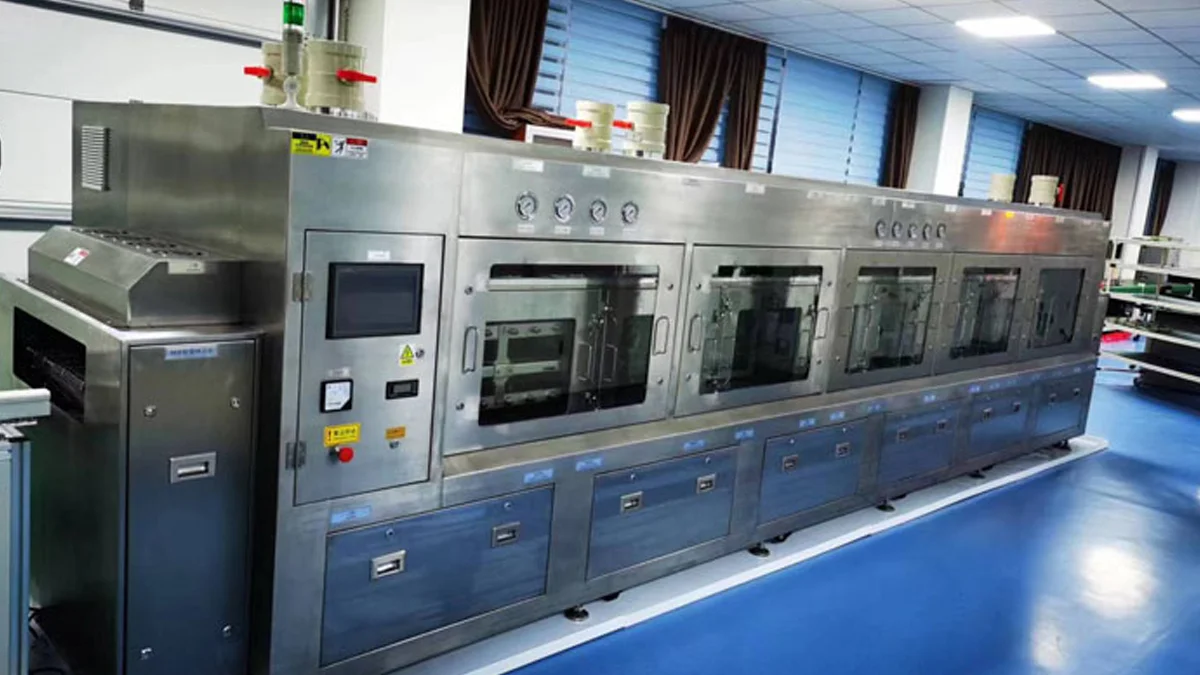
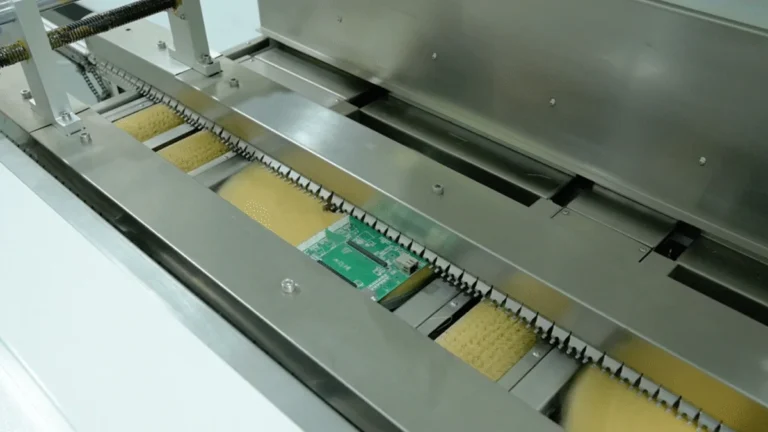
The C1360 conveys assemblies through chemical spray washing, DI-water rinsing and two hot-air drying zones. It supports product widths from 50–500 mm on a 500 mm-wide mesh conveyor, with adjustable conveyor speed from 0–1000 mm/min.
The C1360 is more suitable when:
PCBAs arrive continuously from soldering
Product families repeat in longer production runs
The cleaning process uses compatible chemistry
Automatic infeed and outfeed are required
Production volume justifies a dedicated inline process
For frequent small batches and regular model changes, the offline DEZ-C743 normally provides more practical loading and recipe control.
When Brush or Dry Ice Cleaning Fits
A single-sided brush cleaner should not be the default choice when the complete PCBA will receive conformal coating.
The DEZ-C758 and DEZ-C760 are appropriate when visible flux marks or loose solder balls are concentrated on one accessible solder side. Their brushes cannot provide complete access beneath densely assembled components, and they do not include a full-board DI-water rinsing process.
The DEZ-C7310 dry ice cleaning machine can be evaluated when compatible flux residue is confined to an accessible rework area and the PCBA should not enter a water-based process.
Dry ice cleaning does not provide the dissolution and DI-water rinsing mechanism used for full-board ionic-contamination control. Use it for a validated local application, not as an automatic substitute for complete pre-coating cleaning.
Validate Cleanliness Before Coating
A high-mix cleaning process needs both process control and product verification.
Verification
What it checks
Visual inspection under suitable magnification
Visible flux, particles, solder balls, water marks and staining
ROSE testing
Bulk ionic-contamination screening under the specified extraction method
Ion chromatography
Identity and quantity of selected ionic species
SIR testing
Electrical behaviour under controlled humidity, temperature and bias
Coating wetting and adhesion test
Compatibility between the cleaned surface and selected coating
Dryness verification
Moisture retained beneath components, inside connectors or in restricted areas
Do not create one universal ionic limit for all products. The acceptance method and limit must come from the customer requirement, product risk, coating process or applicable manufacturing standard.
Should High-Mix PCBAs Use Ultrasonic Cleaning?
Not automatically. Ultrasonic suitability depends on component construction, frequency, power, exposure time, chemistry and fixture arrangement. It should not be selected only because a board is multilayer, HDI, thick or densely assembled.
Send PCBAs for Cleaning and Coating Evaluation
To establish a high-mix cleaning process, Contact DEZ. We can test representative assemblies, determine whether offline batch or inline cleaning fits the production mix, and develop the equipment configuration and cleaning cycle for validation.