Every completed DEZ machine is checked against its confirmed model, functions and project configuration before shipment.
Testing covers mechanical assembly, electrical controls, operating functions, utilities and safety functions. Customer samples may also be processed when sample testing is included in the project.
Configuration Review
Testing begins by comparing the completed machine with the confirmed order.
DEZ team checks the model, workpiece capacity, processing functions, voltage, conveyor direction, optional features and custom requirements. This prevents a correctly operating machine from being shipped with the wrong project configuration.
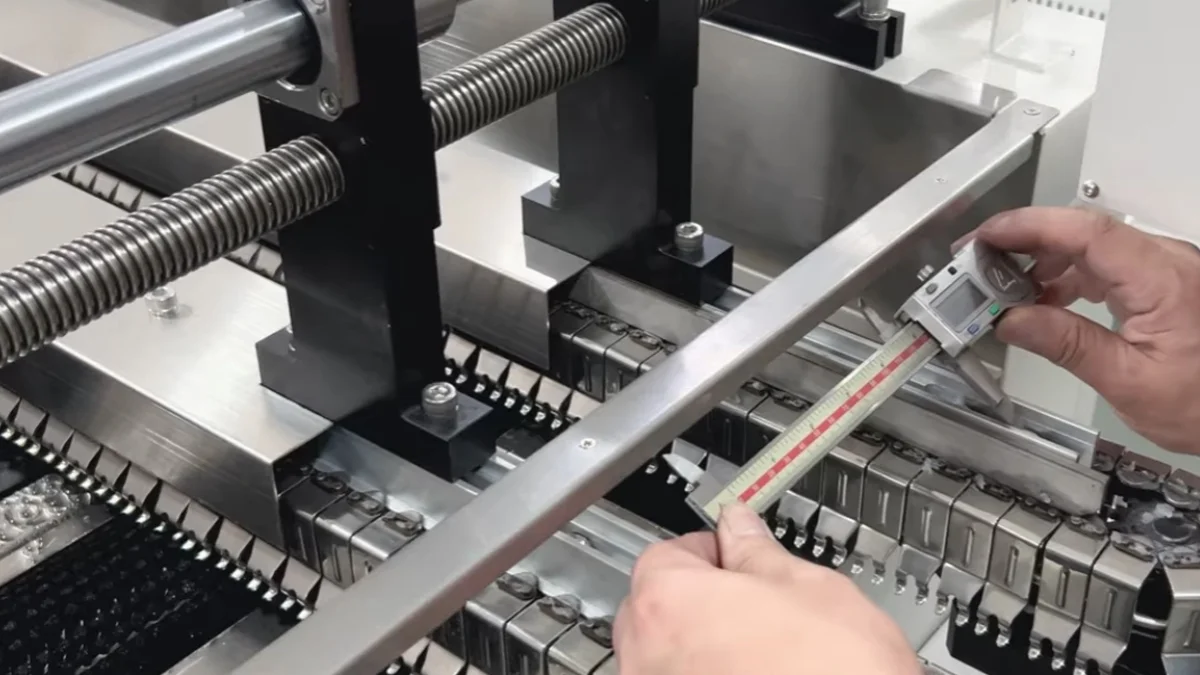
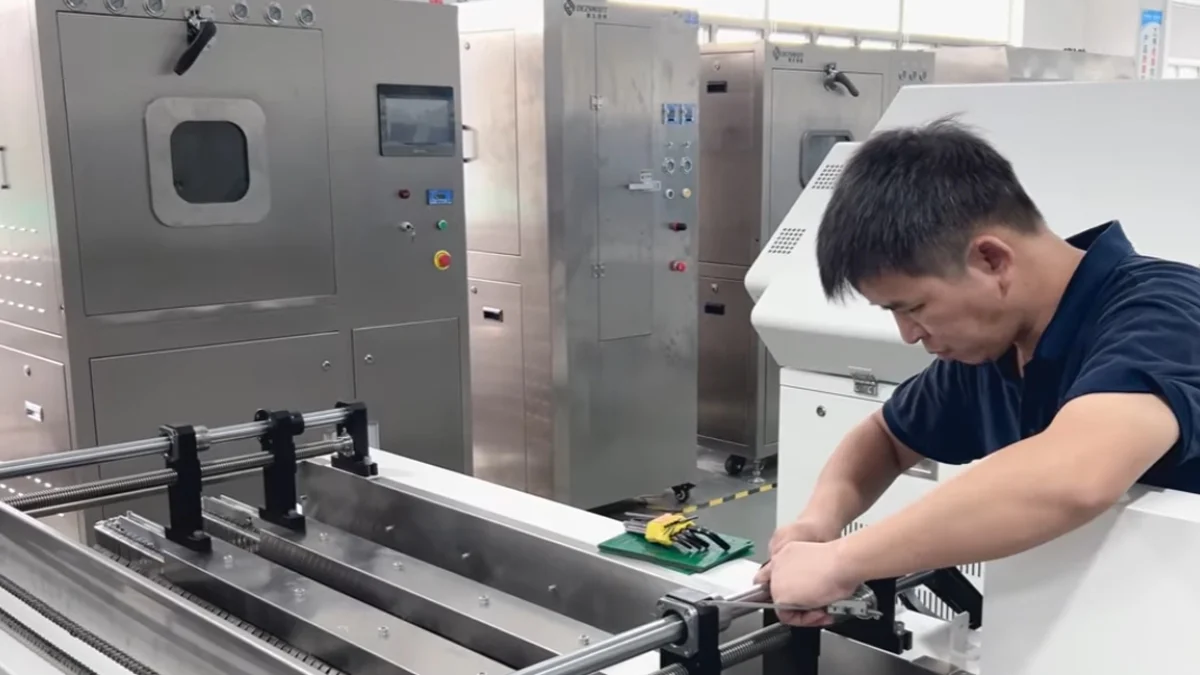
Mechanical Assembly Inspection
The machine frame, covers, doors, processing modules and moving assemblies are checked after installation.
Conveyors, baskets, spray arms, soldering modules, heating sections and other components are inspected according to the machine type. Fasteners, access panels and adjustable parts are also checked before operation.
Electrical and Control-System Checks
Electrical cabinets, wiring, grounding, PLCs, HMIs, sensors, switches and safety circuits are checked against the confirmed configuration.
The machine is powered on to verify control functions, alarms, parameter settings and communication between electrical and mechanical components.
Utility Checks
The required utilities depend on the equipment.
Cleaning machines may require compressed air, DI water, drainage and exhaust. Selective soldering machines may require compressed air, nitrogen and exhaust. Reflow ovens require the specified electrical supply and exhaust connection.
Connections, pressure conditions and operating status are checked before the process test begins.
PCB and PCBA Cleaning Machine Tests
Cleaning equipment is tested according to its actual process.
Brush cleaning machines are checked for PCB transfer, brush movement, cleaning-agent application and drying airflow.
Batch cleaning machines are checked for basket loading, spray circulation, filtration, washing, DI-water rinsing, drainage and hot-air drying.
Inline water-based machines are checked across the washing, rinsing, drying and conveyor sections. Pipe connections and liquid circuits are inspected for leakage during operation.
Selective Soldering Machine Tests
Selective soldering machines are checked for PCB positioning, flux application, preheating, solder-nozzle movement and programmed soldering paths.
The solder pot, pump, nozzle, motion system and applicable nitrogen functions are operated according to the confirmed configuration.
When customer PCB data or samples are available, solder-joint coordinates and processing paths can be tested before shipment.
Reflow Oven Tests
Reflow ovens are checked for zone heating, conveyor movement, width adjustment, cooling and temperature control.
The heating zones are monitored as they approach the set temperatures. Conveyor speed and transfer stability are checked across the complete machine.
Temperature profiling can be performed to confirm how an instrumented PCB responds to the initial oven settings. The final production profile must still be developed around the customer’s solder paste, PCB thermal mass and component limits.
X-Ray and BGA Rework Equipment Tests
X-ray inspection systems are checked for stage movement, image acquisition, magnification controls and configured operating functions.
BGA rework stations are checked for heating-zone control, motion, optical alignment and programmable temperature-profile operation.
Applicable interlocks and safety functions are checked according to the machine configuration.
SMT Handling Equipment Tests
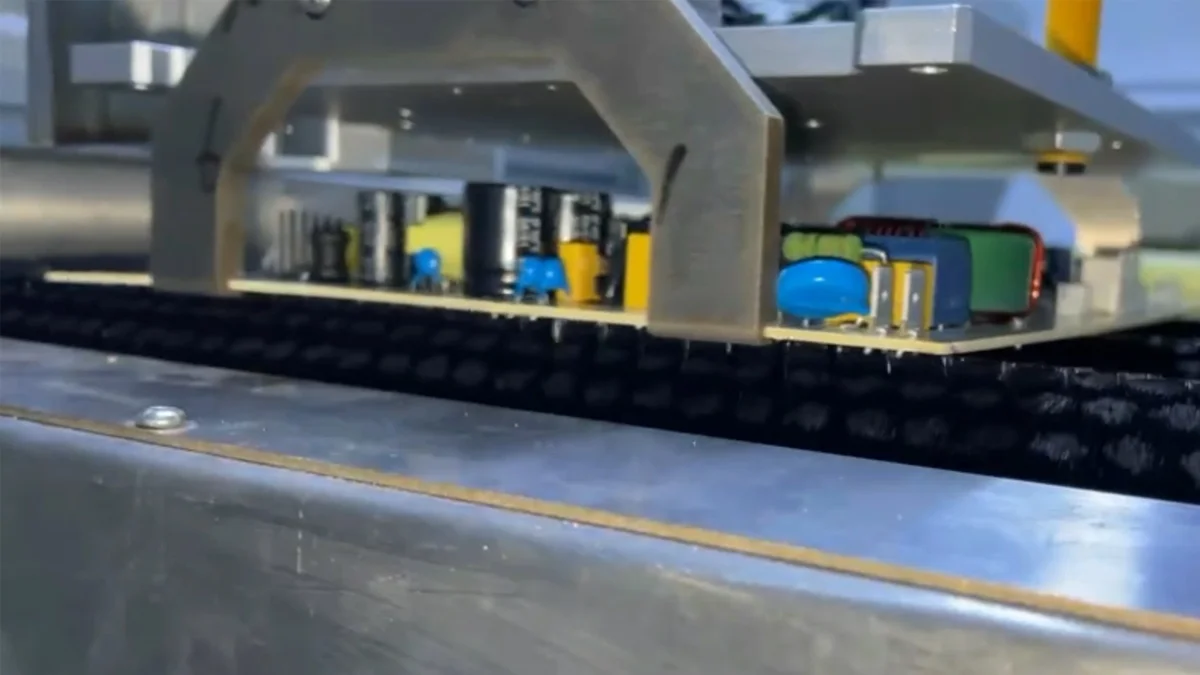
PCB loaders, unloaders, conveyors and buffers are checked using the confirmed transfer direction, line height and PCB range.
Testing covers width adjustment, board detection, conveyor movement, lifting or buffering actions and transfer between operating positions.
Software and Recipe Checks
The HMI is checked for operating controls, parameter entry, recipe storage, alarms and manual functions.
Custom software functions and machine interfaces are tested according to the agreed project requirements.
Customer Sample Testing
Customer samples can be used to check cleaning, soldering, inspection or transfer before shipment.
The sample dimensions, contamination, soldering data or inspection target should be provided before testing. The process settings and observed results can then be recorded for the project.
Free sample testing is available for qualified equipment projects.
Final Inspection
After functional testing, the machine is reviewed for its final configuration, appearance, accessories and operating condition.
Required parts, tools and project documents are checked before packing. Completed machines are then prepared for the confirmed shipment method and destination.
What Customers Should Confirm Before Shipment
Customers should confirm the machine configuration, voltage, workpiece dimensions, conveyor direction, optional functions and delivery information.
For sample testing, send the PCB, PCBA, stencil, fixture or component together with the required process result.
Request Equipment Testing
Send your workpiece specifications and process requirements to arrange equipment evaluation or sample testing before ordering.