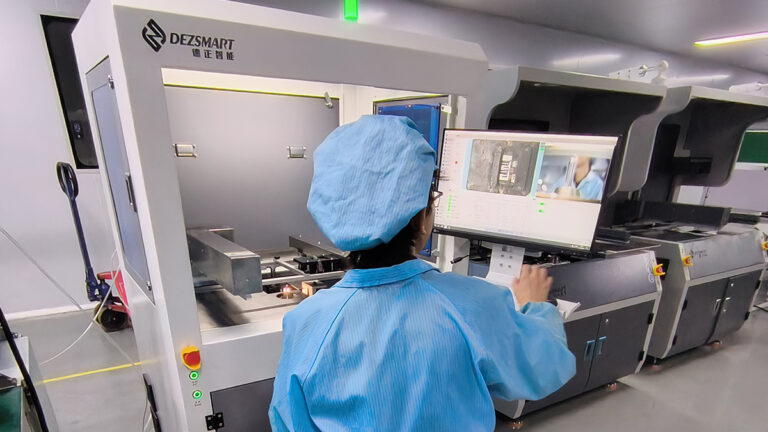
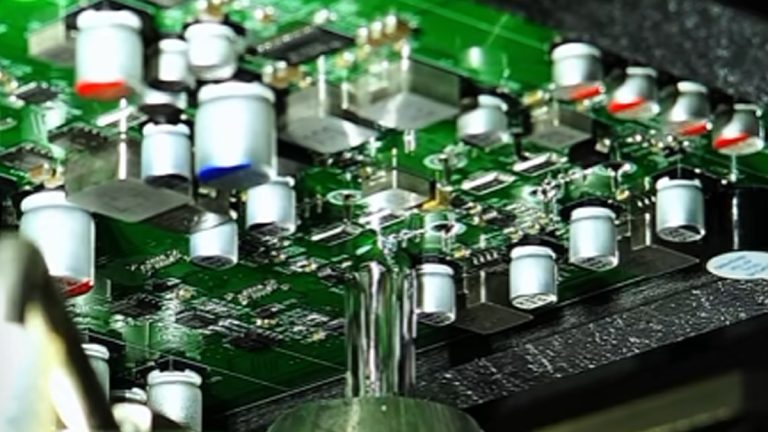
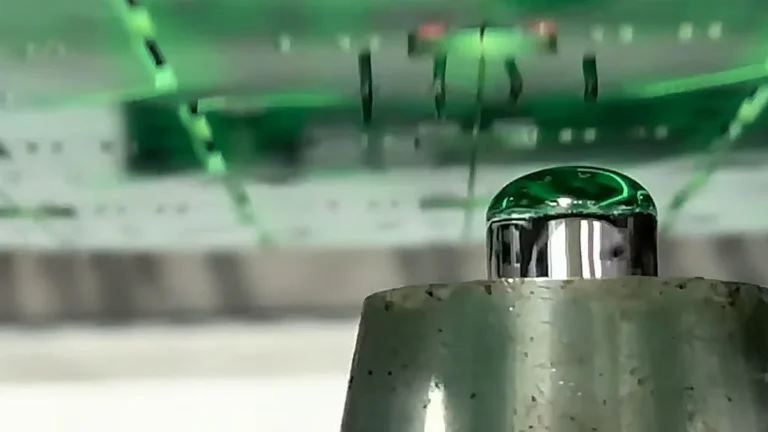
Nitrogen in selective soldering creates a local low-oxygen atmosphere around the mini-wave nozzle and solder joint. It limits oxidation of the molten solder, supports wetting and drainage, reduces dross and helps maintain a stable solder wave.
Because selective soldering protects only the programmed soldering area, its nitrogen consumption is normally lower than a process that must inert a much larger soldering zone. The actual requirement still depends on the machine, nozzle quantity, enclosure and target oxygen level.
Table of Contents
Why Oxygen Affects the Soldering Process
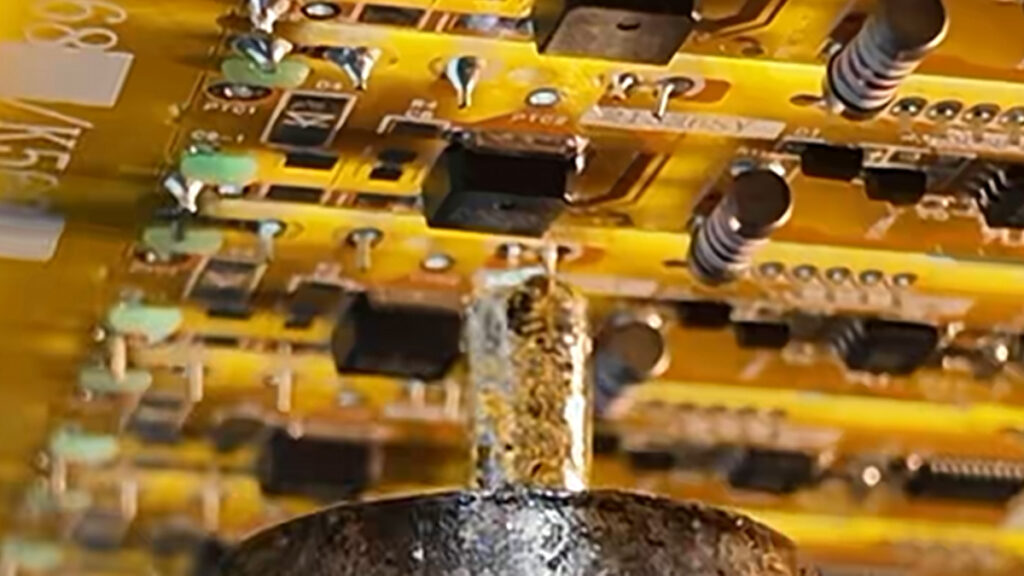
Molten solder reacts quickly with oxygen. An oxide film can form on the solder-wave surface, the nozzle and the solder as it separates from the joint.
This oxide film interferes with wetting and solder drainage. The result may be insufficient hole fill, icicles, solder flags or bridging between adjacent pins.
Flux removes existing oxide from the pad and component lead, but its activity is limited by time and temperature. A nitrogen atmosphere reduces new oxidation during solder contact, giving the flux a wider and more stable process window.
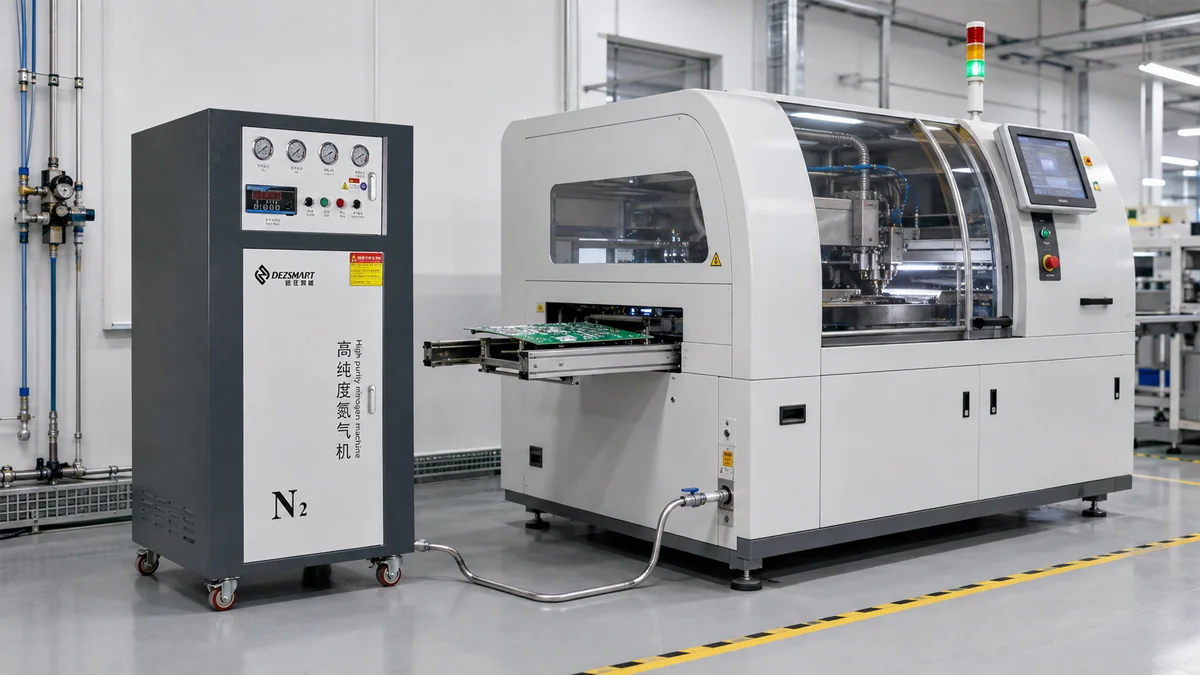
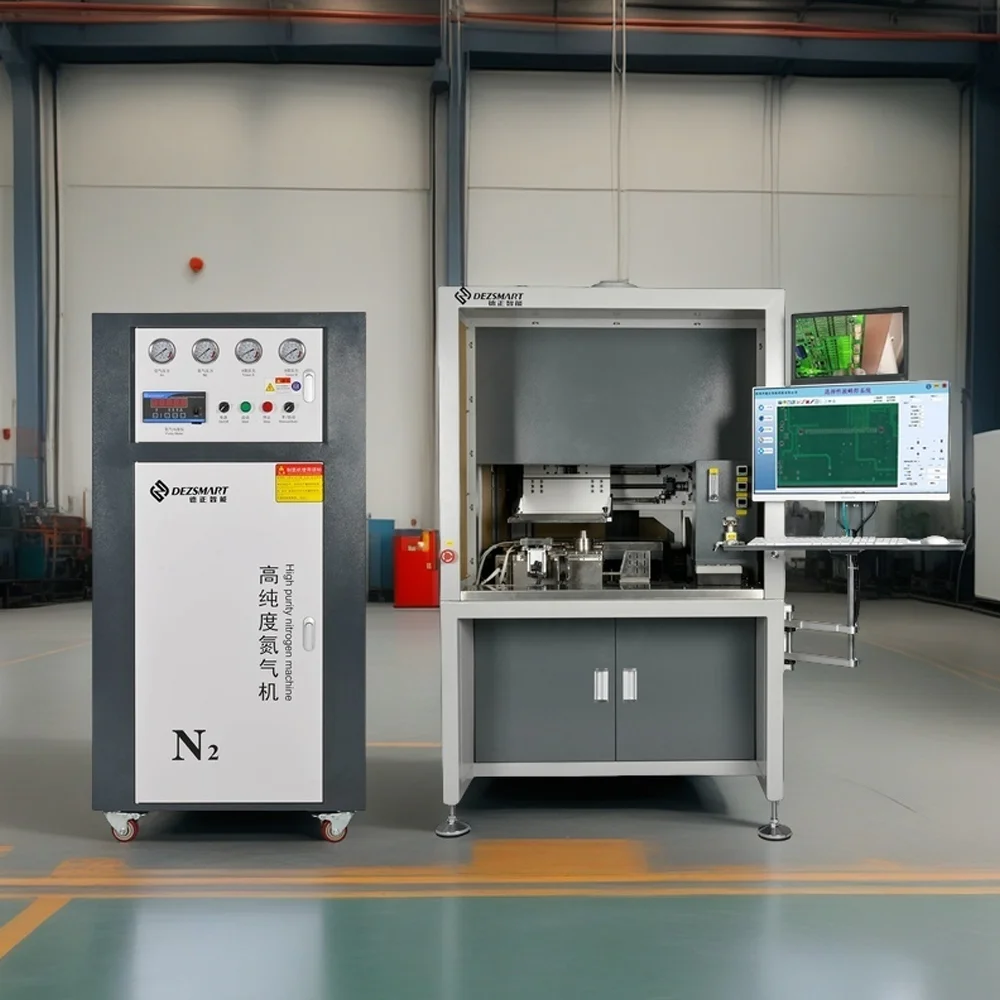
This is why current DEZ selective soldering machines use nitrogen-assisted mini-wave soldering around the programmed THT joints.
Better Wetting and Hole Fill
Nitrogen does not improve soldering by directly changing the solder alloy. It improves the conditions in which the solder and flux work.
With less oxide forming on the molten solder surface, solder can wet the pad and component lead more consistently. This can improve capillary flow through plated holes and help achieve the required hole fill, especially with lead-free alloys, large connectors or PCBAs with greater thermal mass.
Nitrogen cannot compensate for a contaminated pad, poor component solderability, an unsuitable nozzle or insufficient contact time. These conditions must still be corrected through the soldering programme and material selection.
More Stable Drainage and Less Bridging
The point where the PCBA leaves the mini-wave is particularly important. Solder must drain cleanly away from the joint without leaving a bridge or icicle.
Oxide on the solder surface can disturb this separation. By displacing oxygen around the nozzle and separation area, nitrogen supports cleaner solder drainage and can reduce bridging, spikes and solder flags.
Fine-pitch connectors can benefit from this wider process window, but withdrawal direction, nozzle size, solder height and movement speed remain equally important.
Less Dross and Better Nozzle Protection
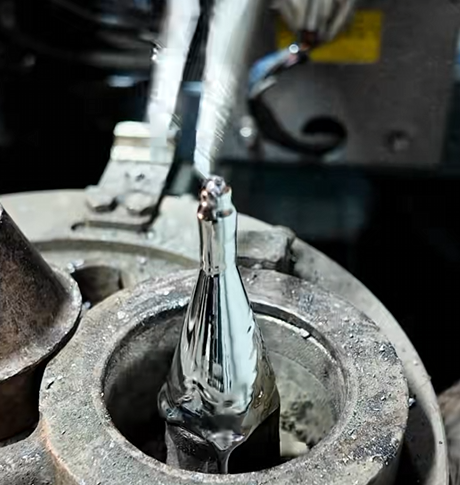
Solder dross forms when molten solder oxidizes. Excessive dross consumes solder, contaminates the solder-pot surface and increases maintenance around the pump and nozzle.
Nitrogen limits contact between oxygen and the molten solder. This reduces dross formation and helps the mini-wave maintain a cleaner, more stable surface.
The nozzle also benefits from reduced oxidation. Oxide buildup can interfere with nozzle wetting, change the wave shape and eventually reduce the effective solder height.
Depending on its size, shape and supplier, a replacement selective soldering nozzle may cost approximately US$100–300. Most factories also keep several nozzle sizes for different PCBAs. Protecting the nozzles therefore reduces both replacement expense and the risk of production interruption.
Nitrogen does not make the nozzle maintenance-free. Operators must still inspect the opening, remove deposits, maintain nozzle wetting and confirm the wave height.
Heated Nitrogen and Flux Preheating
Many selective soldering systems heat the nitrogen before it reaches the nozzle area. Heated nitrogen prevents cold gas from cooling the mini-wave and can provide additional local heat to the fluxed soldering area.
Preheating helps evaporate flux solvent before the PCBA contacts molten solder. If excessive liquid flux, solvent or moisture reaches the mini-wave, it can generate solder spatter and disturb the wave.
Heated nitrogen can reduce this risk by supporting local preheating, but it does not guarantee that spattering will disappear. Flux quantity, board temperature, preheating time and moisture must still be controlled.
For PCBAs with high thermal mass, dedicated infrared or convection preheating may still be required.
Nitrogen Parameters That Matter
A high flow rate alone does not produce a stable nitrogen atmosphere. Purity, flow, pressure, temperature and leakage must work together.
Process parameter
Why it matters
If it is unstable
Nitrogen purity
Determines how much oxygen enters with the supplied gas
More oxidation and dross may form
Flow rate
Displaces air around the nozzle and soldering area
Low flow allows surrounding air to enter
Inlet pressure
Maintains the required gas supply through the machine
Pressure loss can change the protective atmosphere
Nitrogen temperature
Prevents cold gas from cooling the solder wave
Unheated gas may reduce local thermal stability
Pipe and enclosure sealing
Prevents unnecessary mixing with factory air
Leakage raises oxygen content and gas consumption
The purity stated by the nitrogen source is not always the oxygen condition at the solder joint. Nitrogen mixes with surrounding air as it leaves the nozzle, so the effective atmosphere also depends on nozzle design, flow direction, enclosure and leakage.
For demanding applications, oxygen should be evaluated close to the actual soldering area rather than relying only on the purity displayed by the nitrogen generator.
Nitrogen Requirements for a DEZ Selective Soldering Machine
Its current specification requires nitrogen purity above 99.998%, an inlet pressure of 3–4 bar and consumption of approximately 1–2 m³/h per operating nozzle.
These values apply to the H3500A configuration. Other machines may have different nozzle quantities, flow requirements or operating pressures, so nitrogen supply should be confirmed from the selected model rather than copied between machines.
Nitrogen Generator or Cylinders?
Nitrogen cylinders can be practical for occasional soldering, process trials or emergency backup. Regular production requires repeated cylinder ordering, storage and replacement, creating a risk of interruption when a cylinder becomes empty.
An on-site nitrogen generator produces nitrogen continuously from clean, dry compressed air. It is normally more practical when selective soldering machines operate frequently or across multiple shifts.
The DEZ-D59-2N SMT nitrogen generator provides a standard output of 3 Nm³/h, purity up to 99.999% and adjustable pressure from 0.1 to 0.65 MPa.
Before connecting it to a soldering machine, compare its output with the machine’s combined continuous and peak demand. Pipe losses, additional machines and future production expansion must also be considered.
Nitrogen Does Not Replace Process Control
Nitrogen widens the selective soldering process window, but it cannot correct an unsuitable solder alloy, excessive flux, poor preheating or an incorrectly selected nozzle.
Void or gas-pocket formation should not be treated as a nitrogen-only problem. Flux quantity, solvent evaporation, hole geometry, solderability, contact time and solder drainage must also be evaluated.
A stable process therefore combines the correct nitrogen atmosphere with controlled fluxing, preheating, solder temperature, wave height, contact time and withdrawal direction.
Configure the Nitrogen Supply for Your Process
Send DEZ your selective soldering machine model, number of solder pots and nozzles, required nitrogen purity, operating pressure, continuous consumption and daily working hours.