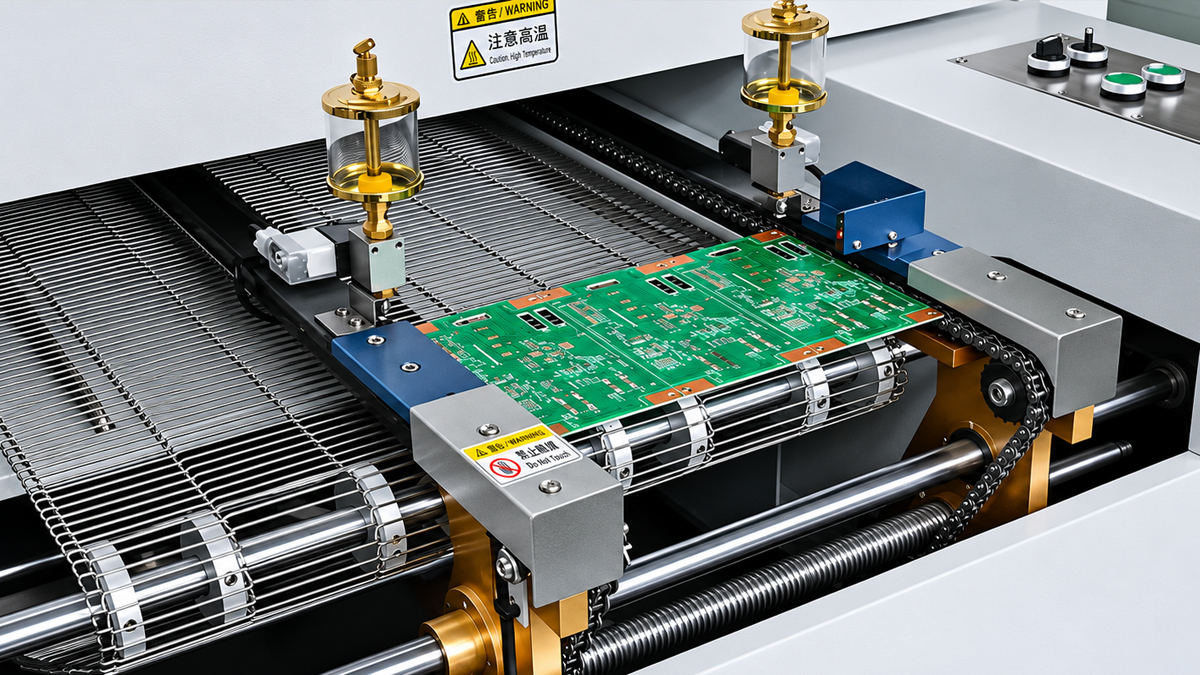
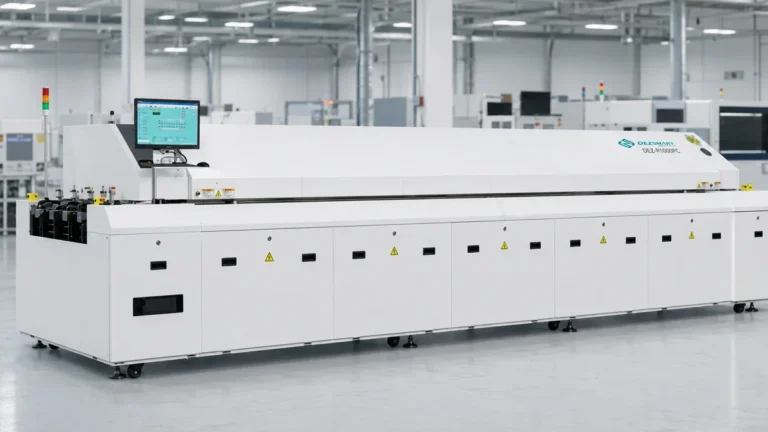
The main differences between an 8-zone and a 10-zone reflow oven are the available heating length and the number of independent temperature adjustments.
An 8-zone oven is normally sufficient for conventional PCB assemblies when it can produce the required solder-paste profile at the target production speed. A 10-zone oven provides more adjustment points and a longer heating path for PCBAs with large thermal-mass differences, narrow process windows or greater throughput requirements.
More zones do not automatically produce better solder joints. The correct oven is the one that can keep the hottest and coldest points of the actual PCBA inside the approved process window under full production loading.
Table of Contents
What Two Additional Zones Change
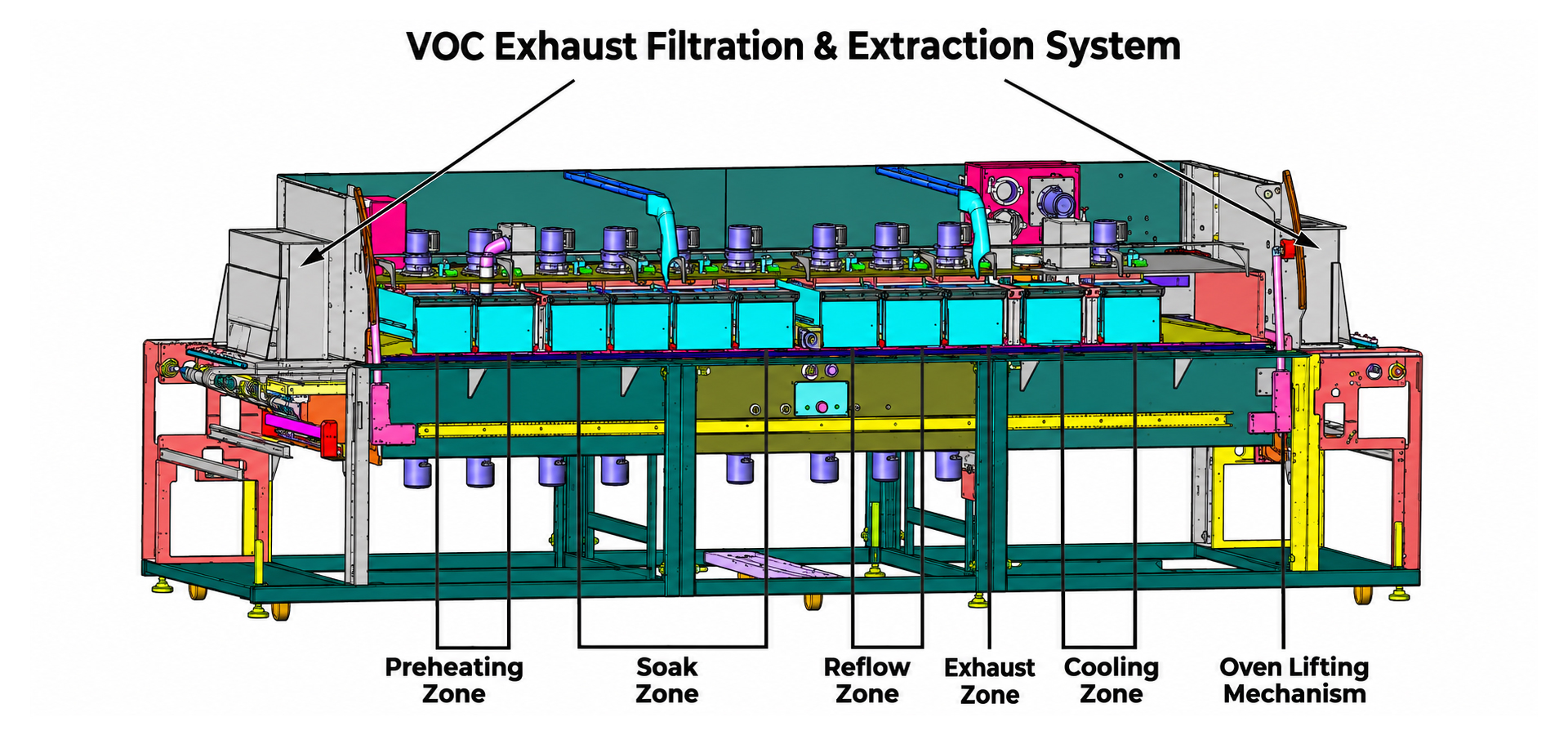
A reflow profile must control preheating, flux activation, time above liquidus, peak temperature and cooling.
With ten heating zones, the temperature rise can be divided into more independent steps. Process engineers have more room to slow the initial heating rate, balance the soak stage and control the transition into peak reflow without relying only on conveyor-speed changes.
The longer heating section also increases the available process time. This can help when a board contains large copper areas, shields, connectors or power components that heat more slowly than small passive components.
However, the number of zones is only one part of the oven design. Heating length, hot-air circulation, upper and lower heating, conveyor loading and cooling performance also affect the measured PCBA temperature.
DEZ 8-Zone and 10-Zone Reflow Ovens
The following comparison uses the current specifications of the DEZ-R800PC and DEZ-R1000PC.
Comparison
DEZ-R800PC
DEZ-R1000PC
Heating zones
8 upper + 8 lower
10 upper + 10 lower
Heating-section length
3140 mm
3890 mm
Cooling zones
2
2
Conveyor speed
0–1.8 m/min
0–2.0 m/min
Temperature-setting range
Room temperature to 320°C
Room temperature to 300°C
Online profiling
3 thermocouple channels
3 thermocouple channels
Typical selection direction
Conventional PCBAs with an achievable profile
Complex or thermally unbalanced PCBAs requiring more adjustment margin
The DEZ-R800PC 8-zone reflow oven provides a 3140 mm heating section with independent upper and lower hot-air zones.
The DEZ-R1000PC 10-zone reflow oven extends the heating section to 3890 mm. The additional length and control points give engineers more flexibility when balancing different heating rates across the assembly.
When an 8-Zone Reflow Oven Is Enough
An 8-zone oven is a practical choice when the PCBA reaches the required ramp rate, soak condition, time above liquidus and peak temperature without excessive temperature differences across the board.
Typical applications can include LED boards, appliance controllers, standard power supplies and other assemblies with moderate thermal mass. The product name alone does not determine suitability; the measured profile does.
An 8-zone oven can also process PCBAs containing BGA, QFN or 0201 components when the board construction, copper distribution and component layout allow a stable profile. These packages do not automatically require a 10-zone machine.
The shorter heating section can reduce equipment footprint and installed power requirements. It is therefore reasonable to select eight zones when additional heating length does not provide a measurable process benefit.
When a 10-Zone Oven Provides More Margin
A 10-zone oven becomes more useful when the hottest and coldest areas of the PCBA respond very differently to the same oven settings.
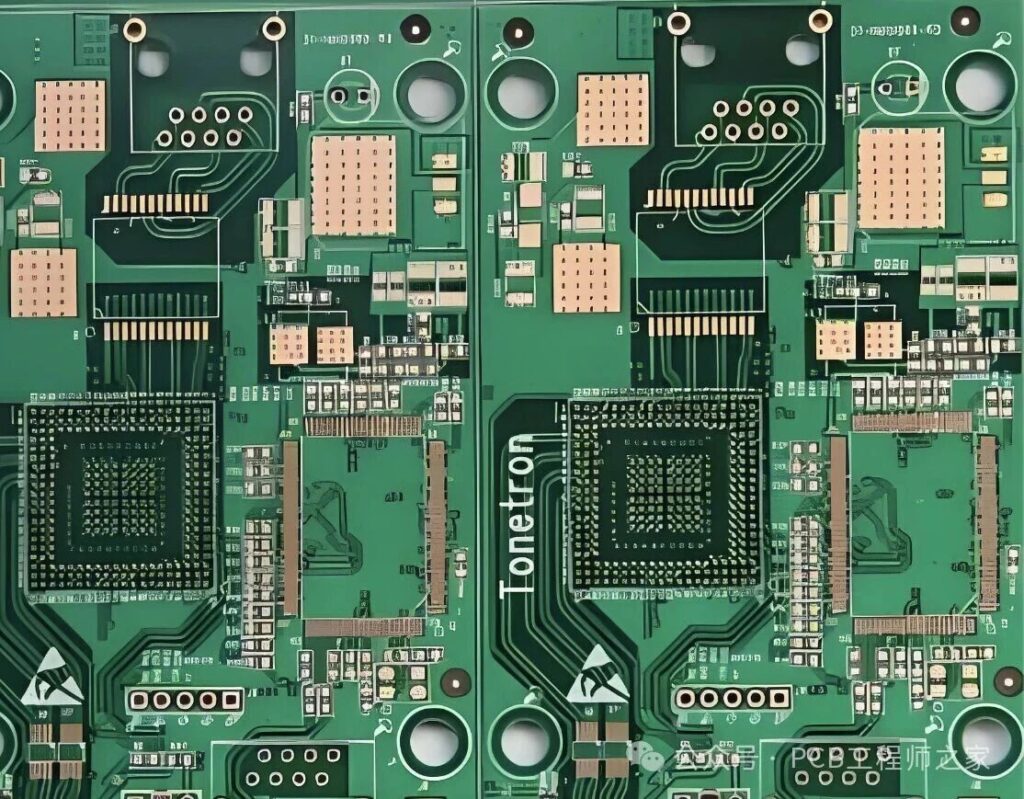
A small passive component can heat quickly while a large connector, shield, BGA package or heavy copper section remains below the required temperature. Increasing the entire oven temperature may overheat the faster area before the slower area reaches the correct reflow condition.
The additional zones allow the heating curve to be shaped more gradually. This is useful for thick multilayer boards, copper-heavy power electronics and mixed assemblies containing both fine-pitch components and high-thermal-mass parts.
A longer heating section may also support a higher production rate without forcing the PCBA through the required thermal stages too quickly. The actual conveyor speed must still be confirmed with the solder-paste specification and a measured profile.
Do BGA, QFN and 0201 Assemblies Require Ten Zones?
Not necessarily.
BGA and QFN solder joints are hidden beneath the package, while 0201 components have very little thermal mass. Combining these components with large connectors, shields or heavy copper areas can create a narrow thermal process window.
In that situation, a 10-zone oven provides more adjustment flexibility. But a relatively uniform board containing these packages may still run successfully through an 8-zone oven.
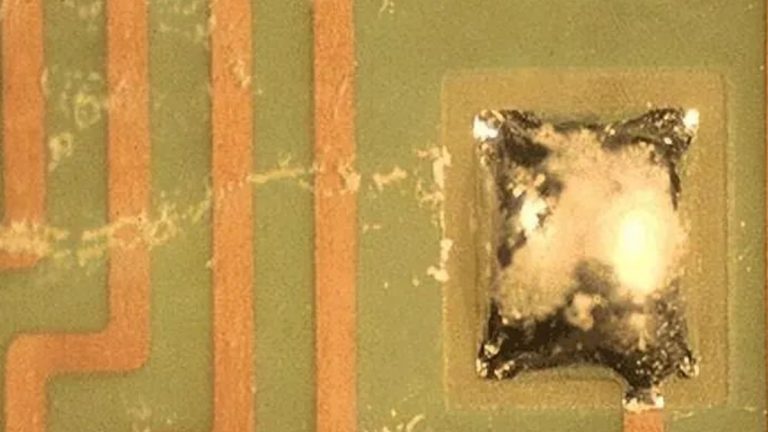
The decision should be based on measured temperature differences, not component names alone. Hidden solder joints should also be checked by suitable inspection after the profile has been established.
Why Zone Count Alone Is Not Enough
An oven with more zones can still produce an unsuitable profile if the airflow, loading or conveyor settings are incorrect.
Upper and lower hot-air circulation must transfer heat evenly across the usable conveyor width. Rail position, centre-board support, PCB spacing and the number of boards inside the oven can also change the heating response.
Cooling must be included in the evaluation. The solder joint is not complete at peak temperature; the PCBA must pass through a controlled cooling stage that produces the required solidification conditions without excessive thermal stress.
Temperature-control accuracy on the equipment display is also different from actual component temperature. The only reliable method is to attach thermocouples to representative points on the PCBA and measure the complete production profile.
Test the Most Difficult PCBA at Full Load
Do not perform the final comparison using only an empty oven or the easiest board in the product range.
Choose the assembly with the largest thermal difference. Place thermocouples near the smallest or fastest-heating component and around the largest component, heavy copper area or other expected cold point.
Run the test using the real carrier, conveyor speed, board spacing and maximum expected production loading. Compare:
heating rate;
temperature difference across the PCBA;
soak time;
time above liquidus;
peak temperature;
cooling rate;
visible and hidden soldering defects.
The measured curve must remain within the limits specified by the solder-paste supplier and the temperature restrictions of the components.
Choose an 8-zone reflow oven when the actual PCBA can reach a stable production profile with sufficient process margin. There is no need to purchase additional zones that do not improve the measured result.
Choose a 10-zone oven when the product has greater thermal-mass differences, requires more profile-adjustment points or must maintain the approved curve at a higher conveyor speed.
The correct question is not simply whether ten zones are better than eight. It is whether the heating length, airflow, conveyor speed and zone control can keep the complete PCBA inside the required thermal process window during real production.
Provide the PCB dimensions, thickness, layer count, copper weight, largest components, solder-paste datasheet, target output and current production-line layout.
DEZ can compare the required thermal profile with the available heating length, conveyor speed and cooling configuration before recommending an 8-zone or 10-zone reflow oven.