Speak Directly With Our Equipment Team
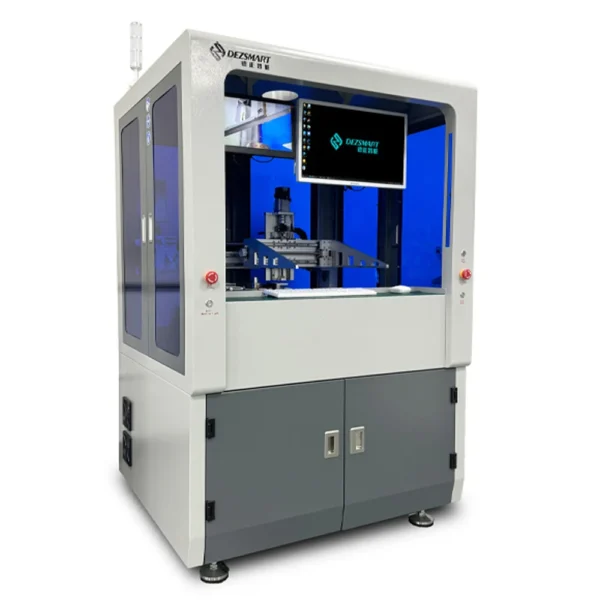
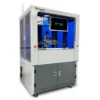
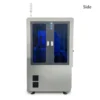
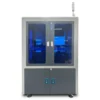
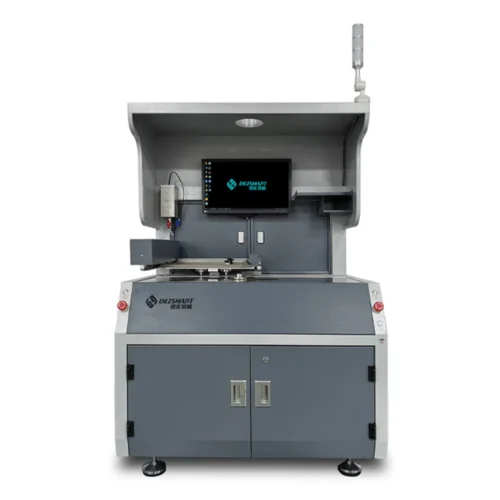
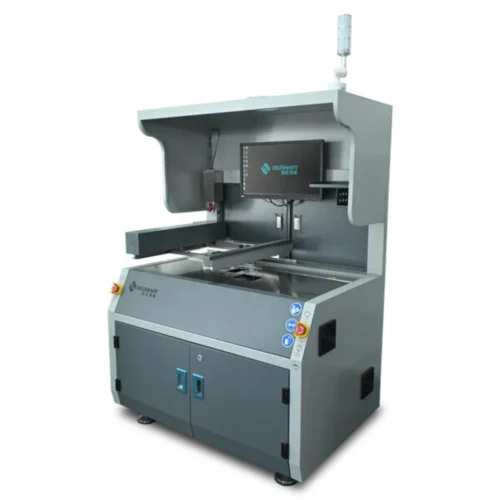
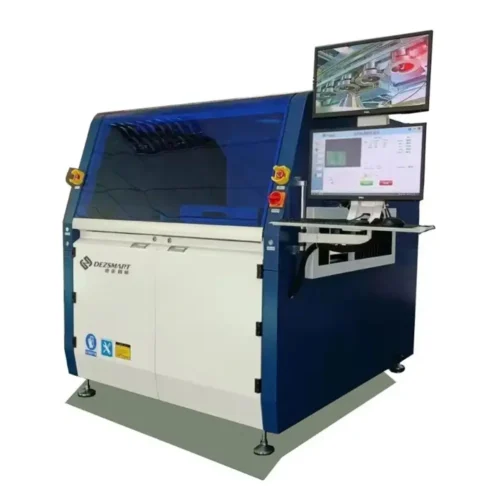
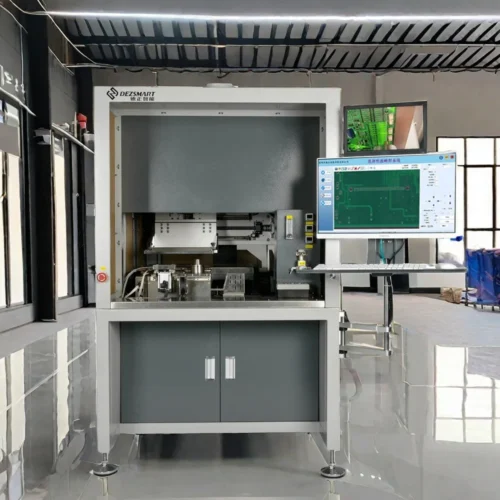
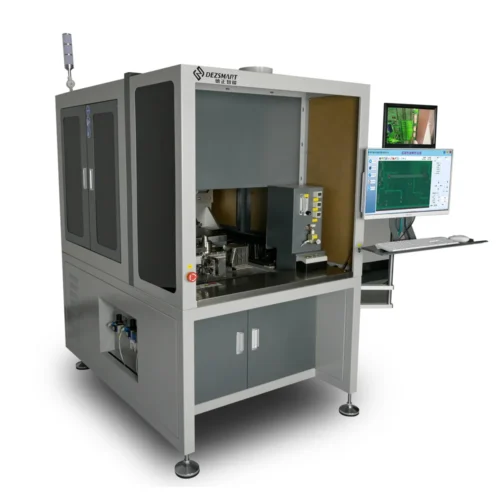
The DEZ-H3500A is a compact offline automatic selective soldering machine for through-hole components on mixed-technology PCBAs up to 350 × 410 mm.
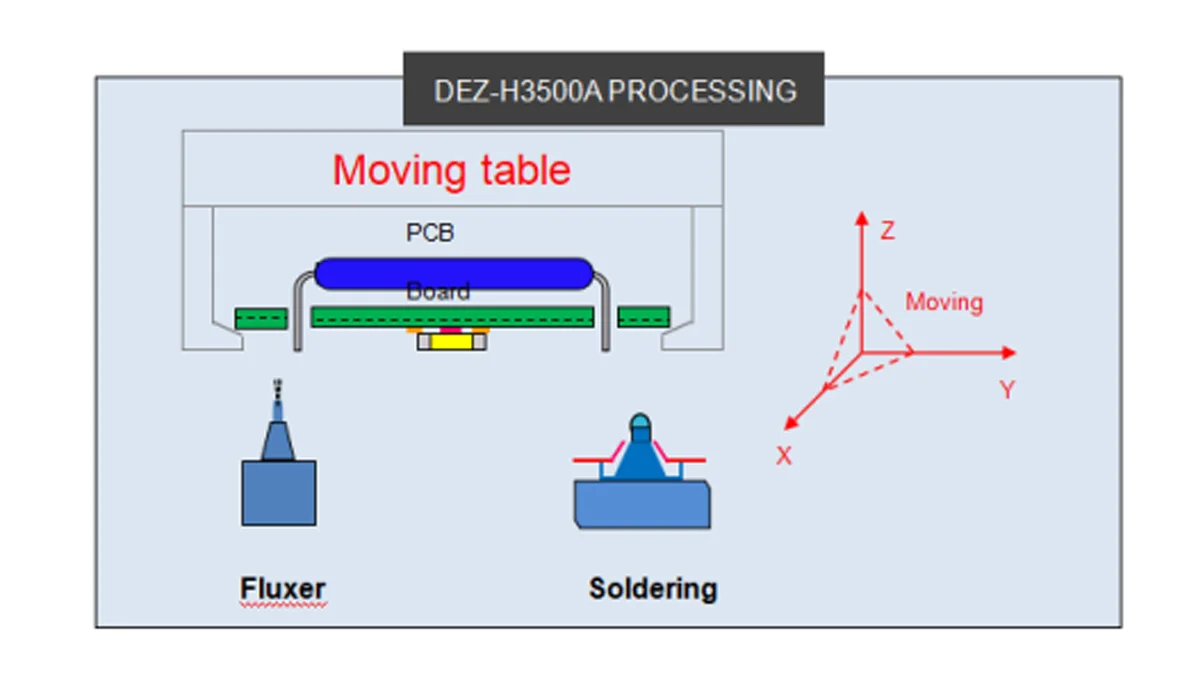
After manual loading, the machine automatically applies flux and moves every programmed THT joint across a nitrogen-assisted mini-wave. Soldering paths, nozzle height, movement speed, solder temperature and contact time are saved by product, allowing the same process to be repeated across the complete production batch.
The H3500A is suitable for manufacturers replacing inconsistent hand soldering or adding flexible THT soldering capacity without installing an inline selective soldering system. Suitable for customers requiring high-mix, low-volume, and larger-sized PCBs.
Hand soldering quality depends on the operator’s technique, solder quantity, iron temperature and contact time. Variations between operators or shifts can produce insufficient hole fill, excess solder, bridging, cold joints and damaged pads.
The H3500A controls the movement path, nozzle height, wave contact time, solder temperature and withdrawal direction for every programmed joint. Once the process is confirmed, the same parameters are applied to each PCBA.
Flux and solder are delivered only to the required through-hole joints. The complete underside of the board does not pass across a conventional solder wave, allowing THT connectors and components to be soldered close to previously reflowed SMD packages.

| Process | Function |
|---|---|
| Manual loading | The operator places the PCBA or carrier on the XYZ platform |
| Program selection | The machine loads the saved soldering path and process parameters |
| Selective fluxing | The jet valve applies flux to the programmed THT soldering areas |
| Position transfer | The XYZ platform moves the PCBA from fluxing to the soldering position |
| Selective soldering | Each joint moves across the nitrogen-assisted mini-wave |
| Process monitoring | The operator observes the soldering process and operating parameters |
| Manual unloading | The completed PCBA is removed for inspection or the next process |
| Specification | DEZ-H3500A |
|---|---|
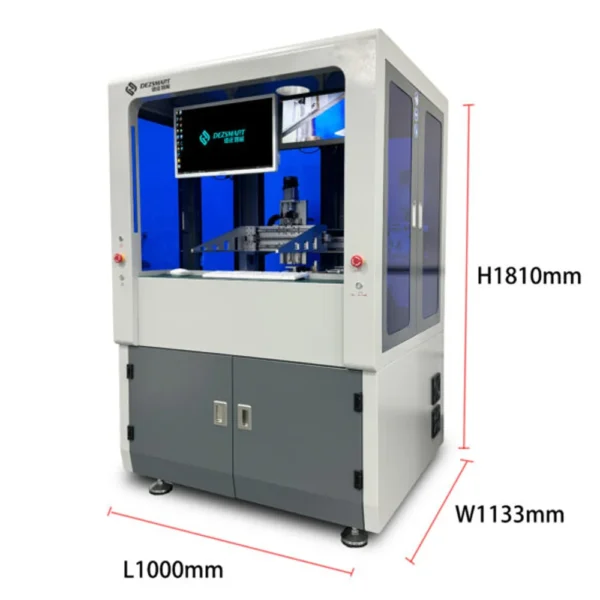
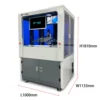
| Machine Dimensions | L1000 × W1133 × H1810 mm |
| Total Power | 3 kW |
| Operating Power | Approximately 1 kW |
| Power Supply | AC 220 V, 50 Hz |
| Net Weight | 380 kg |
| Maximum Soldering Area | L350 × W410 mm; custom sizes available |
| PCB Thickness | 0.2–6 mm |
| Minimum PCB Edge | ≥3 mm |
| Loading and Unloading | Manual |
| Operating Height | 900 ±30 mm |
| Bottom Component Clearance | 30 mm |
| Control System | Industrial PC |
| Motion Axes | X, Y and Z |
| Motion Control | Stepper motor control |
| Positioning Accuracy | ±0.1 mm |
| Flux Tank Capacity | 1 L |
| Solder Pot Quantity | One |
| Solder Pot Capacity | 10–15 kg |
| Solder Melting Time | 30–40 minutes |
| Maximum Solder Temperature | 350°C |
| Solder Pot Power | 1.2 kW |
| Standard Nozzles | Five per solder pot |
| Air Pressure | 3–5 bar |
| Air Consumption | 8–12 L/min |
| Nitrogen Pressure | 3–4 bar |
| Nitrogen Purity | >99.998% |
| Nitrogen Consumption | 1–2 m³/h per nozzle |
We have worked with
| Selection Requirement | DEZ-H3500A | DEZ-H3600A |
|---|---|---|
| Production Type | Offline | Offline |
| Process | Fluxing and selective soldering | Fluxing, infrared preheating and selective soldering |
| Maximum Soldering Area | 350 × 410 mm | 400 × 300 mm |
| Motion Control | Stepper motor | Closed-loop servo |
| Positioning Accuracy | ±0.1 mm | ±0.1 mm |
| Integrated Preheating | Not included in confirmed configuration | 3 kW lower infrared preheating |
| Total Power | 3 kW | 5 kW |
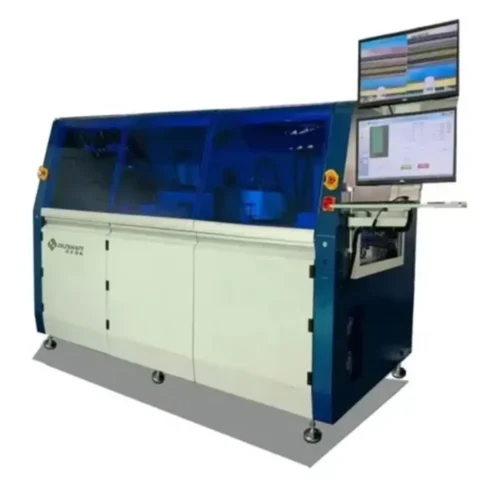
Fluxing, XYZ movement and selective soldering are automatic after the product program starts. PCBA loading and unloading remain manual, so the machine is classified as an offline automatic selective soldering machine. Another similar offline machine is the compact wave soldering machine DEZ-H3200A.
It solders through-hole connectors, pin headers, terminals, relays, transformers, switches, sockets and other THT components. It does not solder BGA, QFN or other surface-mount packages.
The confirmed H3500A configuration does not include an integrated infrared preheating module. Choose the H3600A when the PCB requires controlled preheating before soldering.
Check the flux quantity, solder temperature, nozzle height, solder contact time, movement speed and solderability of the pad and component lead. A board with high thermal mass may also require external preheating or the H3600A configuration.
Bridging can result from excessive wave height, an oversized nozzle, slow withdrawal speed, incorrect travel direction or insufficient clearance around the joint.
Inspect the PCB pad and component lead for oxidation or contamination. Also verify flux activation, solder temperature, nitrogen purity and oxide accumulation around the nozzle.
Check the solder level, nozzle blockage, pump condition, oxide buildup and nitrogen flow. A partially blocked nozzle can change the wave height and produce inconsistent solder joints.
Verify the flux nozzle position, jet valve condition, tank pressure and program coordinates. Dried flux can restrict the valve and change the spray pattern.
Yes. The specified process uses nitrogen around the mini-wave to reduce oxidation and support consistent solder wetting.
The machine requires nitrogen purity above 99.998%, pressure of 3–4 bar and consumption of approximately 1–2 m³/h per soldering nozzle.
A carrier is recommended when the PCB has an irregular outline, insufficient edge clearance, limited rigidity or a risk of moving during the programmed soldering path.
The nozzle must fit the available space while supplying enough solder for the required hole fill. Pad size, pin spacing, nearby SMD components and withdrawal direction should be evaluated.
Install the corresponding carrier and nozzle, select the stored program and verify the fluxing and soldering coordinates. Product-specific parameters do not need to be entered again when a validated program already exists.
The solder pot supports temperatures up to 350°C. Confirm the alloy, pot compatibility, nozzle configuration and required operating temperature before changing solder materials.
Remove solder dross regularly, keep the nozzle opening clear and check the wave height before production. Oxidation or blockage can cause incomplete hole fill and unstable soldering.
Provide the PCBA, Gerber file, PCB dimensions, thickness, THT component layout, solder alloy, flux type, required hole fill and expected cycle time.
Send DEZ the PCB drawing, component layout and production requirements. We will confirm the working area, carrier, soldering nozzle, nitrogen supply and process parameters required for the DEZ-H3500A.
Contact DEZ for PCBA cleaning machine, selective soldering machine, stencil cleaning machines, X-ray inspection, BGA rework, reflow ovens and SMT handling equipment.
Send your workpiece dimensions, production problem and required throughput to receive a free application review, equipment recommendation and project quotation. Free sample testing is available for qualified projects.
An equipment specialist will contact you within one hour during business hours.
Get a Free Recommendation and Request Sample Testing
Email: [email protected]
Phone: +86 138 2338 9052