SMT Stencil Cleaning for a Electronics Storage Device Manufacturer
How a storage device manufacturer replaced inconsistent manual stencil wiping with automatic washing, rinsing and drying for repeatable PCBA production.
This customer manufactures storage products with different PCBA designs and production batches. Each product may require a different SMT stencil, creating frequent changeovers and a large number of stencils waiting for cleaning, inspection or reuse.
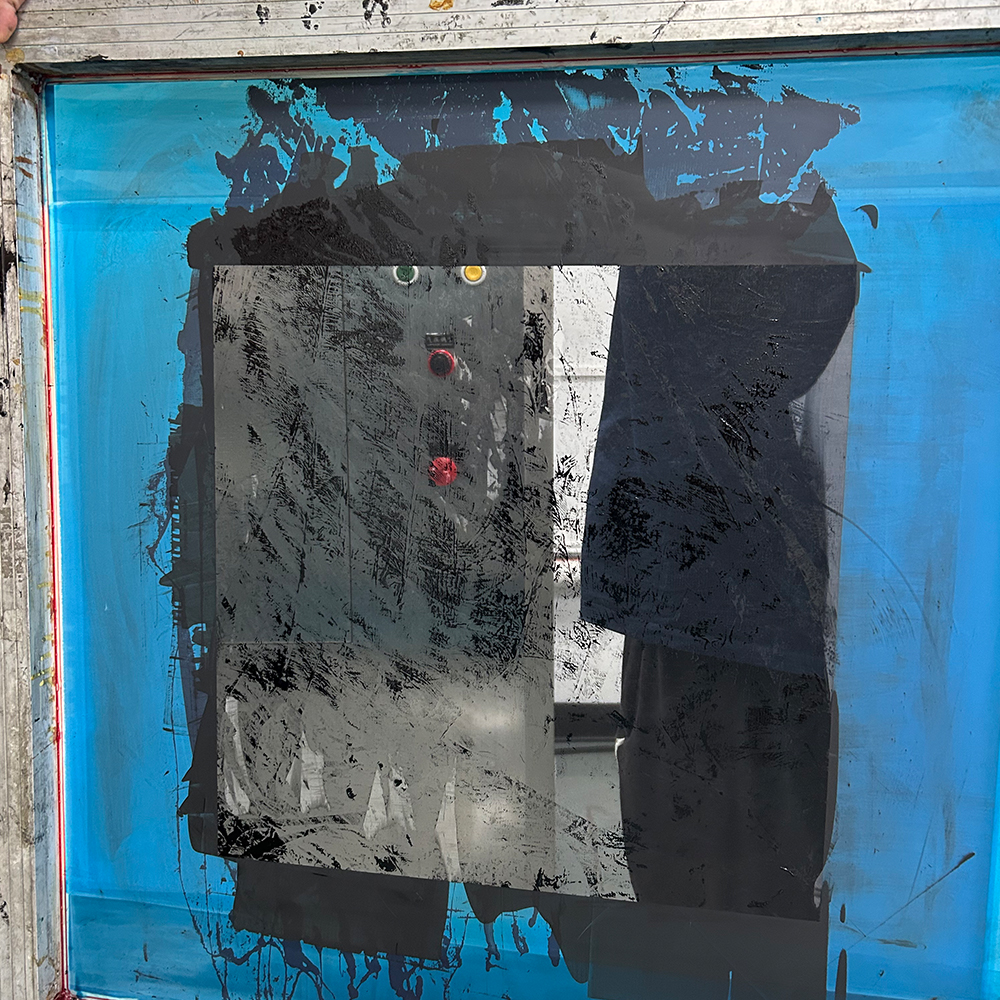
The previous cleaning process depended heavily on manual wiping. Operators could remove visible paste from the stencil surface, but the result inside fine apertures was difficult to confirm and difficult to repeat.
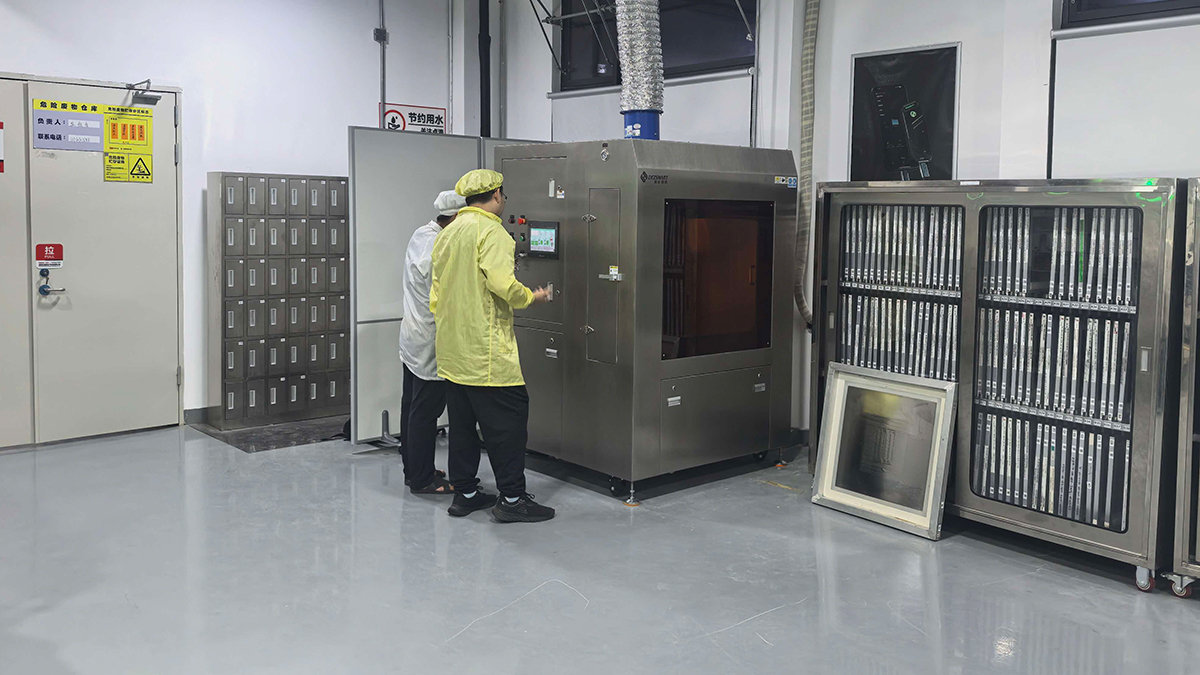
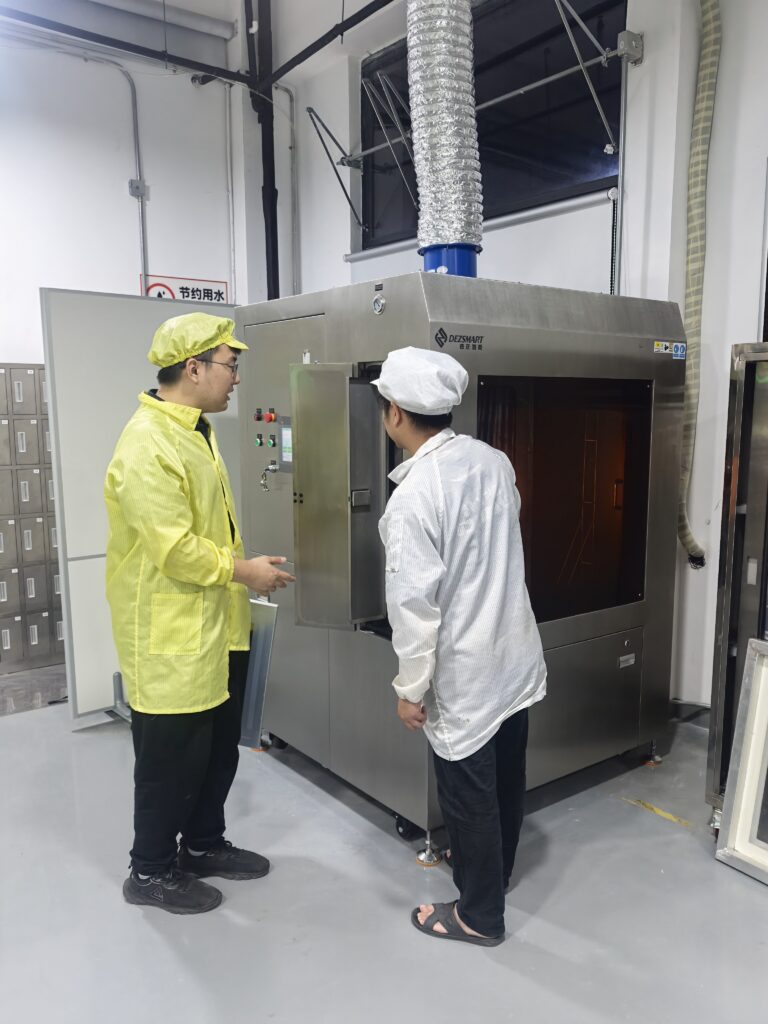
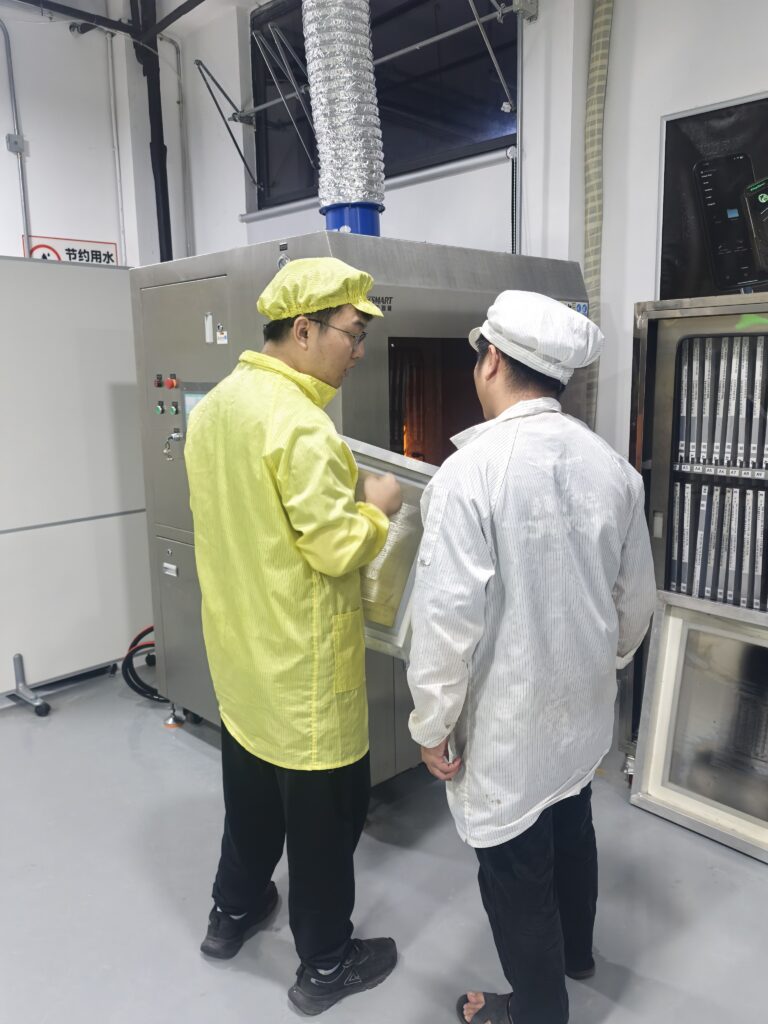
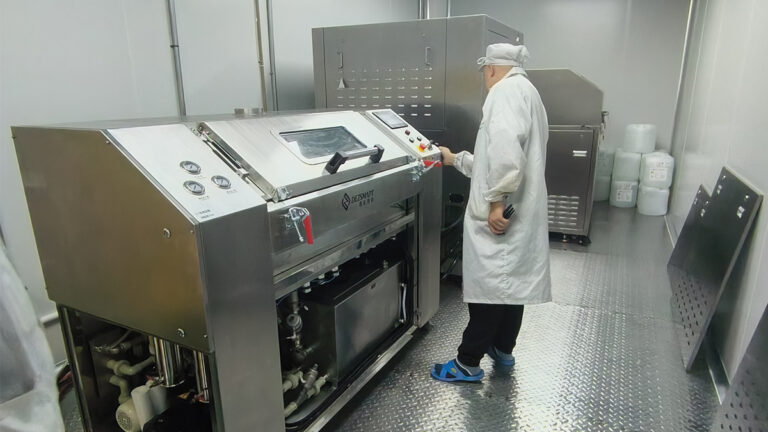
To establish a controlled cleaning process before stencil storage and reuse, the customer installed an automatic stencil cleaning machine in its dedicated stencil management area.
Table of Contents
Residue Carried Into the Next Printing Cycle
Solder paste on the stencil underside is not only a cleanliness issue. If it transfers to the next PCB, it can cause smearing, unwanted paste deposits and contamination around the pads.
Paste remaining inside the aperture is more difficult to detect. Once it begins to dry, the effective opening becomes smaller and paste release becomes unstable. The next production batch may show insufficient deposits, missing paste or uneven solder volume.
These printing variations can continue across multiple boards before they are identified. The cost is no longer one dirty stencil—it can become repeated printer stoppages, inspection failures and batch rework.
Manual Wiping Was Not Repeatable
Manual wiping depended on the operator’s pressure, cleaning time and amount of cleaning agent. Even when two operators cleaned the same stencil, the final result could be different.
Light wiping might leave paste inside the apertures. Excessive wiping or rough handling could increase the risk of foil damage or a change in stencil tension. Cloth fibres and dissolved paste could also be spread across the foil instead of being completely removed.
Under-stencil wiping remains useful for controlling fresh paste during printing. It does not replace complete solder paste stencil cleaning after production, during product changeover or before stencil storage.
Moving Cleaning Into a Controlled Machine Cycle
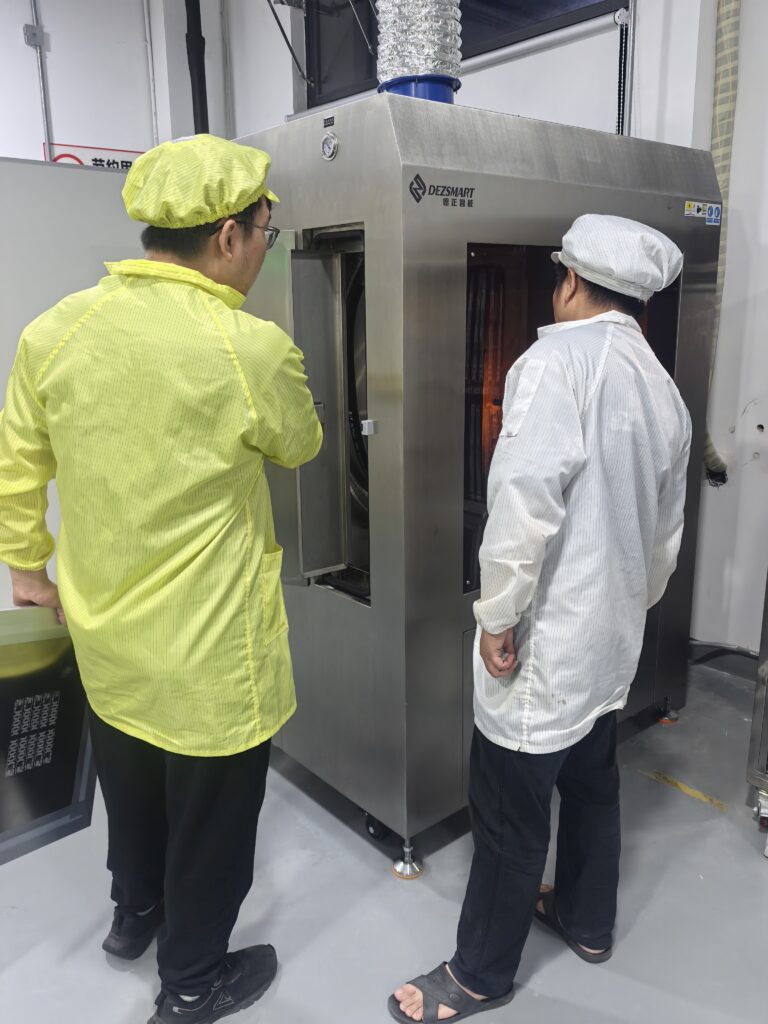
The customer moved the complete cleaning process away from operator-dependent wiping. After the stencil is loaded, the machine completes the programmed cleaning cycle inside an enclosed chamber.
Cleaning liquid reaches both stencil surfaces and passes through the aperture openings. A separate rinsing stage removes released contamination and remaining cleaning agent. Heated airflow then dries the foil, aperture walls and frame before inspection.
How the Process Addresses Printing Risk
Stencil condition
Risk during the next print
Controlled machine response
Paste on the stencil underside
Smearing and unwanted paste deposits
Cleaning both stencil surfaces
Dried paste inside apertures
Insufficient, missing or uneven deposits
Cleaning liquid passes through the aperture openings
Dissolved paste and chemistry remain
Residue may return to the next printing cycle
Separate clean-water or DI-water rinsing
Water remains on the foil or frame
Stencil is not ready for inspection or storage
Heated air drying
Cleaning depends on the operator
Results vary between people and shifts
Programmed cleaning, rinsing and drying
It provides a repeatable cleaning condition so that operators can check the stencil against the same acceptance standard after every cycle.
Installation and Process Confirmation
During installation, DEZ engineers worked with the customer’s production team to confirm stencil loading, cleaning coverage, rinsing, drying and daily operation.
The cleaning programme was matched to the customer’s solder paste, stencil condition and production requirements. This is important because fresh paste, dried paste and different flux systems may require different chemistry, temperature or cycle settings.
From Manual Work to a Defined Process
After installation, complete offline cleaning no longer depended on how hard or how long an operator wiped each stencil.
The operator loads the stencil and starts the approved programme. Cleaning, rinsing and drying are completed in sequence, while manual work is mainly limited to loading and final inspection.
This gives the factory a clearer return-to-use condition: the stencil surface and apertures are cleaned, cleaning chemistry is rinsed away, and retained moisture is removed before the stencil returns to printing or storage.
Selecting a Stencil Cleaning Machine
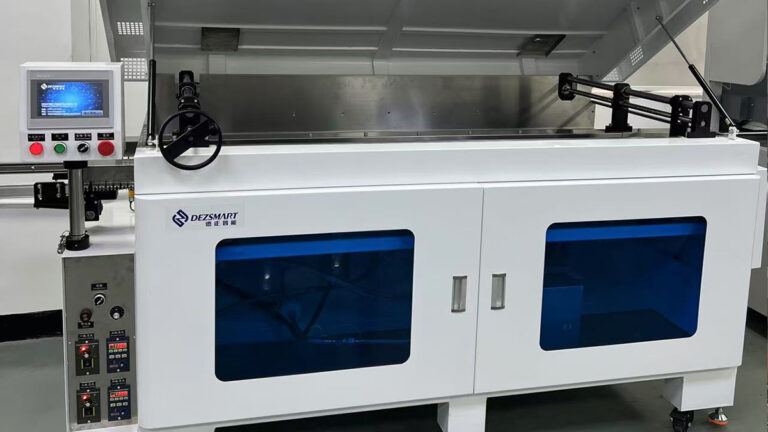
For standard water-based applications, the DEZ-C750 automatic water-based stencil cleaning machine combines washing, clean-water or DI-water rinsing and heated air-knife drying in one chamber. It processes compatible stencils up to 740 × 740 × 40 mm.
Machine selection should not be based only on the external stencil dimensions. The minimum aperture, solder-paste formulation, residue condition, cleaning quantity and available factory utilities also determine the appropriate cleaning process.
Factories using approved solvent cleaning can compare pneumatic and water-based equipment on the SMT stencil cleaning machine page.
Discuss Your Stencil Cleaning Project
Send DEZ your stencil dimensions, minimum aperture, solder-paste information, current cleaning method and required cleaning quantity.
Representative contaminated stencils can be tested before the equipment configuration and cleaning programme are confirmed.