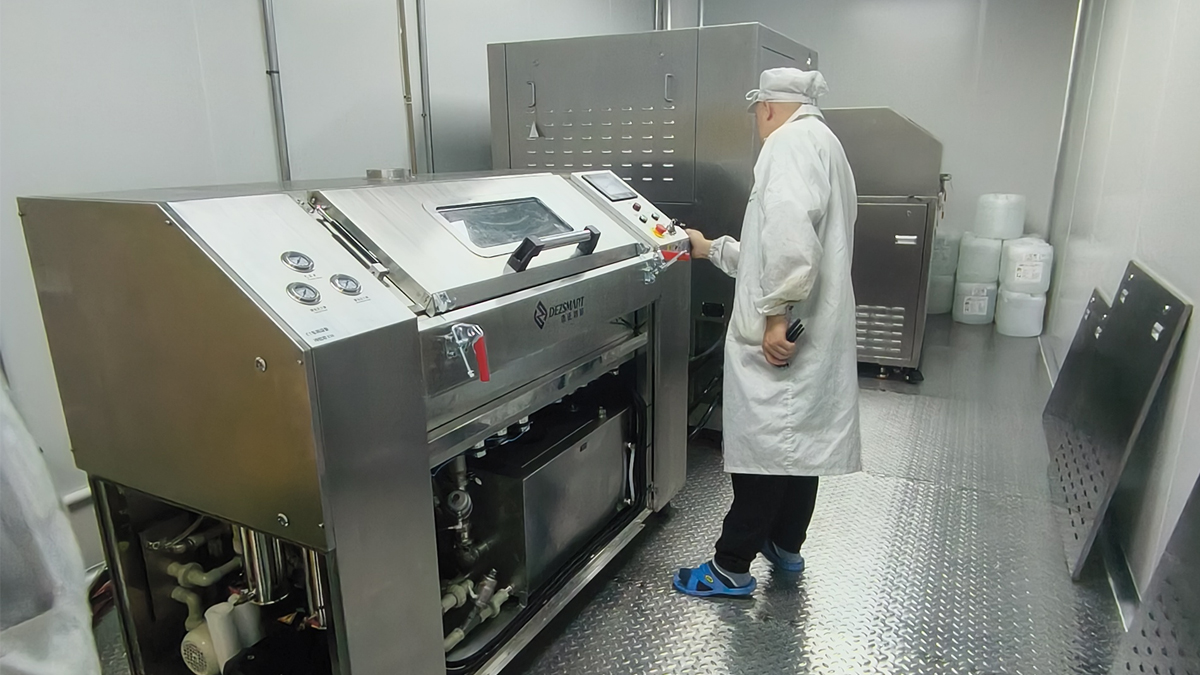
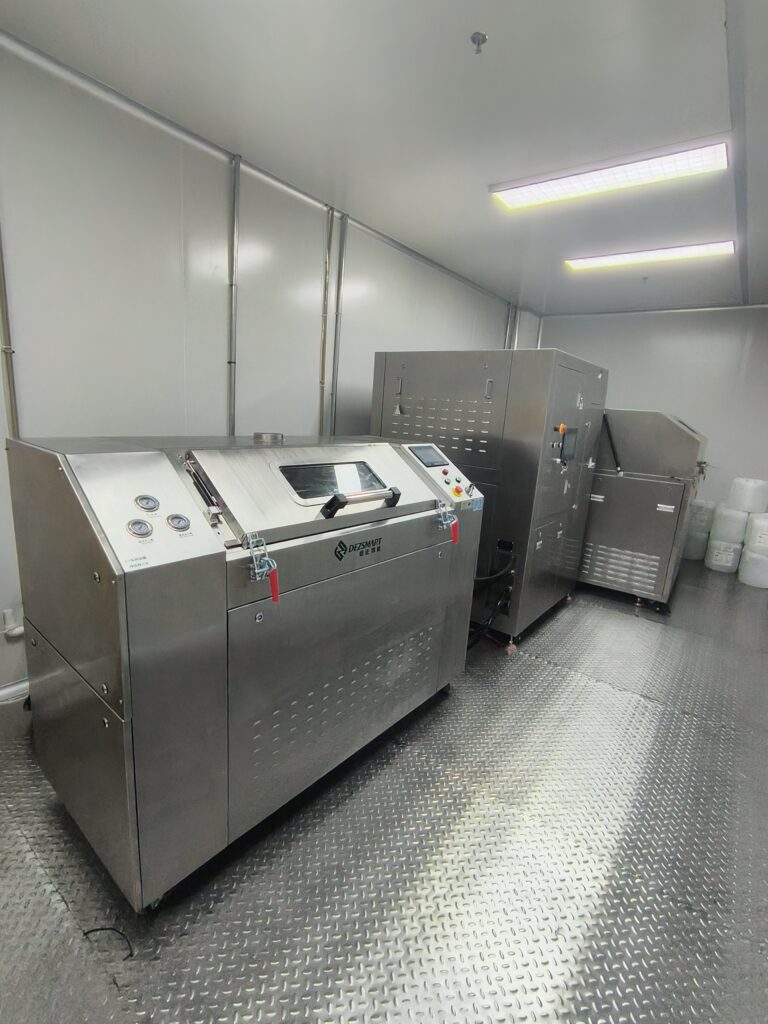
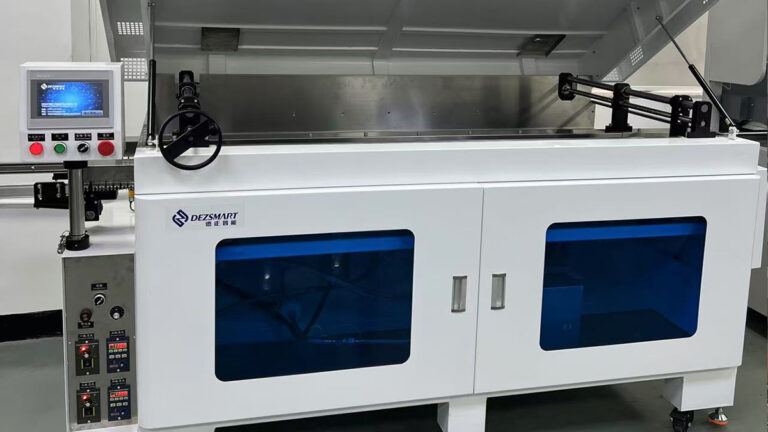
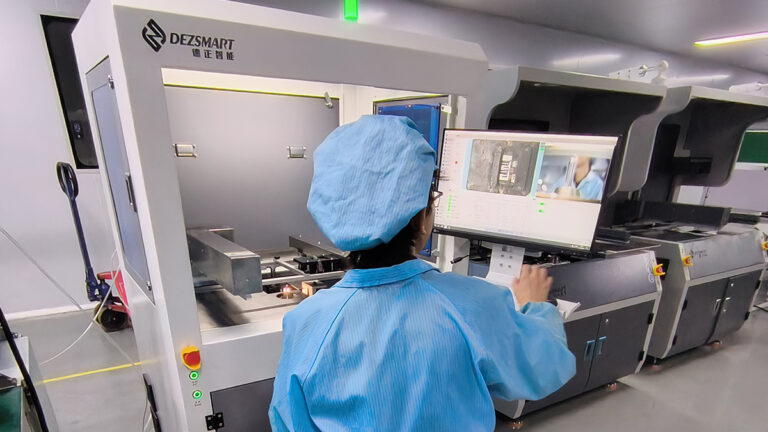
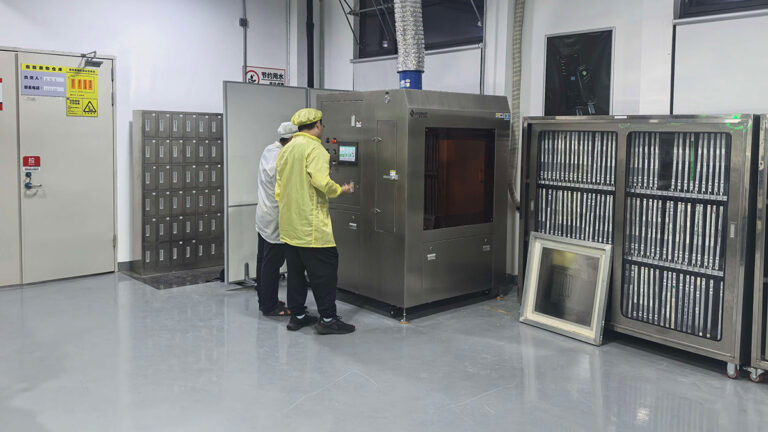
A PCBA manufacturer installed three DEZ cleaning machines to replace the manual washing of SMT stencils, printer squeegees, soldering fixtures and production trays.
Before the project, employees had to scrub these tools by hand. Cleaning quality depended on the operator, the pungent smell of the cleaning liquid affected the working environment, and employees were reluctant to perform a repetitive task involving prolonged contact with chemicals.
The customer established a dedicated cleaning room with three separate processes:
DEZ-C750 for water-based SMT stencil cleaning
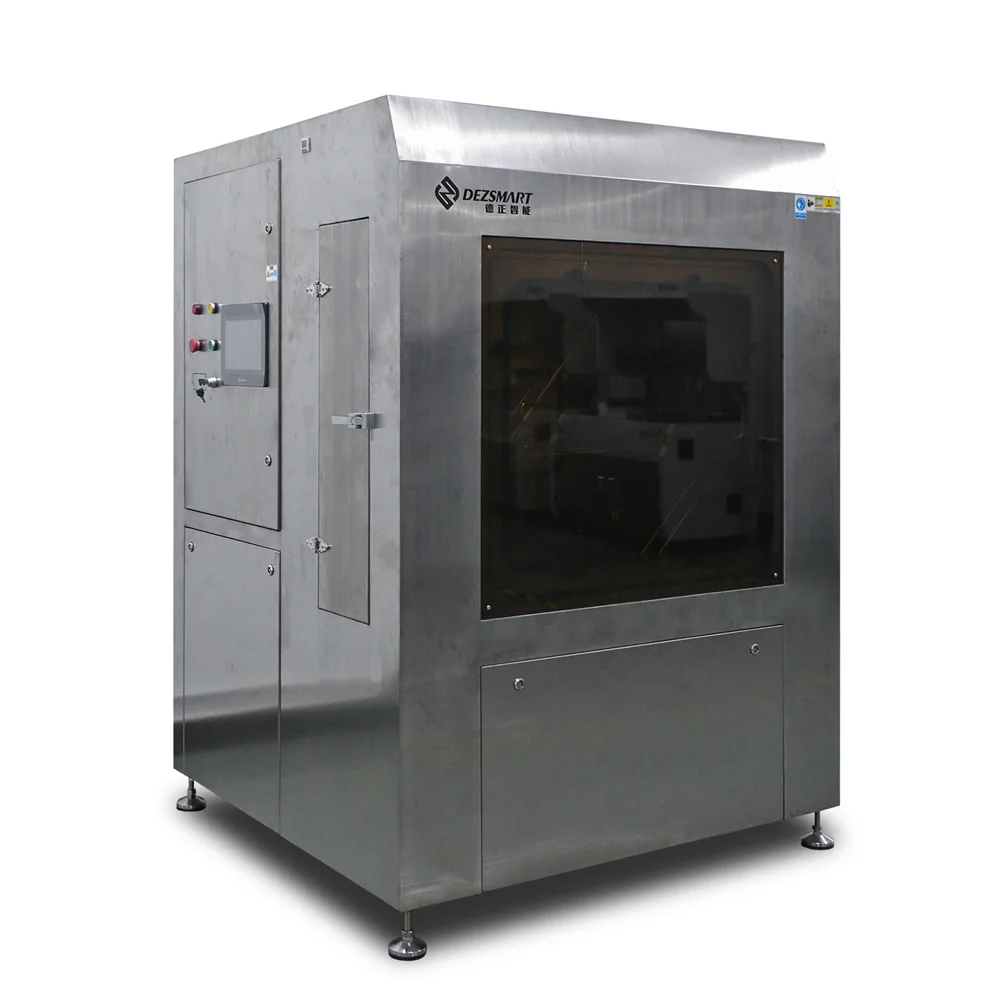
DEZ-C770 for automatic printer squeegee cleaning
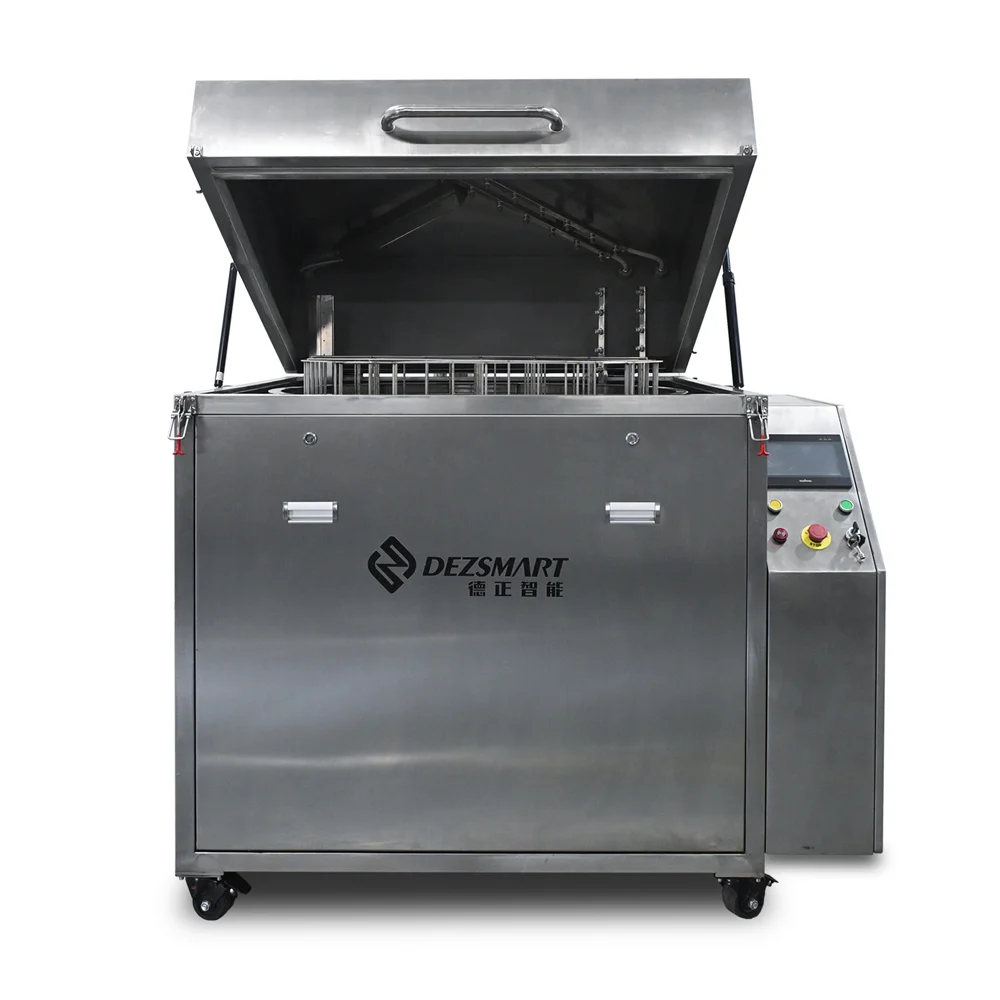
DEZ-C756 for fixture, pallet and production-tray cleaning
After loading the workpiece and starting the approved cycle, the machines complete their configured cleaning and drying processes automatically. Operators still load, inspect and unload the tooling, but repetitive hand scrubbing is no longer part of the normal cleaning cycle.
Table of Contents
Why This PCBA Factory Needed Three Cleaning Machines
PCBA production uses different tools at the printing, reflow and soldering stages.
SMT stencils contain fine apertures that retain solder paste and adhesive. Printer squeegees collect paste along their blades and holders. Wave-solder pallets, reflow trays and other fixtures accumulate flux, oil and process residue around openings, clamps and locating points.
These workpieces differ in size, weight, construction and contamination. Treating all of them with the same manual washing method created inconsistent results and excessive chemical handling.
This problem is particularly common in EMS and high-mix PCBA manufacturing. Different customer orders may require new stencils, solder pastes, fixtures and process settings several times during one production day. Dirty production tooling can then delay the next changeover.
Previous Manual Cleaning Problems
Results Depended on the Operator
Manual cleaning varied according to brushing pressure, direction, cleaning time and the amount of liquid applied. Two employees could clean the same type of tool and produce different results.
Residue Remained in Difficult Areas
Surface wiping could remove visible material while leaving solder paste inside stencil apertures, around squeegee holders or inside pallet openings.
Cleaning Liquid Had a Pungent Smell
Open manual washing increased employee exposure to cleaning-liquid vapour. The unpleasant smell made the cleaning room difficult to work in and reduced employee willingness to perform the task.
Heavy Tools Were Difficult to Wash
Fixtures, carriers and soldering pallets can be large or heavy. Repeatedly turning and scrubbing them by hand increased operator effort and made it difficult to reach every opening and locating point.
Cleaning Became a Production Bottleneck
When several stencils, squeegees or fixtures required cleaning after a product changeover, the work accumulated faster than operators could process it manually.
Three Workpieces, Three Cleaning Processes
Production tool
Main contamination
Installed equipment
SMT stencils and screen frames
Solder paste, red glue, flux and printing residue
DEZ-C750
Printer squeegees and holders
Solder paste and compatible adhesive residue
DEZ-C770
Wave-solder pallets, fixtures and reflow trays
Flux, oil, dust and process deposits
DEZ-C756
Water-Based Stencil Cleaning – DEZ-C750
SMT stencils must be cleaned before dried solder paste restricts the apertures and affects the next printing cycle. Manual wiping may clean the foil surface without removing residue from the aperture walls.
The stencil remains inside one chamber throughout the programmed cycle. Movable spray cleaning reaches both stencil surfaces, while the rinsing stage removes released contamination and cleaning-agent residue. Heated drying removes retained water before inspection and storage.
For this customer, the C750 replaced open manual washing with a controlled process that could be repeated for different production batches. Water-based cleaning also reduced the factory’s dependence on highly volatile solvent cleaning.
Automatic Squeegee Cleaning – DEZ-C770
Solder paste accumulates along the squeegee blade, holder, fasteners and recessed areas during stencil printing.
If the remaining paste dries during storage, later cleaning becomes more difficult. Manual wiping also requires employees to handle cleaning liquid and spend additional time working around the complete holder assembly.
The DEZ-C770 was configured as the customer’s dedicated automatic squeegee cleaning machine. After compatible squeegees are secured inside the chamber, the machine completes spray cleaning and air drying according to the selected settings.
The enclosed process reduces repeated manual wiping and limits the time employees spend directly handling the cleaning liquid. Filtration allows compatible cleaning fluid to circulate through the system, while the exhaust structure manages vapour released during the process.
A dedicated DEZ-C770 product page is being prepared. You can currently contact DEZ with the squeegee length, holder dimensions, blade material, solder-paste type and required batch quantity.
Fixture and Pallet Cleaning – DEZ-C756
Fixtures and pallets present a different cleaning problem.
Wave-solder pallets repeatedly pass through fluxing, preheating and soldering. Flux can build up around PCB openings, clamps and protected areas. Reflow trays and PCB carriers collect solder paste, oil and dust around locating points and board-contact surfaces.
These workpieces are generally heavier and contain deeper structures than stencils or squeegees.
During washing, multidirectional spray reaches different surfaces as the basket rotates. A separate rinse removes remaining detergent and released contamination. Air cutting and heated drying then remove water before the tooling returns to inspection and production.
This process is suited to EMS and PCBA factories that use different pallets, carriers and trays across multiple orders. Materials, surface coatings, load balance and cleaning-agent compatibility must be confirmed with representative workpieces.
A Dedicated Cleaning Room for PCBA Production Tools
The customer placed the three machines together in a dedicated cleaning room, but each machine retains a clearly defined function.
SMT Printing Tools
Used Stencil → C750 Wash, Rinse and Dry → Inspection → Storage or Reuse
Used Squeegee → C770 Clean and Air Dry → Inspection → Return to Printer
Soldering Fixtures and Trays
Used Fixture or Pallet → C756 Wash, Rinse and Dry → Inspection → Return to Production
Separating these processes prevents heavily flux-contaminated pallets from being cleaned together with precision stencil-printing tools. It also allows the cleaning chemistry, loading method and cycle settings to be matched to each workpiece.
From Manual Washing to One-Button Cycles
Before installation
After installation
Employees scrubbed tools by hand
Employees load the tools and start the approved cycle
Cleaning depended on individual technique
Defined settings control the machine process
Open handling increased contact with cleaning liquid
Cleaning takes place inside enclosed equipment
Strong odours affected the working environment
Less time is spent beside open cleaning liquid
Heavy fixtures were turned and brushed manually
Fixtures rotate through multidirectional spray cleaning
Different tools shared one manual process
Stencils, squeegees and fixtures have separate workflows
Automation does not remove the need for loading, inspection, chemistry control or machine maintenance. It removes the repetitive hand-scrubbing work that employees were unwilling to perform and gives the factory a more repeatable cleaning process.
Customer Result
After the three machines were installed, the customer no longer depended on employees continuously brushing stencils, squeegees and heavy fixtures by hand.
The project delivered several practical changes:
Repetitive manual scrubbing was removed from routine cleaning.
Operators spent less time in direct contact with cleaning liquid.
The impact of pungent chemical odours was reduced.
Cleaning cycles were no longer determined by individual operator habits.
Separate processes were established for printing tools and soldering fixtures.
Employees could load the workpiece, start the machine and perform other approved tasks during the automatic cycle.
Tool cleaning became part of a defined factory process rather than an unpopular temporary job.
The main benefit was not simply purchasing three machines. The customer created an organised cleaning system covering the principal reusable tools in its SMT and soldering processes.
Who Needs This Cleaning-Room Configuration?
This three-machine arrangement is most relevant to:
EMS factories with frequent customer-product changeovers
PCBA manufacturers operating SMT printing and wave or selective soldering
Automotive and new-energy electronics factories using dedicated soldering fixtures
Factories managing large quantities of stencils, squeegees, carriers and trays
Manufacturers that want to reduce open manual solvent washing
Production sites where manual cleaning has become inconsistent or difficult to staff
The exact configuration should be based on the workpiece dimensions, contamination, cleaning chemistry, daily quantity and factory utilities.
Plan a Similar SMT Cleaning Room
Contact DEZ for an SMT cleaning automation review. DEZ can evaluate the workpieces, perform sample cleaning and configure separate processes for stencils, squeegees, fixtures and pallets.