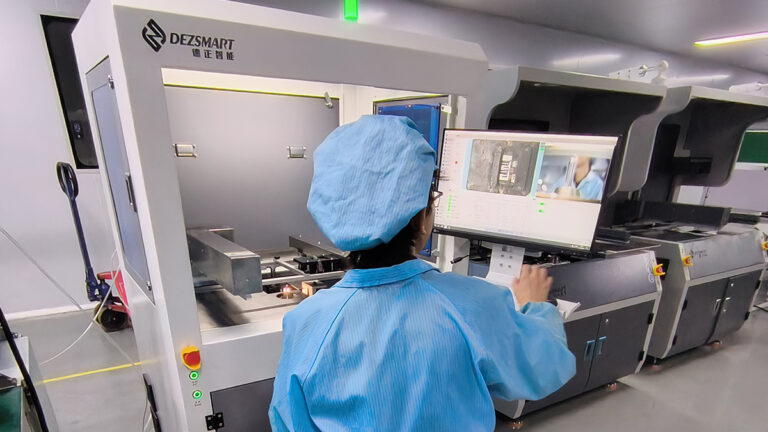
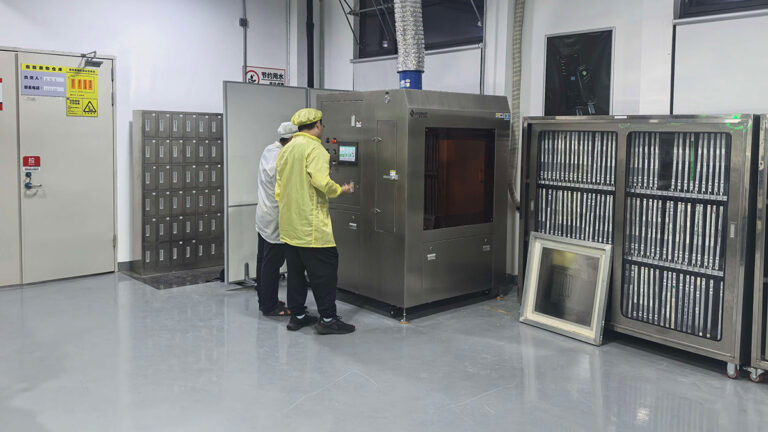
A mobile phone brand with strong sales in African markets ordered multiple PCBA cleaning machines for its production lines.
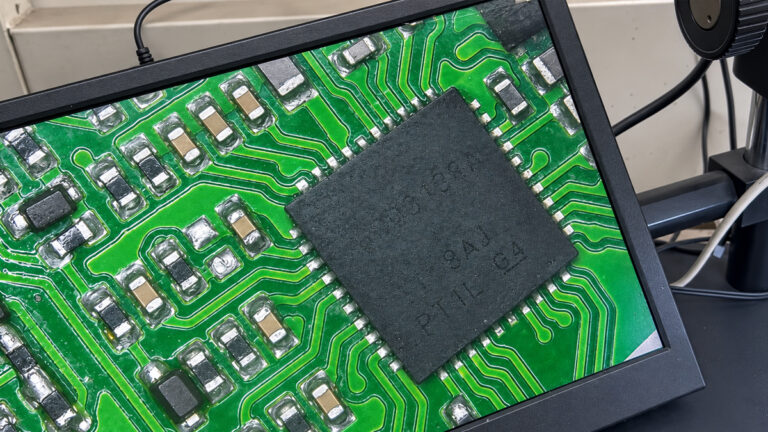
After wave soldering, visible rosin and flux marks remained on the accessible solder side of the PCBAs. The previous process relied on workers applying cleaning agent and brushing each board manually.
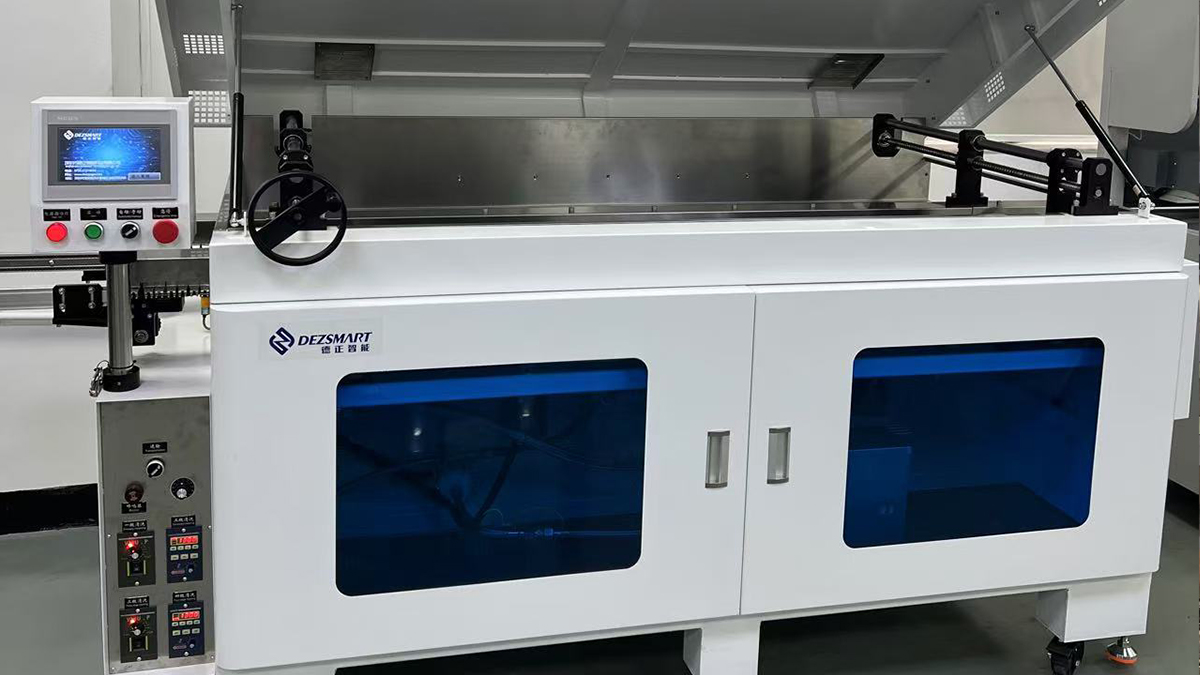
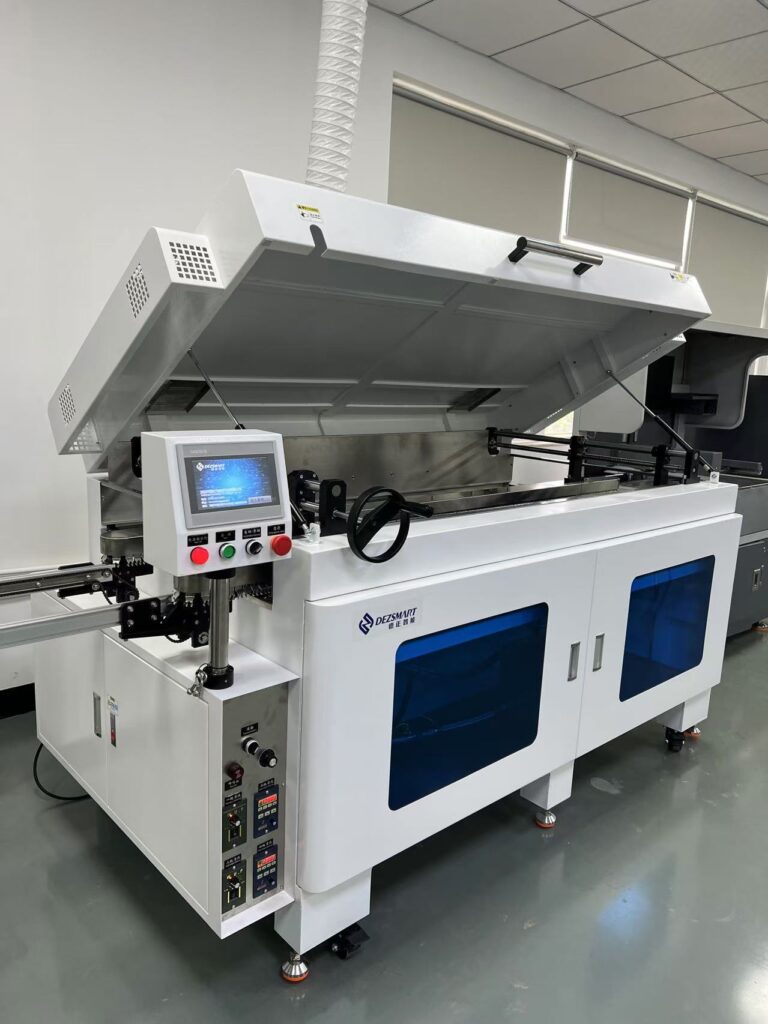
As production volume increased, manual cleaning could no longer provide the required output or consistent cleaning result. DEZ therefore supplied an enlarged, customised version of the DEZ-C758 for continuous single-sided PCBA brush cleaning.
Table of Contents
Manual Brushing Limited Production Output
Manual PCBA cleaning depends on the operator’s brushing pressure, direction, cleaning-agent dosage and working time.
Boards cleaned by different operators may therefore show different results. Repeated contact with cleaning liquid also makes the process unpleasant for workers, while every board occupies manual labour that could be used elsewhere in production.
For a mobile phone brand processing larger production quantities, cleaning PCBAs individually by hand became a bottleneck after wave soldering.
Continuous Solder-Side Cleaning
The machine applies a compatible cleaning agent to the accessible solder side before the PCBA enters the brush-cleaning sections.
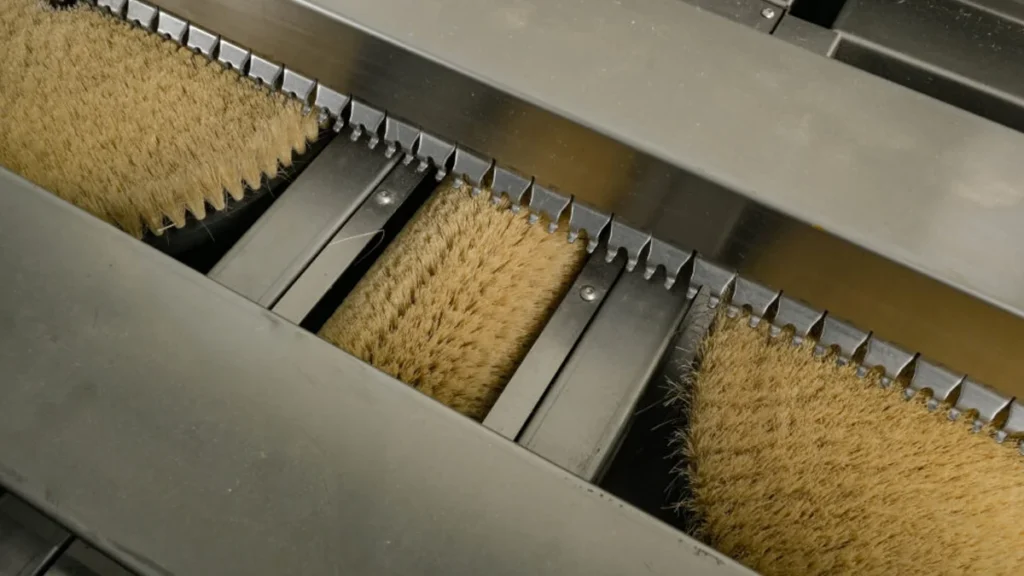
Wet brushing loosens reachable rosin flux marks and surface contamination. Dry brushing then removes remaining liquid and loosened material, followed by fan drying before the PCBA leaves the machine.
The process runs continuously through the conveyor:
The customer required a larger working configuration for its specific PCBA or production carrier dimensions. DEZ therefore enlarged the machine structure and cleaning area after reviewing the workpiece and production requirements.
The external appearance in these project photos is different from the standard C758 product image. It is a customer-specific configuration and should not be used as the standard machine specification.
How the Custom Configuration Addressed the Project
Customer requirement
Equipment response
Production result
Special PCBA or carrier dimensions
Enlarged customer-specific machine configuration
Workpieces fit the required cleaning process
Rosin flux marks after wave soldering
Cleaning-agent application and wet brushing
Reachable residue is removed from the solder side
Inconsistent manual brushing
Adjustable conveyor and brush settings
Cleaning is less dependent on individual operators
Continuous production requirement
Conveyor-based PCBA transport
Boards move through cleaning without individual hand brushing
Higher cleaning output
Multiple machines supplied
Greater capacity than a single manual cleaning station
The final configuration was based on the customer’s actual PCBA size, component clearance, accessible board edge and required production speed.
Multiple Machines for Mobile Phone Production
The customer purchased multiple customised units rather than relying on one cleaning station.
This provides the cleaning capacity required for larger mobile phone production volumes and allows the equipment to support different production lines or batches.
After the process settings are confirmed, conveyor speed, cleaning-agent flow, brush height and brush rotation can be repeated for the same PCBA type. This gives the factory a more controlled process than assigning boards to different workers for manual brushing.
What the Project Improved
The customised C758 replaced repeated manual brushing of the solder side after wave soldering.
Operators no longer needed to apply cleaning liquid and scrub every board individually. Continuous transport and mechanical brushing substantially increased processing efficiency while reducing variation between cleaned PCBAs.
For a consumer electronics manufacturer producing mobile phones for competitive African markets, the main value was straightforward: more boards could be cleaned with less manual work and a more repeatable visible surface result.
Cleaning Scope
This process targets visible rosin flux marks, surface contamination and loose solder balls that the brushes can physically reach on one accessible solder side.
It does not immerse the complete PCBA, include a DI-water rinse or clean deeply underneath low-clearance components. When the requirement includes complete aqueous washing or measured ionic cleanliness, another PCBA cleaning machine configuration should be evaluated.
Request a Custom PCBA Cleaning Machine
DEZ can modify the C758 according to special PCBA dimensions, carrier structure, conveyor direction, production speed and line-interface requirements.
Send the PCBA dimensions, component-height drawing, solder-side photograph, flux information, required throughput and upstream or downstream equipment. A representative PCBA should be tested before the brush configuration and process settings are confirmed.