Speak Directly With Our Equipment Team
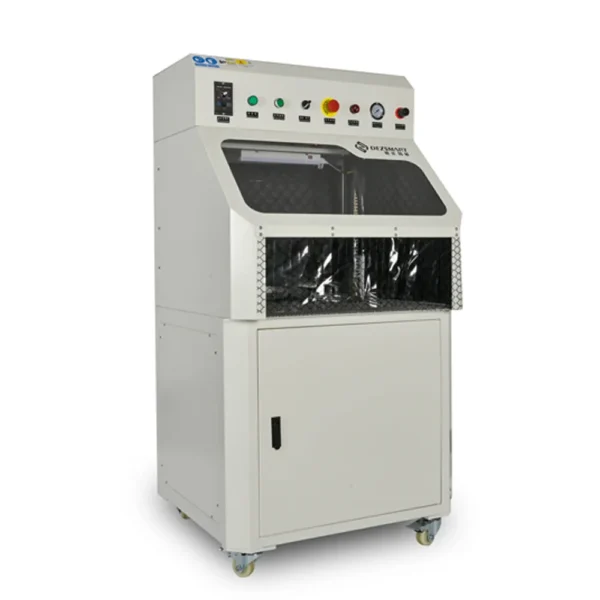
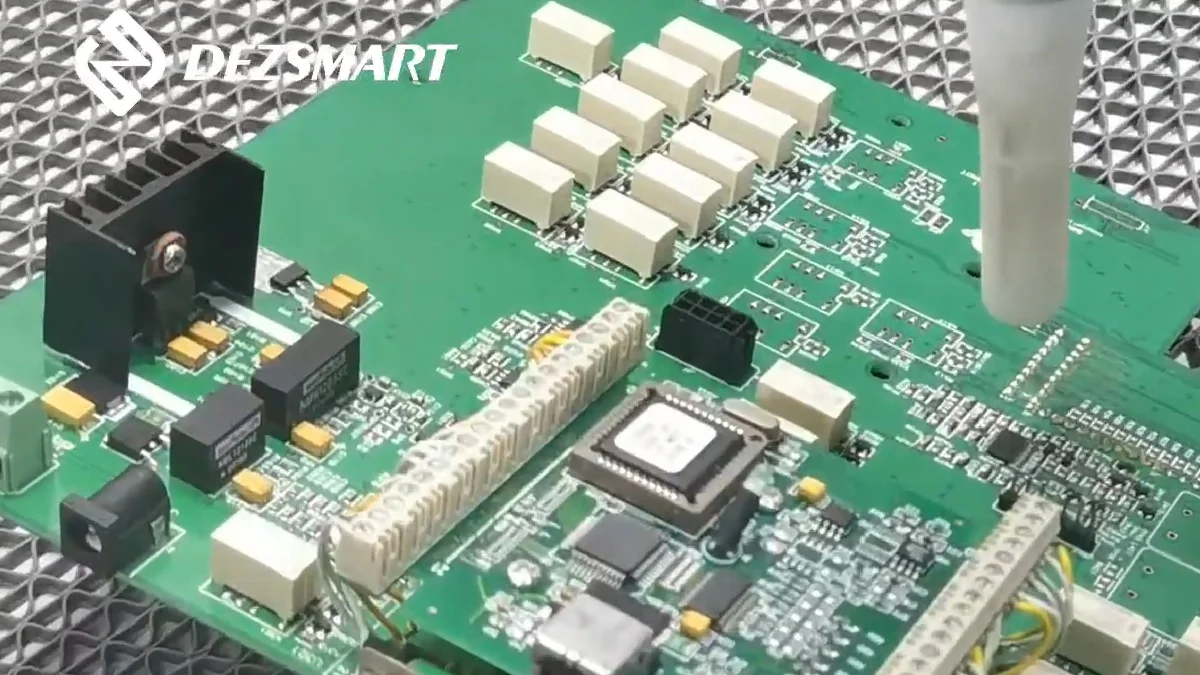
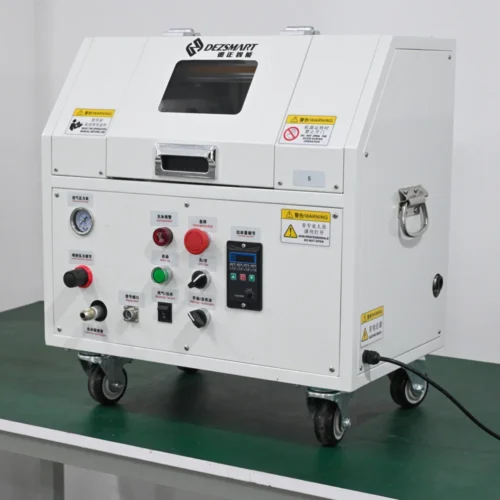
The DEZ-C7310 removes flux, rosin, coating residue, carbon deposits, oxidation and loose contamination from PCBAs, electronic assemblies and industrial parts.
Adjustable spray pressure and dry ice feed allow the cleaning process to be matched to delicate circuit boards, electronic modules, plastic parts and metal surfaces. Dry ice sublimates after impact, so cleaned parts require no rinsing or hot-air drying before inspection, repair, coating or assembly.
The DEZ-C7310 cleans exposed solder joints, component leads, connectors, PCB surfaces and repaired areas without leaving cleaning media on the assembly.
After cleaning, PCBAs can proceed directly to visual inspection, AOI, conformal coating, electrical testing, component replacement or final assembly. This shortens the cleaning process and prevents residual flux or loose contamination from interfering with inspection and subsequent production steps.

| Process | Function |
|---|---|
| Load and position | Place the PCBA or part in the cleaning position |
| Set parameters | Select air pressure, dry ice feed and nozzle |
| Dry ice blasting | Remove flux, rosin, dust, coating residue or burrs |
| Residue extraction | Exhaust system collects loosened contamination |
| Inspection and unloading | Check the cleaned area and move the product to the next process |
| Product Model | DEZ-C7310 |
|---|---|
| Power Supply | AC220V, 50Hz |
| Main Motor Power | 0.25 kW |
| Exhaust Motor Power | 500 W |
| Air Flow | 0.5–4.0 m³/min, adjustable |
| Working Pressure | 0.1–0.8 MPa, adjustable |
| Dry Ice Spray Rate | 0.1–0.6 kg/min, adjustable |
| Applicable Dry Ice Size | 140 × 125 × 250 mm, approximately 5 kg |
| Hopper Capacity | 5–10 kg |
| Machine Dimensions | L680 × W750 × H1680 mm |
| Customization | Machine dimensions and configuration can be customized |
We have worked with
Check whether the nozzle is reaching the contaminated surface directly. Reduce the working distance, adjust the spray angle or gradually increase the pressure and dry ice feed. Thick or cured flux may require several controlled passes.
Irregular feeding is commonly caused by old dry ice, moisture inside the hopper, blocked feed passages or insufficient compressed-air flow. Use fresh dry ice and keep the hopper and supply line dry.
The compressor must provide pressure within 0.1–0.8 MPa and sufficient flow for the selected process. The machine can require up to 4.0 m³/min, so compressor capacity should be confirmed according to operating pressure, nozzle and duty cycle.
Use the lowest dry ice feed that removes the contamination consistently. Correct nozzle selection and working distance usually reduce consumption more effectively than simply increasing the blasting pressure.
Condensation can occur when continuous blasting makes the workpiece surface too cold in a humid environment. Use shorter cleaning passes, allow temperature recovery and control workshop humidity.
Use a focused nozzle for localised flux around solder joints and repaired components. Use a wider nozzle for larger PCB surfaces, fixtures and industrial parts. The nozzle should provide sufficient coverage without blasting adjacent sensitive components unnecessarily.
Inspect the compressed-air supply, hose connection, nozzle, dry ice feed passage and hopper. Low air flow, worn nozzles and partial blockage can reduce cleaning performance even when the displayed pressure appears normal.
The machine is most effective where the dry ice stream can directly reach the contamination. Cleaning results underneath low-clearance packages depend on component spacing, contamination position, nozzle angle and process parameters. Sample testing is recommended.
Use fresh dry ice as soon as possible and keep it in an insulated container. Do not use an airtight container because sublimating CO₂ creates pressure. Old or moisture-contaminated dry ice can cause unstable feeding.
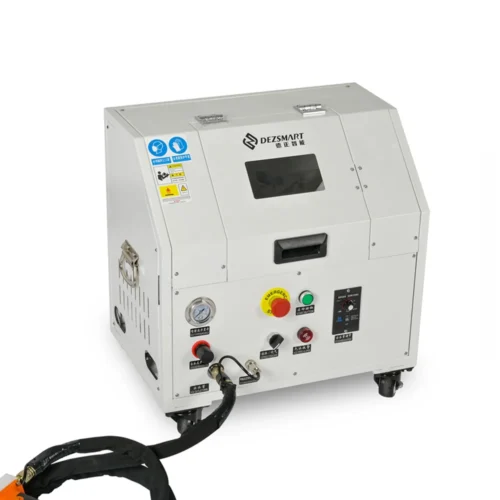
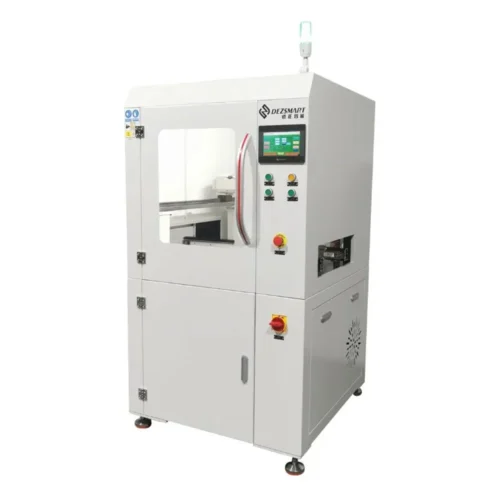
The C7310 is a floor-standing PCBA dry ice cleaning machine with an integrated exhaust motor for a dedicated cleaning station. The C1650 is a compact portable model for cleaning at different work locations. The C7320 is designed for enclosed or automated inline cleaning.
Yes. Provide the workpiece, contaminant type, required cleaning result and current process. Sample cleaning can be used to confirm nozzle type, working pressure, dry ice consumption and processing time.
Send DEZ your PCBA, electronic module, fixture or industrial part together with photos of the contamination. We will evaluate the cleaning requirement and recommend the appropriate nozzle, air supply and process parameters for the DEZ-C7310.
Contact DEZ for PCBA cleaning machine, selective soldering machine, stencil cleaning machines, X-ray inspection, BGA rework, reflow ovens and SMT handling equipment.
Send your workpiece dimensions, production problem and required throughput to receive a free application review, equipment recommendation and project quotation. Free sample testing is available for qualified projects.
An equipment specialist will contact you within one hour during business hours.
Get a Free Recommendation and Request Sample Testing
Email: [email protected]
Phone: +86 138 2338 9052