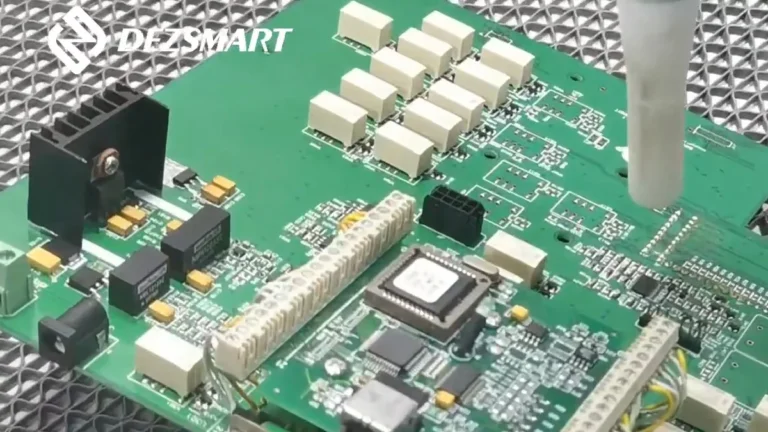
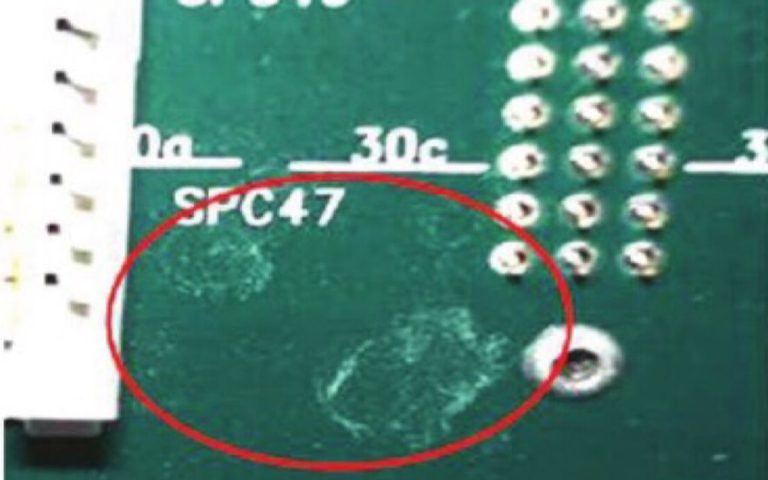
Brushes, ionised air, vacuum extraction and tacky rollers do not perform the same cleaning function.
On a bare PCB before solder paste printing, they can form one dry-cleaning process: ionised air releases static-attracted particles, brushes detach contamination, vacuum captures it and tacky rollers collect particles remaining on accessible flat surfaces.
After wave or selective soldering, brush cleaning operates differently. A compatible cleaning fluid and controlled brush contact can remove accessible flux marks and loose solder balls from the solder side of an assembled PCBA.
Table of Contents
Match the Contamination to the Cleaning Method
Contamination
Board and process stage
Effective method
Suitable DEZ equipment
Dust and loose powder
Bare PCB before printing
Brush, vacuum and tacky roller
DEZ-C753S
Fibres, hair and board debris
Bare PCB before printing
Brush detachment followed by vacuum capture
DEZ-C753S
Static-attracted particles
Bare PCB before printing
Ionised air followed by vacuum or roller collection
DEZ-C753S
Fine dry particles on flat surfaces
Bare PCB before printing
Tacky roller contact transfer
DEZ-C753S
Loose solder balls
Accessible PCBA solder side after soldering
Controlled brush contact and waste collection
DEZ-C758 or DEZ-C760
Visible flux marks
Accessible PCBA solder side after soldering
Cleaning-fluid application and wet brushing
DEZ-C758 or DEZ-C760
Flux beneath low-standoff components
Assembled PCBA
Compatible aqueous cleaning with wash, DI-water rinse and drying
DEZ-C743 or DEZ-C1360
Defined ionic-contamination requirement
Assembled PCBA
Validated cleaning process plus ionic testing
DEZ-C743 or DEZ-C1360
No single cleaning element covers every condition. The method must match both the contaminant and its location.
Ionised Air Releases Static-Attracted Particles
Fine dust may remain on a PCB because of electrostatic attraction rather than strong physical adhesion. Ordinary compressed air can move this contamination without preventing it from returning to the board.
Ionised air supplies balanced positive and negative ions that reduce the electrostatic charge holding particles to insulating surfaces. It is useful for releasing lightweight dust and fibres, but it does not collect them.
Ionisation must therefore operate with vacuum extraction or another collection stage. Its performance should be checked through ion balance and discharge-time measurements rather than assumed from the presence of an ionising bar.
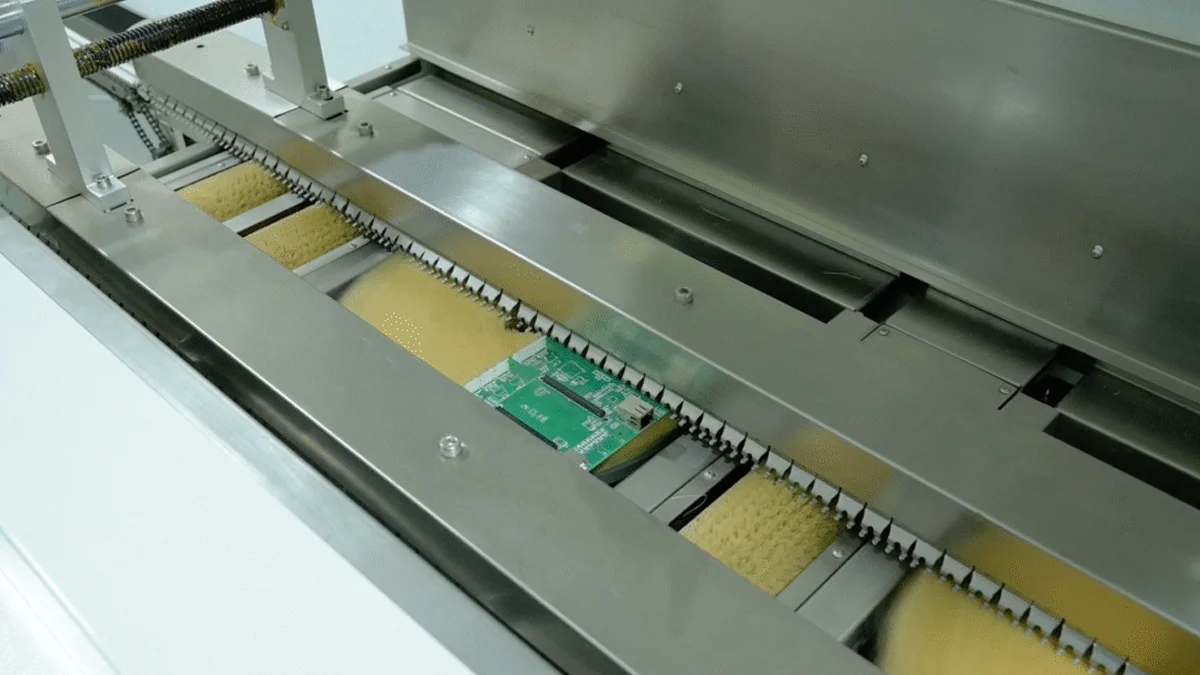
The DEZ-C753S double-sided PCB cleaning machine combines ionised air with brushes, dual vacuum extraction and tacky rollers. This configuration is intended for dry contamination on bare PCBs before solder paste printing.
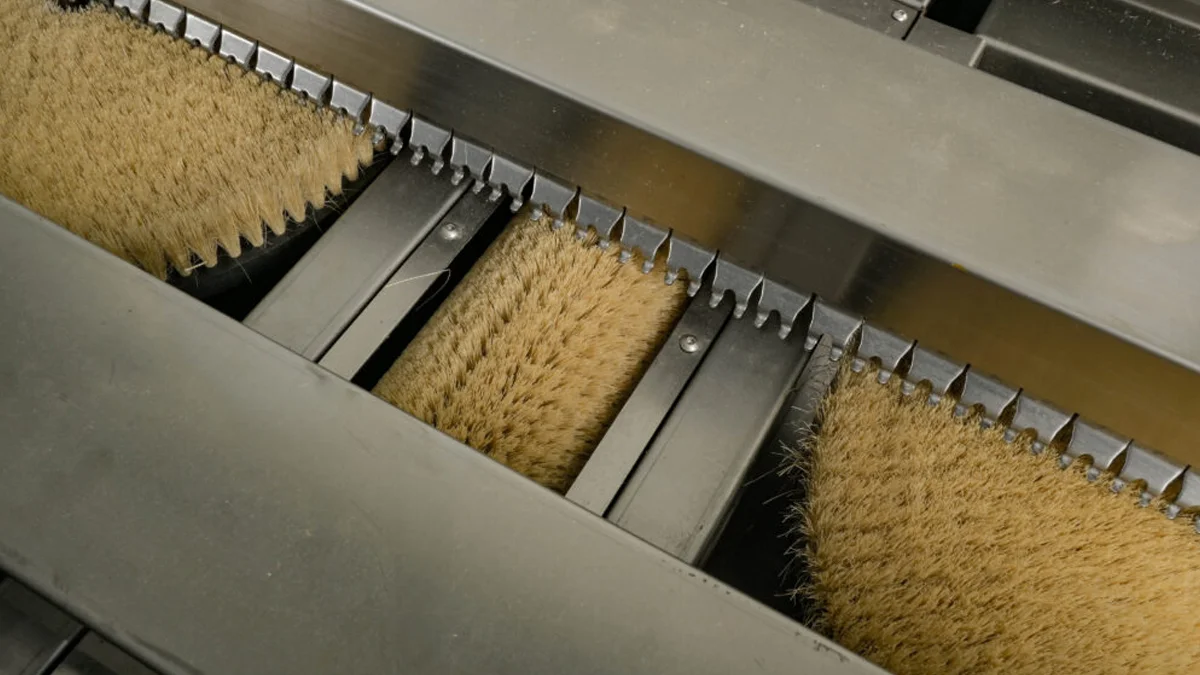
Brushes Detach Contamination
Brushes apply mechanical contact where airflow or suction alone cannot release the contamination.
For bare PCBs, brushes target dry contaminants such as fibres, hair, board debris and particles attached to accessible surface features. The released material must then be extracted by vacuum or transferred to a tacky roller. Technical-cleanliness guidance similarly identifies brushing as a method for removing more firmly adhering particles while noting that brushes require cleaning and replacement as contamination accumulates.
For assembled PCBAs, the brush performs a different job. When used with a compatible cleaning fluid, it can act on accessible flux marks and loose solder balls on the solder side after wave or selective soldering.
Vacuum Captures Released Particles
Vacuum extraction removes particles after they have been loosened by brushes or released through static neutralisation.
It is effective for collecting:
Loose dust
Fibres
Board debris
Particles lifted by brushes
Airborne contamination inside the cleaning chamber
Vacuum does not normally remove cured flux, oil or strongly adhered films by itself. Its effectiveness also depends on airflow at the cleaning point, duct condition and filter loading.
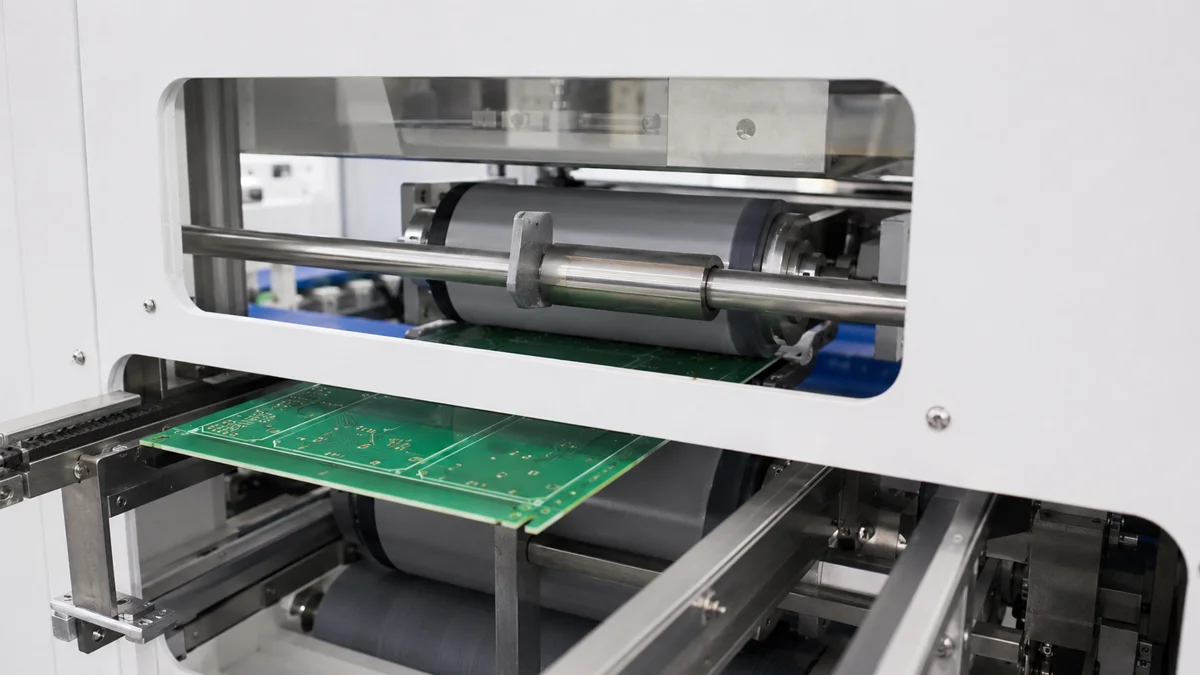
Tacky Rollers Transfer Residual Dry Particles
A tacky roller contacts an accessible flat PCB surface and lifts remaining dry particles. The collected contamination is then transferred from the cleaning roller to replaceable adhesive paper.
Tacky rollers are effective for fine dust and small dry particles that remain after initial brushing and vacuum extraction. They are not intended to remove flux films, oil or ionic contamination.
Direct contact is required. A tacky roller cannot reliably clean deep holes, recessed areas or surfaces obstructed by assembled components. The roller and adhesive paper must also be replaced before contamination loading causes reduced collection or reverse transfer.
For this reason, tacky rollers are particularly relevant to flat bare PCBs and are not a general solution for populated PCBA surfaces.
How the DEZ-C753S Combines All Four Methods
The DEZ-C753S uses the four mechanisms as a coordinated dry-cleaning system:
Ionised Air → Brush Detachment → Vacuum Capture → Tacky-Roller Transfer
Its three brushes loosen accessible contamination from both sides of the bare PCB. Ionised air reduces electrostatic attraction, two vacuum collectors remove released particles, and front-and-rear tacky rollers collect particles remaining on accessible surfaces.
Key operating data include:
Parameter
DEZ-C753S
Workpiece
Bare PCB before solder paste printing
Cleaning coverage
Double-sided
PCB size
50 × 50–350 × 350 mm
PCB thickness
0.4–3 mm
Cleaning brushes
Three
Vacuum collectors
Two
Tacky rollers
Front and rear
Static elimination
Built in
Conveyor height
900 ±25 mm
Choose the DEZ-C753S when the main problem is dust, fibres, hair, loose particles or static-attracted contamination before printing.
Brush Cleaning After Soldering: DEZ-C758 or DEZ-C760
Post-solder brush cleaning should not be confused with the dry cleaning performed by the DEZ-C753S.
The DEZ-C758 single-sided PCBA cleaning machine applies cleaning fluid to the accessible solder side, followed by multidirectional wet brushing, dry brushing and fan drying. It supports PCBA widths of 50–300 mm and component heights up to 135 mm.
Choose the DEZ-C758 when:
Only the accessible solder side requires cleaning
The main problems are visible flux marks or loose solder balls
Continuous conveyor processing is required
Fan drying is required after brush cleaning
The DEZ-C760 automatic PCBA brush cleaning machine applies alcohol-based PCBA cleaning fluid before using one 360 mm rotary brush and two roller brushes. It processes PCBAs up to 300 × 300 mm and requires at least 1.5 mm of available board edge for gripping.
Choose the DEZ-C760 when:
Multidirectional rotary and roller-brush contact is required
The PCBA fits within 300 × 300 mm
At least 1.5 mm of board edge is available
The contamination is accessible from the solder side
Neither machine should be described as a complete ionic-cleanliness process unless the cleaned PCBA passes the specified test method.
When Brush, Air, Vacuum and Rollers Are Not Enough
These methods are unsuitable when contamination is beneath components, trapped in low-standoff gaps or distributed across the complete assembly.
Visible cleanliness does not confirm ionic cleanliness. If ionic contamination is part of the acceptance requirement, define the test method and limit before selecting the machine.
Which PCB Cleaning Machine Should You Choose?
Use the following selection rule:
Bare PCB dust, fibres or static-attracted particles before printing: DEZ-C753S
Accessible solder-side flux marks and loose solder balls: DEZ-C758
Accessible solder-side cleaning requiring rotary and roller brushes: DEZ-C760
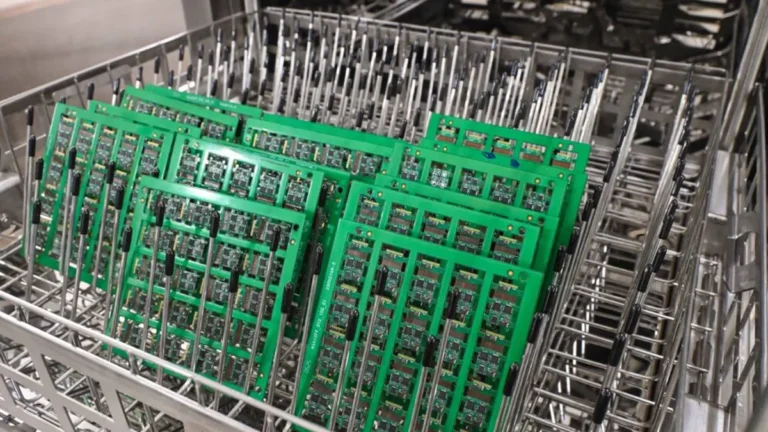
Complete offline aqueous washing, DI rinsing and drying: DEZ-C743
Continuous inline aqueous cleaning: DEZ-C1360
Send DEZ the board dimensions, component height, contamination photographs, flux or cleaning-agent information, required takt time and cleanliness criterion. Representative boards can then be tested to confirm whether dry particle cleaning, solder-side brush cleaning or aqueous cleaning is the correct process.