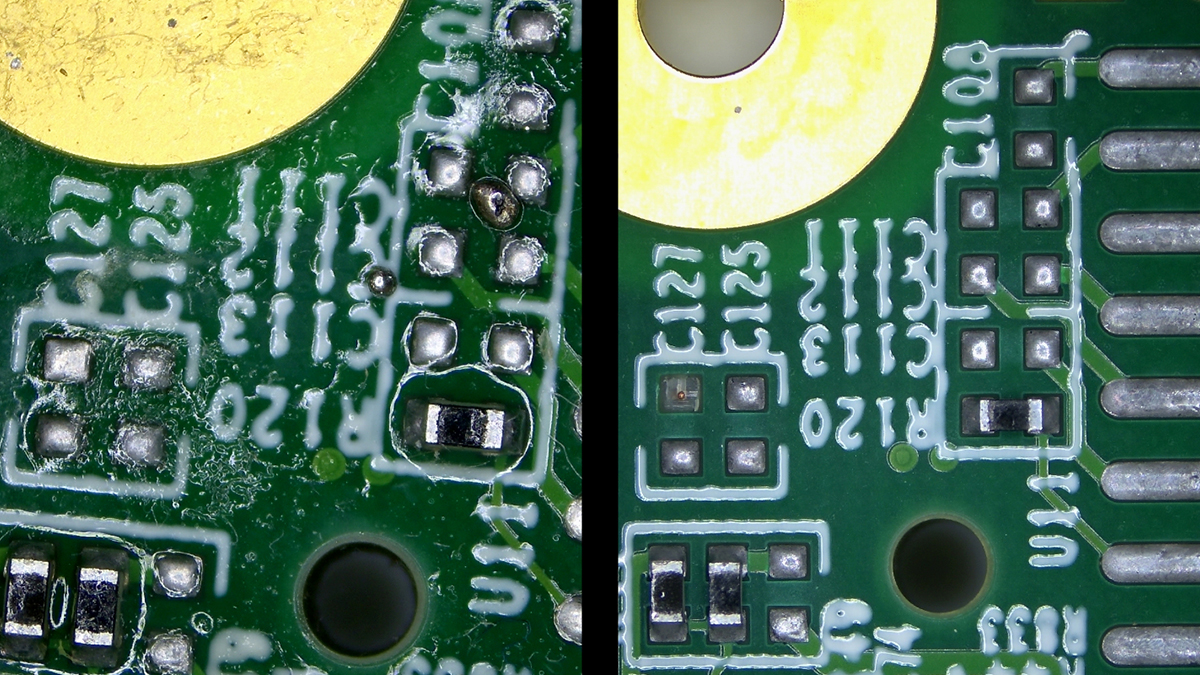
A customer supplied several assembled circuit boards containing visible post-solder residue around through-hole joints, IC leads, SMD packages, LED terminations and power components.
The microscope images show different PCB colours and component structures, but most of the samples share one visible problem: glossy or white residue remains around soldered areas and across the surrounding solder mask.
The purpose of the evaluation was not to apply one machine to every board. It was to determine which cleaning route best matched the location of the contamination, component accessibility and required result.
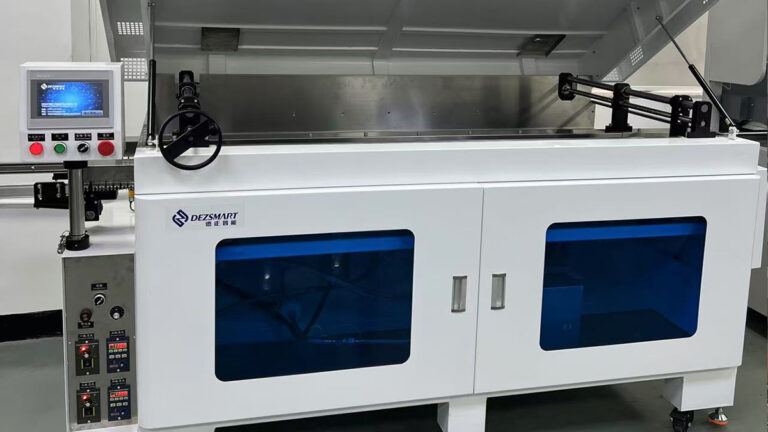
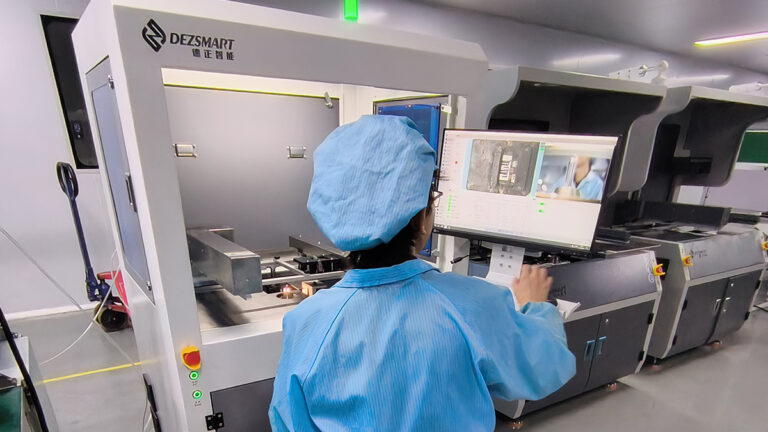
DEZ provides both PCBA cleaning machines and dry ice cleaning machines. The available processes include single-sided brushing, complete aqueous washing and local waterless dry ice cleaning.
Table of Contents
Customer Cleaning Requirements
The submitted samples contained several cleaning challenges:
Open flux residue around through-hole solder joints;
Deposits between exposed IC leads;
Contamination around small SMD packages;
Residue at LED terminations;
White process deposits across pads and solder mask;
Flux around mixed SMT and THT power components.
The images confirm where visible residue was reduced. However, the photographs do not identify the exact flux chemistry or provide an ionic-contamination value.
The cleaning route must therefore be selected from both the visible evidence and additional production information, including flux type, component clearance, board materials, required throughput and customer acceptance criteria.
Cleaning Equipment Considered
The following three machines represent the main cleaning routes evaluated for these samples.
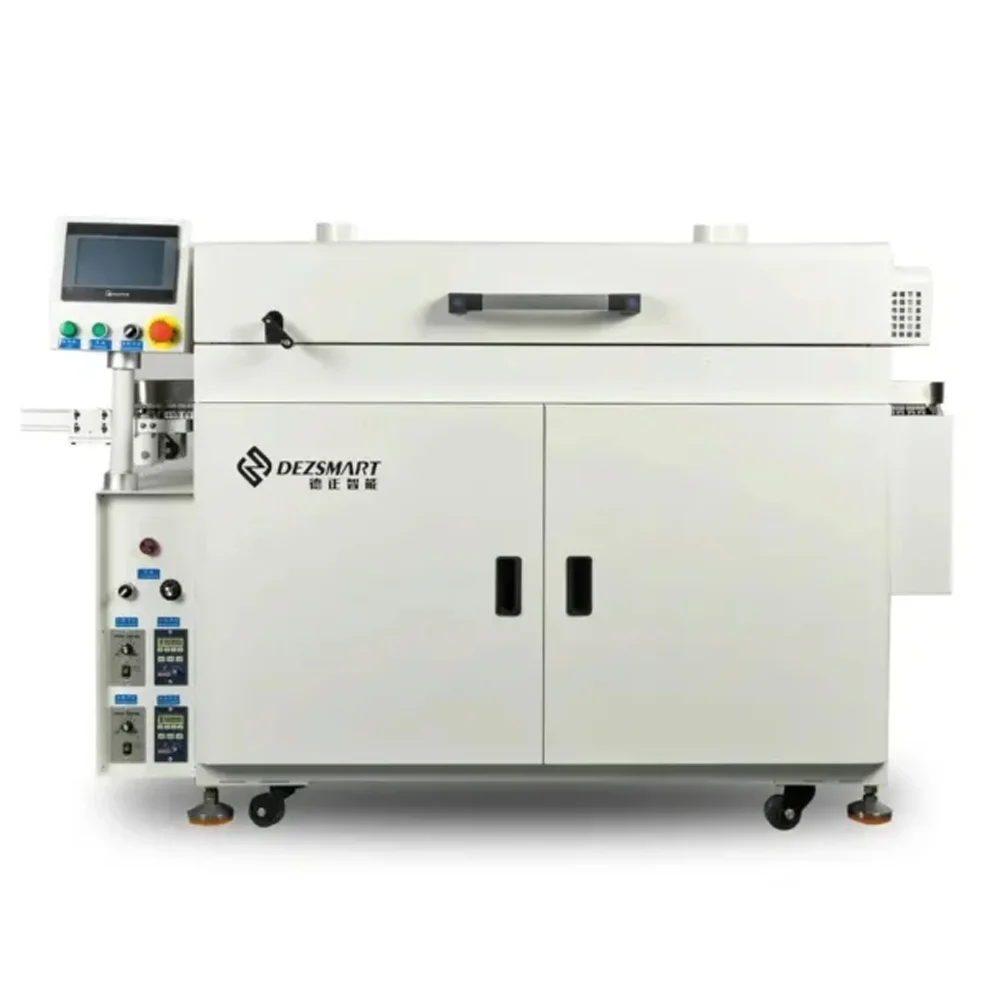
The process uses controlled cleaning-agent application, multidirectional wet brushing, dry brushing and fan drying. It fits flat solder-side surfaces that the brushes can reach without unsuitable contact with components or protruding structures.
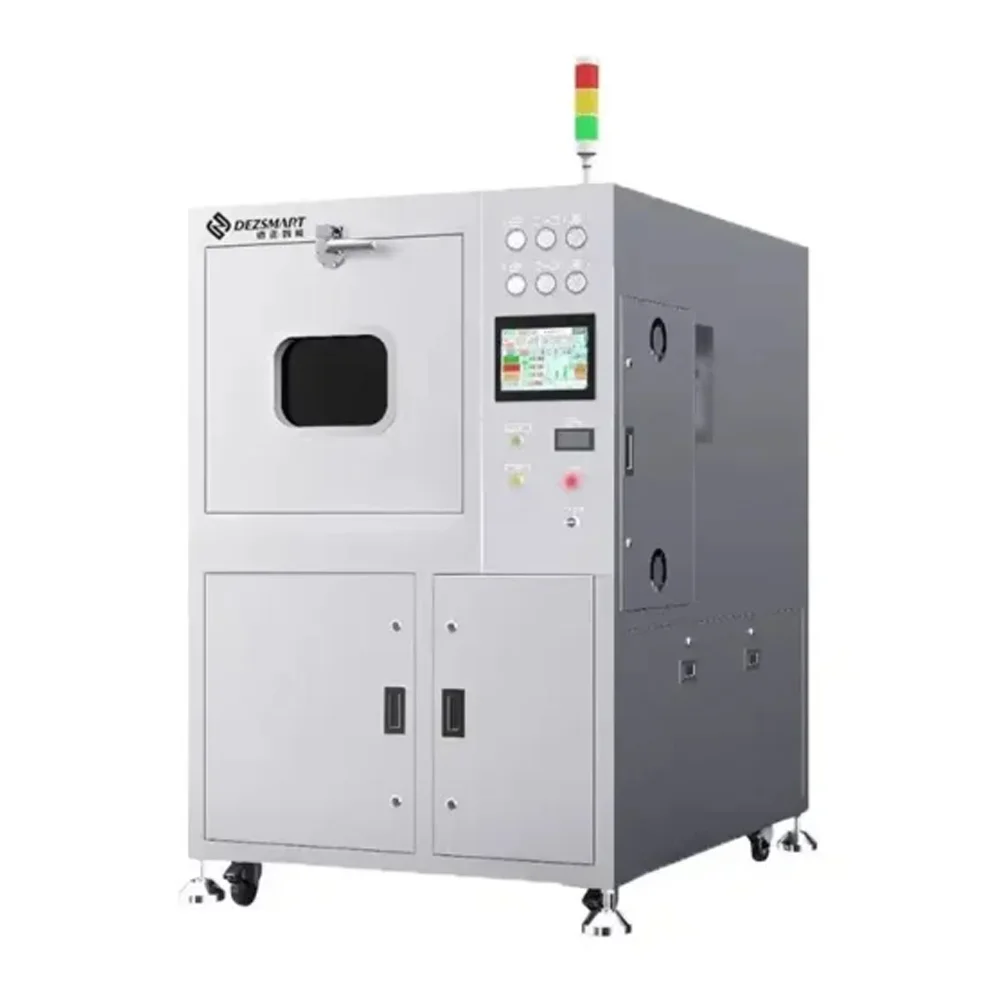
It is the main choice when contamination extends across populated areas, multiple board sides require cleaning or dissolved residue and cleaning chemistry must be rinsed away. Multiple compatible PCBAs can be processed in the two-level basket.
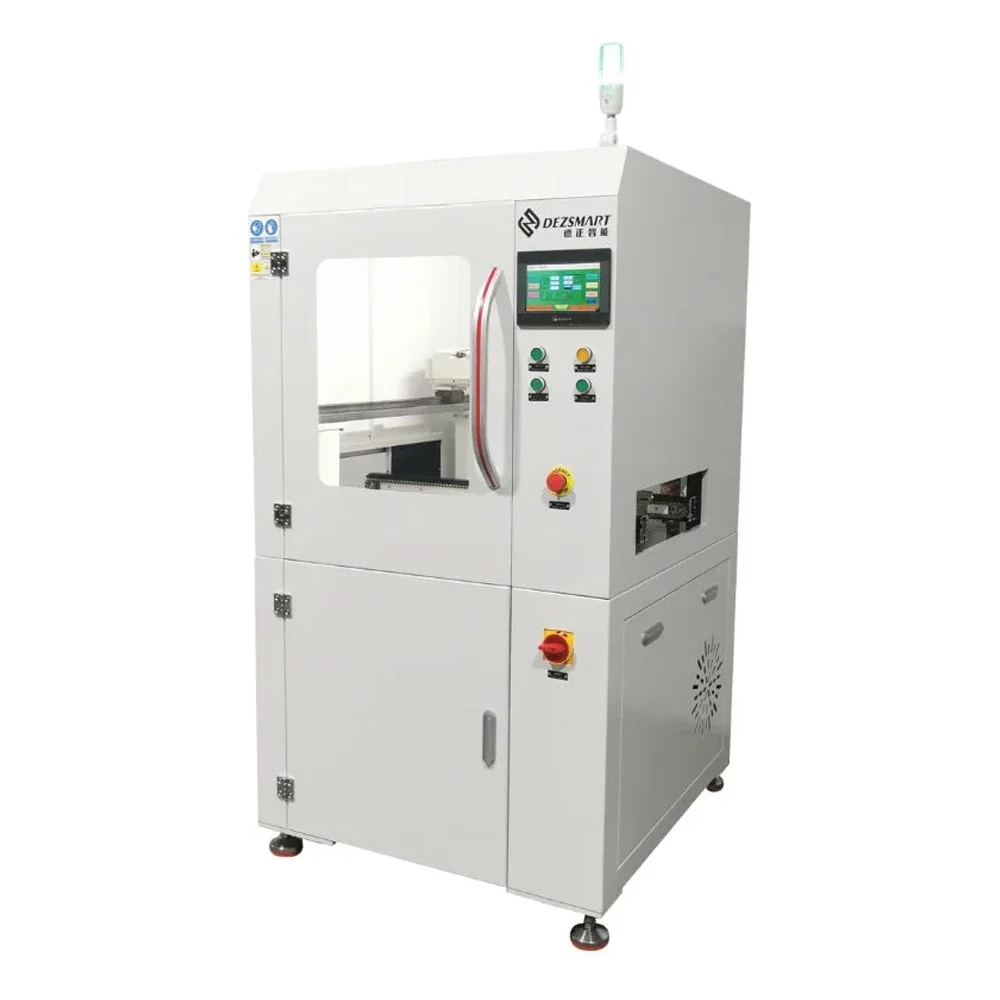
Compressed air directs dry ice particles at the contaminated area. The dry ice separates compatible surface deposits and then sublimates, so the process does not require a water rinse or hot-air drying stage.
It fits local residue around exposed joints, leads and components when the nozzle has direct access and the assembly has passed pressure and material compatibility testing.
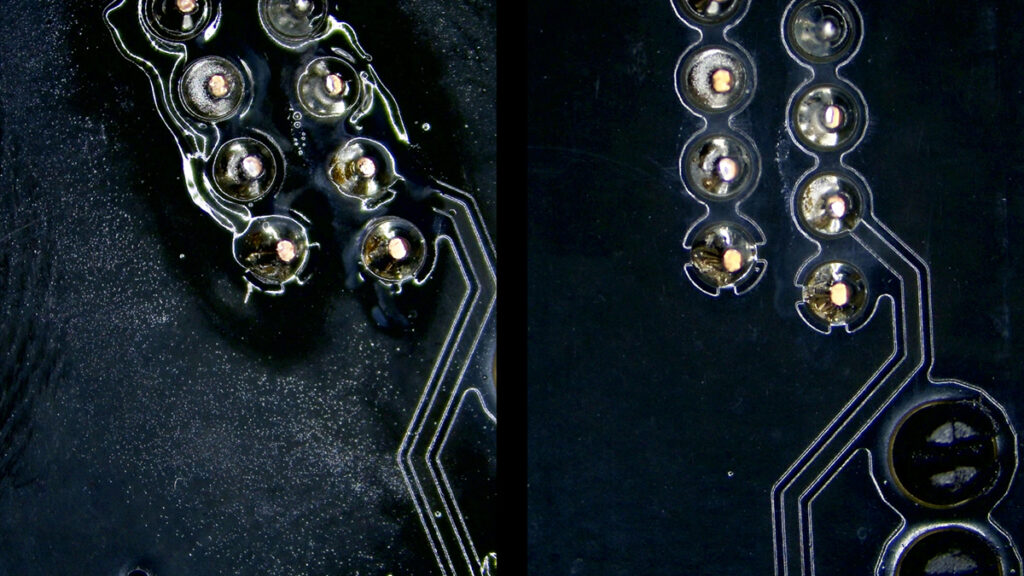
Sample 1: Through-Hole Solder Joints
The upper photograph shows a glossy film around a group of through-hole solder joints. Residue extends between adjacent joints and across the dark solder mask.
The lower photograph shows a reduction in the broad surface film. Individual solder joints and the surrounding traces are easier to distinguish.
The contamination is concentrated on an open, relatively flat solder-side area that appears accessible to the cleaning brushes.
Dry ice fits when the customer requires local waterless cleaning around the exposed joints or when liquid cleaner and subsequent drying are not preferred.
Use DEZ-C743 when: the same contamination extends to both sides or the complete assembly requires washing and DI-water rinsing.
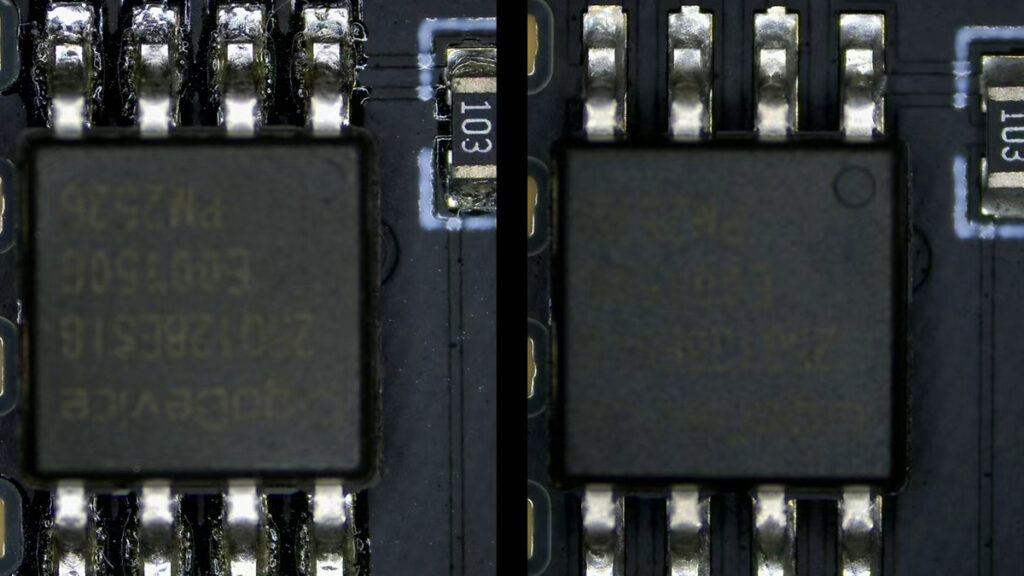
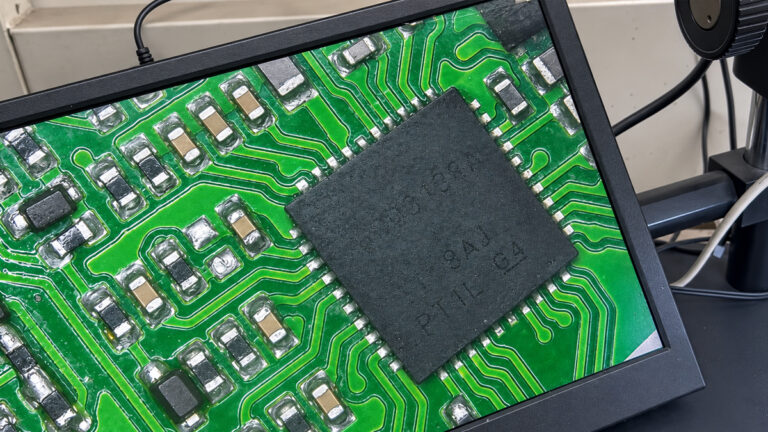
Sample 2: Fine-Pitch IC Leads
Before cleaning, visible residue surrounds both rows of IC leads. Small glossy deposits can be seen between the closely spaced metal terminations.
After cleaning, the spaces between the leads are clearer and less surface residue is visible.
The residue is exposed around the component leads and can potentially be treated with a focused dry ice nozzle. Spray pressure, distance and angle must be validated on the actual package.
Choose the aqueous route if contamination may extend beneath the component or if the process requires chemical dissolution followed by DI-water rinsing.
DEZ-C758 is not recommended for this populated component-side area because direct brush contact is unsuitable.
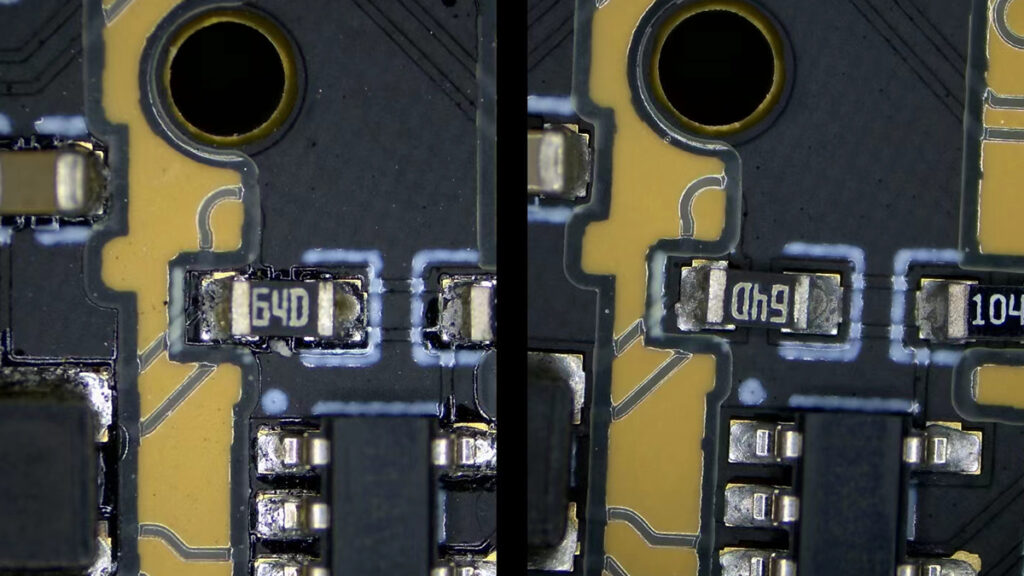
Sample 3: Small SMD Components
This area contains a chip resistor, a small integrated circuit and nearby soldered terminations.
The upper image shows visible deposits around the pad edges. In the lower image, the component boundaries and soldered areas are more clearly defined.
Dry ice is suitable when the contamination is limited to exposed surfaces around these components and local waterless cleaning is required.
Use aqueous batch cleaning when several PCBA models require complete washing, rinsing and drying or when residue occurs in multiple areas of the board.
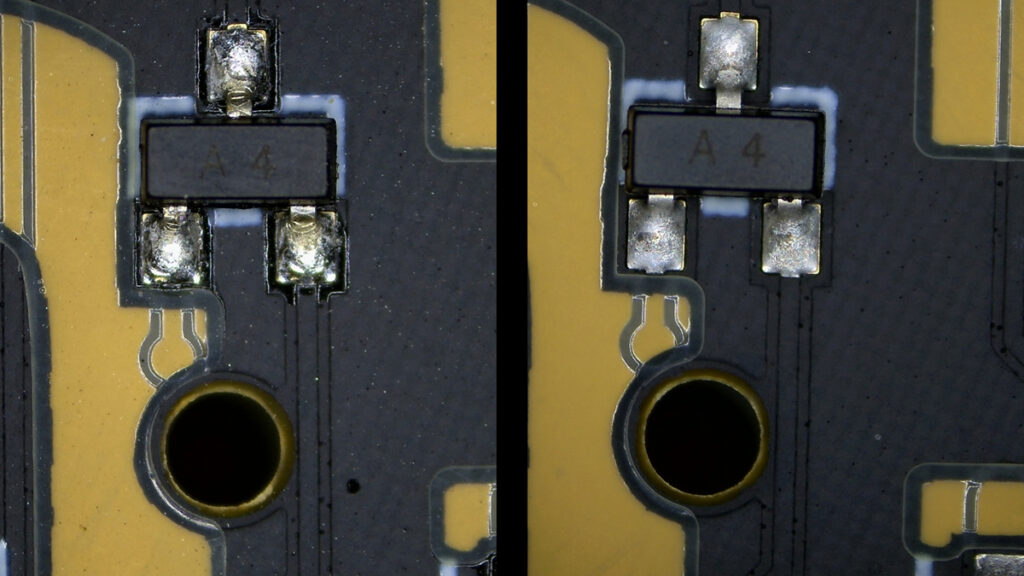
Sample 4: Three-Lead SMD Package
Visible residue surrounds all three soldered pads of the small SMD package. The film extends from the component body onto the nearby solder mask.
After cleaning, the pads appear more clearly separated from the surrounding PCB surface.
This is a strong dry ice application because the contamination is local, exposed and positioned around an accessible component package. It resembles the type of residue produced during component replacement or local soldering work.
Select batch aqueous cleaning when the same residue is distributed across the complete PCBA rather than limited to one repair area.
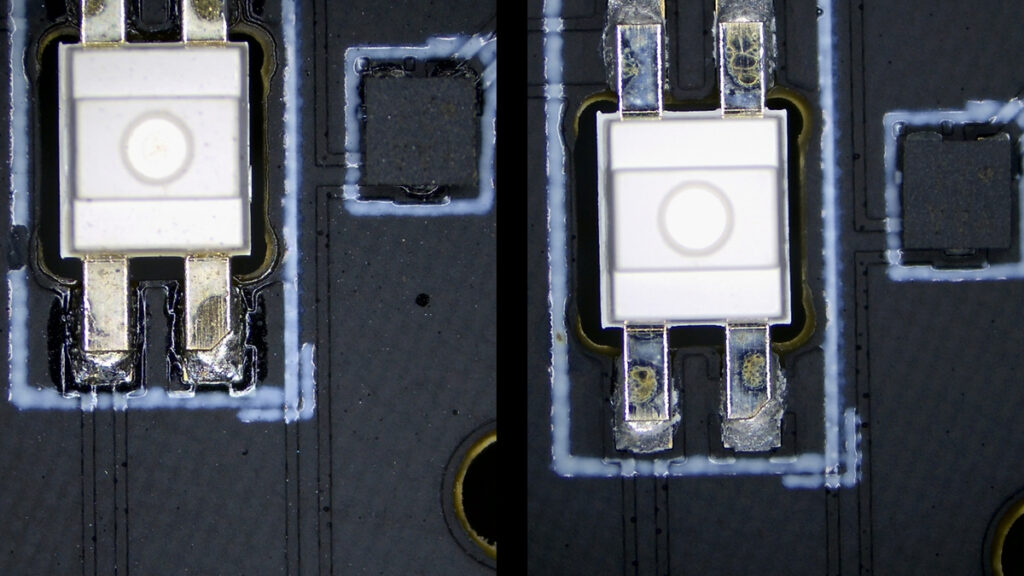
Sample 5: LED Component Terminations
The upper photograph shows residue around the LED leads and package edges. After cleaning, the broad surface film is reduced.
Some colour variation remains on the metal terminations. Surface cleaning does not restore plating or reverse every colour change caused by soldering.
Dry ice provides direct access to the exposed leads without introducing liquid. The LED package, seals and surrounding materials must tolerate the selected pressure, nozzle and working distance.
Use aqueous cleaning when the complete LED assembly requires washing and rinsing and all components are compatible with the cleaning chemistry and drying conditions.
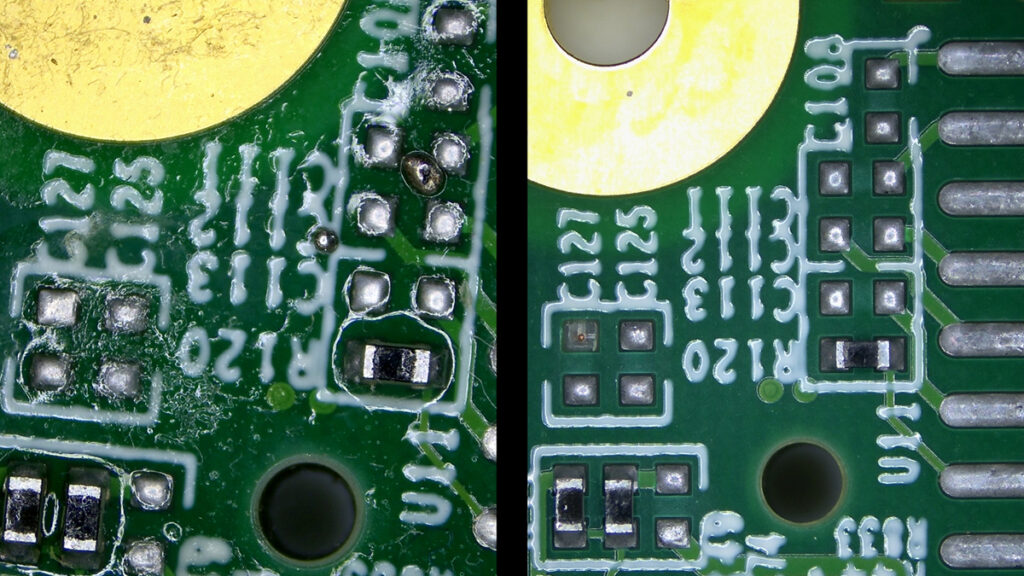
Sample 6: White Process Residue
The green PCBA contains extensive white deposits around component pads, unpopulated footprints and printed reference markings.
After cleaning, the surface is substantially clearer and the pad outlines and markings are easier to inspect.
The photograph cannot establish whether the deposit is flux, dried cleaning chemistry or another production contaminant.
A complete chemical wash and DI-water rinse is the safer initial route when the residue chemistry is unknown and the contamination covers a wider board area.
Dry ice should only be selected if testing confirms that the deposit is an accessible surface material that can be separated without chemical dissolution or rinsing.
DEZ-C758 is unsuitable if the contamination is on a populated surface or distributed around structures that the brushes cannot reach.
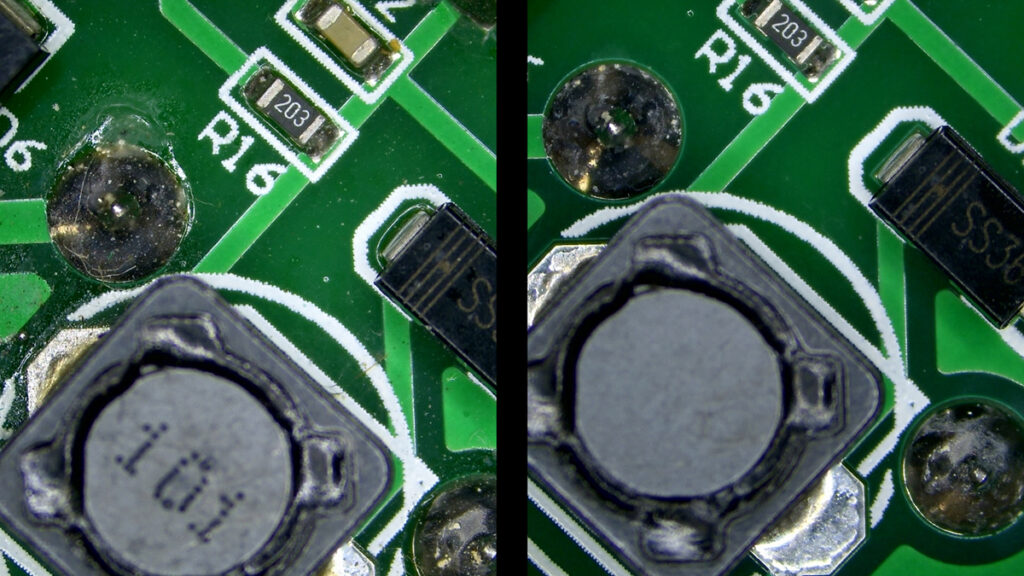
Sample 7: Mixed Power Components
This sample combines a power inductor, larger solder joints and smaller surface-mounted components.
A glossy film is visible around the larger joints before cleaning. The lower image shows less visible residue across the same area.
Dry ice suits local Flux removal around exposed power-component joints when the nozzle can reach the contaminated surface.
Use aqueous batch cleaning when residue is distributed across the complete assembly or when washing and DI-water rinsing are required.
DEZ-C758 is less suitable on the populated side because the power inductor and mixed component heights restrict brush access.
Product Matching Summary
Sample
Component Structure
Primary Product
Alternative
1
Open through-hole solder side
DEZ-C758
DEZ-C7310 or C743
2
Fine-pitch IC leads
DEZ-C7310
DEZ-C743
3
Small SMD components
DEZ-C7310
DEZ-C743
4
Local three-lead package
DEZ-C7310
DEZ-C743
5
LED component leads
DEZ-C7310 after testing
DEZ-C743
6
Widespread white residue
DEZ-C743
DEZ-C7310 after testing
7
Mixed power assembly
DEZ-C7310
DEZ-C743
Problems Solved
Visible Flux During Final Inspection
Glossy residue around joints and components can cause a finished assembly to fail appearance requirements. Removing the film makes the component area easier to inspect under magnification.
Inconsistent Manual Cleaning
Manual wiping depends on operator access, pressure, chemical quantity and cleaning time. It is difficult to achieve the same result between narrow IC leads, large through-hole joints and mixed component structures.
Local Rework Residue
Component replacement and manual soldering can leave Flux around a limited repair area. Dry ice is relevant when the residue is directly accessible and the complete board should not enter a liquid process.
Contamination Across the Complete Assembly
When residue covers several areas or may remain around low-clearance components, an aqueous process provides washing, DI-water rinsing and drying across the assembly.
Accessible Solder-Side Residue
When contamination is restricted to one open solder side, brush cleaning can remove visible Flux marks and loose solder balls without washing the populated side.
Why One Machine Does Not Fit Every PCBA
The seven samples show that “Flux residue” is not enough information for equipment selection.
Two PCBAs may contain similar-looking contamination but require different machines because of:
Residue location;
Component height;
Pad spacing;
Surface accessibility;
Chemical compatibility;
Required cleanliness;
Production quantity;
Inline or offline operation.
A visible deposit on an open through-hole solder side may suit brushes. The same deposit between component leads may require dry ice or aqueous spray cleaning. Contamination beneath low-clearance packages may require washing and DI-water rinsing.
Visible Cleanliness and Ionic Cleanliness
These microscope comparisons demonstrate changes in visible surface contamination. They do not provide ionic-cleanliness data.
Dry ice and brush cleaning can remove accessible visible residue, but they must not be presented as proof that a numerical ionic-contamination limit has been achieved.
When the customer specifies ionic cleanliness, provide the test method and acceptance value before the process is confirmed. Aqueous washing, controlled rinsing, drying and subsequent testing may be required.
Project Result
The seven comparisons show that visible residue was reduced across different PCBA structures:
Through-hole solder joints became easier to inspect;
Fine-pitch lead spacing appeared clearer;
Residue around small SMD packages was reduced;
LED and power-component areas showed less surface film;
White deposits across the green PCB were substantially reduced.
The project also demonstrated that equipment should be selected from the contamination location and production requirement—not from the word “Flux” alone.
Send Your PCBA for Cleaning Evaluation
Send representative PCBAs with their actual contamination together with:
PCBA dimensions;
Maximum component height;
Flux or process chemistry;
Contamination photographs;
Production volume and cycle requirement;
Required visible or ionic-cleanliness result;
Available compressed air, DI water, drainage and exhaust.
DEZ will compare brush, aqueous and dry ice cleaning using the actual board and recommend the appropriate process.