Speak Directly With Our Equipment Team
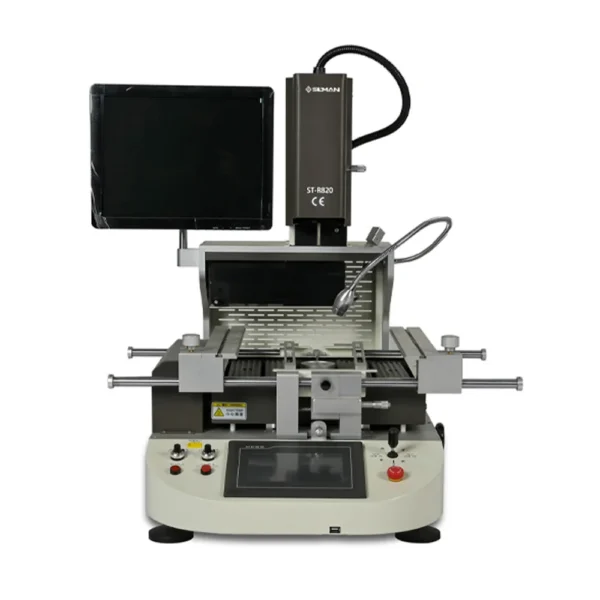
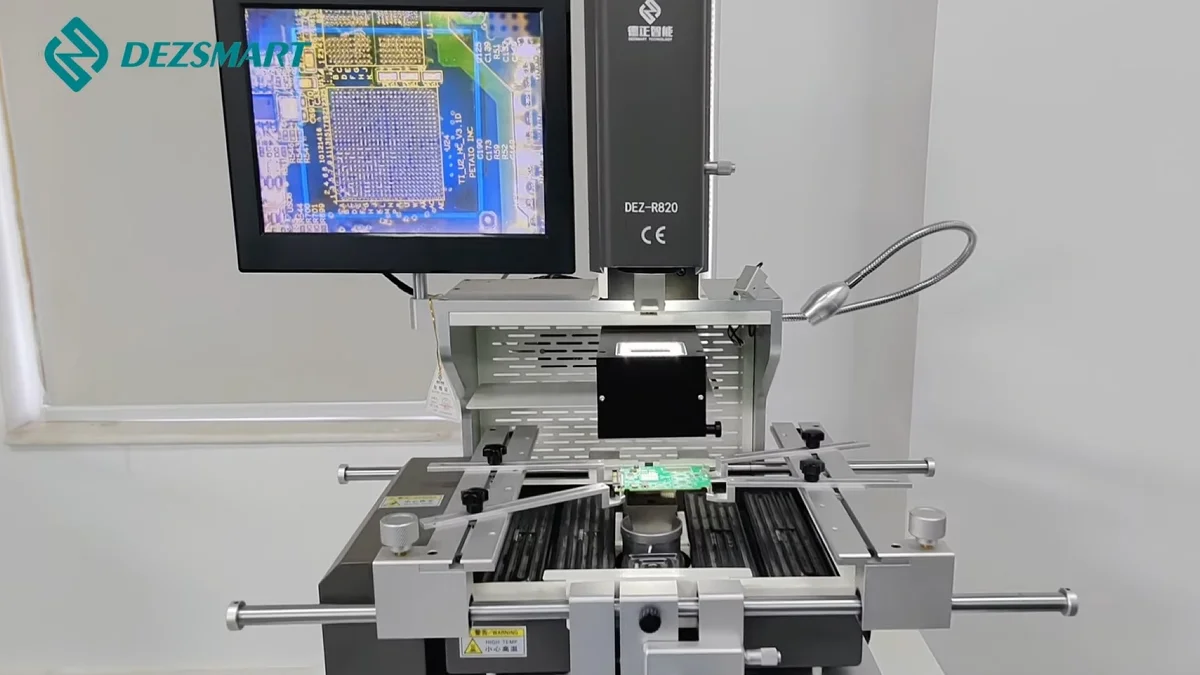
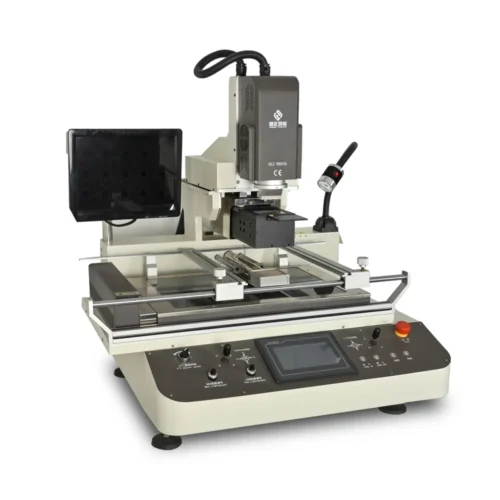
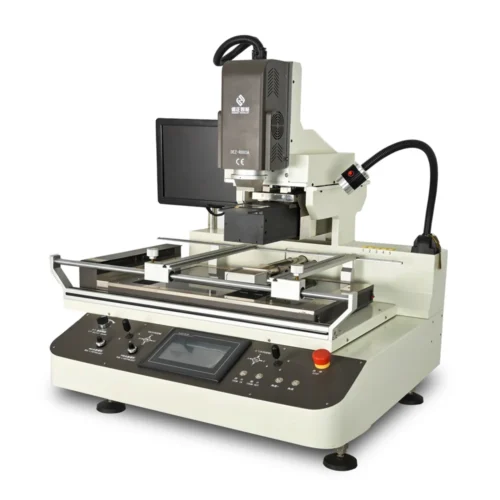
The DEZ-R820 Optical BGA Rework Station removes and replaces BGA, QFN, CSP, QFP, sockets and other surface-mounted components on assembled PCBs.
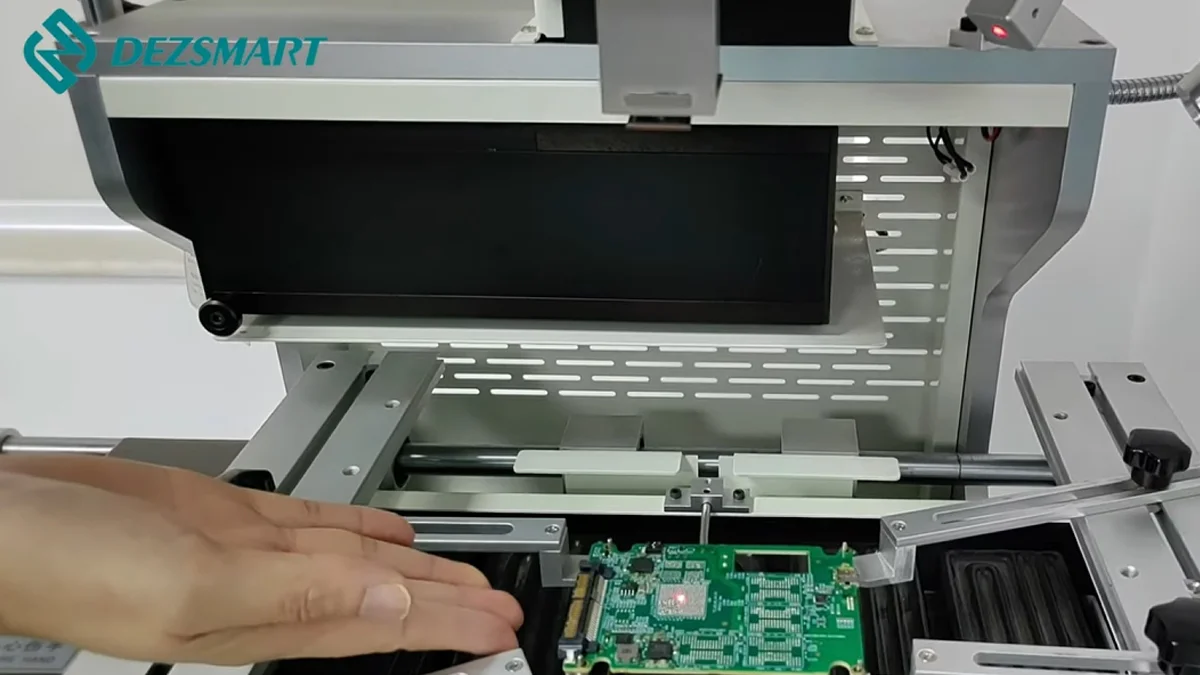
Its three-zone heating system controls heat above and below the component, while the optical alignment system superimposes the component terminals and PCB pads before placement.
The machine combines controlled desoldering, precision alignment, component placement and profile-based soldering in one workstation. This helps repair teams replace defective components while reducing the risk of PCB warpage, overheated neighbouring components, damaged pads and inaccurate placement.
The DEZ-R820 supports PCBs up to 415 × 370 mm and components from 2 × 2 mm to 80 × 80 mm, making it suitable for electronics manufacturing, PCBA repair, failure-analysis laboratories and engineering production.
| Function | Customer Benefit |
|---|---|
| Top and bottom hot-air heating | Heats the component and solder joints from both sides |
| Carbon-fibre infrared preheater | Warms a larger PCB area and reduces thermal differences |
| Independent heating-zone control | Builds a controlled temperature profile for each board |
| CCD optical alignment | Aligns hidden BGA terminals with PCB pads |
| Automatic component placement | Reduces movement after optical alignment |
| Automatic desoldering operation | Controls component lifting after solder reflow |
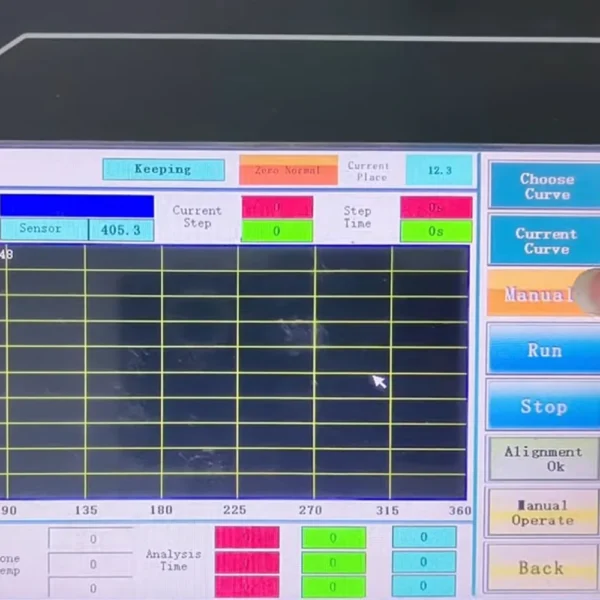
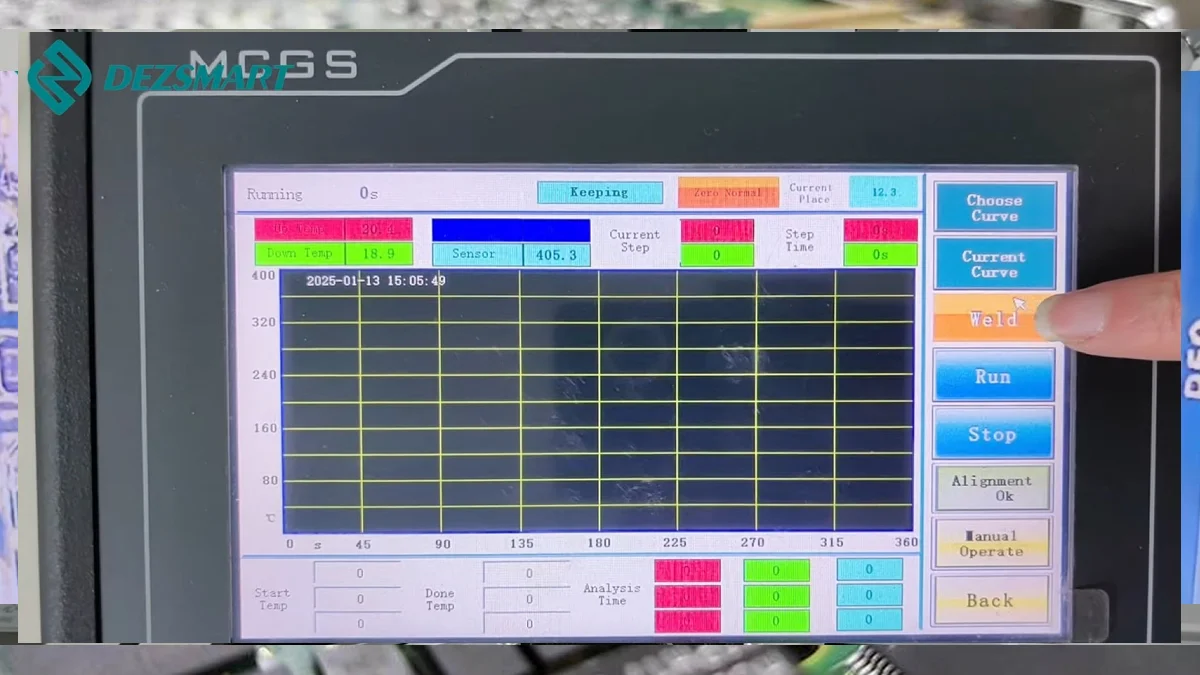
| Closed-loop temperature control | Maintains the programmed heating process |
| Pressure sensor | Reduces excessive placement force on the PCB and component |
| PCB support fixture | Holds different board sizes during heating and placement |
| Profile storage | Reuses approved settings for repeated repair work |
| Real-time temperature monitoring | Shows the actual heating response during rework |
| Over-temperature protection | Protects the machine and PCBA during abnormal conditions |
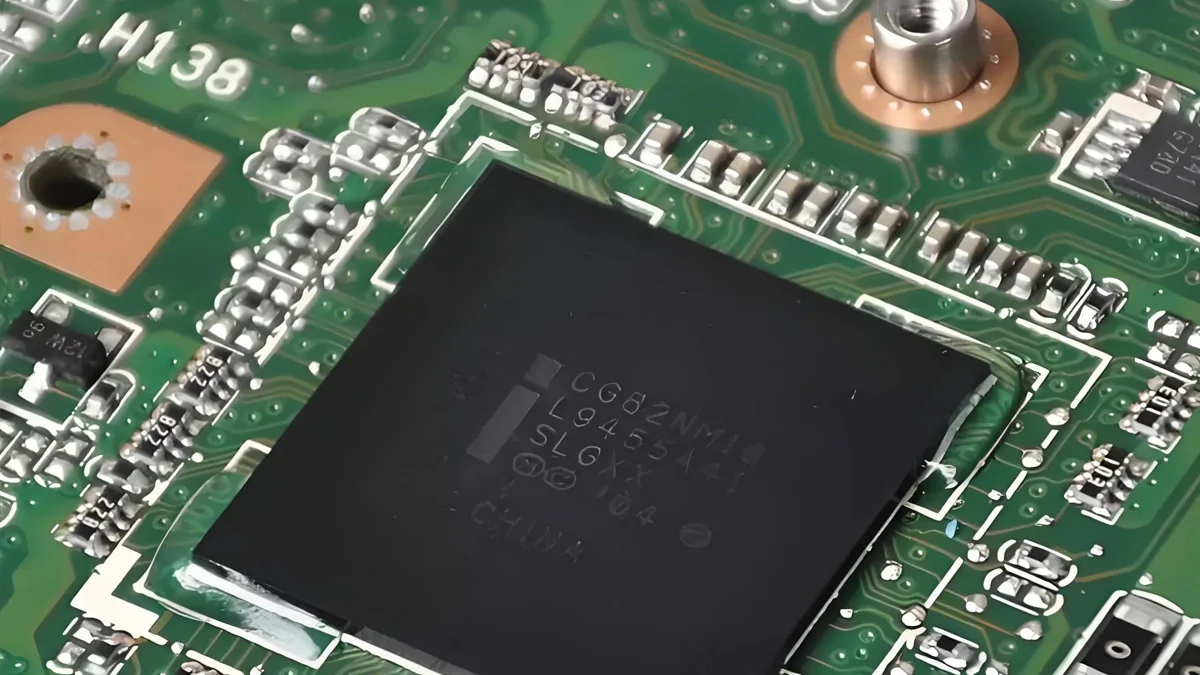
A completed PCB assembly may contain hundreds of correctly installed components but fail because of one damaged BGA, QFN, processor, memory device or socket.
The DEZ-R820 allows the defective component to be removed and replaced while retaining the rest of the assembly.
This is particularly valuable for:
This gives quality engineers direct visual evidence instead of relying only on electrical symptoms or external appearance.

BGA rework requires more than directing hot air at the top of a component.
If only the component surface is heated, the upper area may become too hot while the solder joints beneath the package remain below reflow temperature. Increasing the temperature further can damage the package, pads or nearby components.
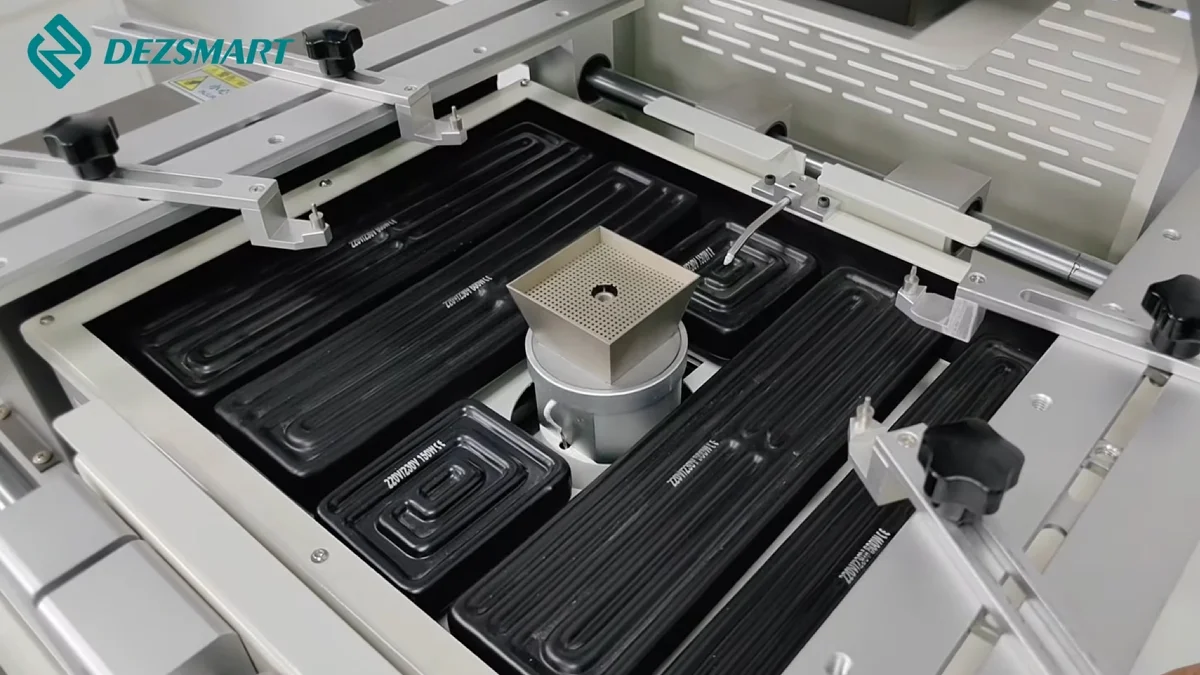
The DEZ-R820 uses three independently controlled heating zones:
· 1,200 W upper hot-air heater;
· 1,200 W lower hot-air heater;
· 2,700 W carbon-fibre infrared preheater.
The infrared zone preheats a larger area of the PCB, while the upper and lower hot-air heaters concentrate the reflow process around the selected component.
| Parameter | Specification |
|---|---|
| Model | DEZ-R820 |
| Equipment type | Semi-automatic optical BGA rework station |
| Supported packages | BGA, CSP, QFN, QFP, sockets and compatible SMD components |
| PCB size | 65mm × 65mm – 415mm × 370 mm |
| Component size | 2mm × 2mm – 80mm × 80 mm |
| Heating system | Upper hot air, lower hot air and infrared preheating |
| Upper heater | 1,200 W |
| Lower heater | 1,200 W |
| Infrared heater | 2,700 W |
| Total power | 5,300 W |
| IR heating area | 280mm × 380 mm |
| Temperature control | K-type thermocouple closed-loop control |
| Listed temperature accuracy | ±3°C |
| Optical system | High-definition CCD colour imaging |
| Placement movement | Z-axis |
| PCB positioning | Adjustable V-groove support |
| Operating interface | Touchscreen HMI |
| Power supply | AC 220 V ±10%, 50/60 Hz |
| Machine dimensions | 680 × 630 × 900 mm, excluding display stand |
| Net weight | Approximately 79 kg |
| Optional accessory | Rework-process inspection camera |
| Comparison | DEZ-R820 Optical BGA Rework Station | Manual Hot-Air Repair |
|---|---|---|
| Heating zones | Upper, lower and infrared preheating | Mainly top heating |
| Temperature profile | Programmable and repeatable | Primarily operator controlled |
| BGA alignment | CCD optical alignment | External visual estimation |
| Component placement | Controlled placement mechanism | Manual tweezers or suction pen |
| PCB support | Adjustable fixture | Basic holder or workbench |
| Temperature feedback | Thermocouple closed-loop monitoring | Limited or separate measurement |
| Pressure control | Built-in pressure sensor | Operator judgement |
| Process repeatability | Suitable for repeat production | Highly operator dependent |
| Best use | BGA, QFN and high-value PCBA repair | Simple SMD and occasional repairs |
We have worked with


X-ray inspection and BGA rework perform different but connected functions.
The X-ray system identifies the hidden solder defect and records its position. The rework station removes and replaces the affected component. The repaired assembly can then return to X-ray inspection for verification.
Recommended Process:
DEZ-X7600 X-Ray Inspection → DEZ-R820 BGA Rework → Post-Rework X-Ray Verification
Without pre-rework inspection, a good component may be removed unnecessarily. Without post-rework inspection, hidden defects beneath the replacement component may remain undetected.

It removes and replaces BGA and other surface-mounted components using controlled heating, optical alignment and precision placement.
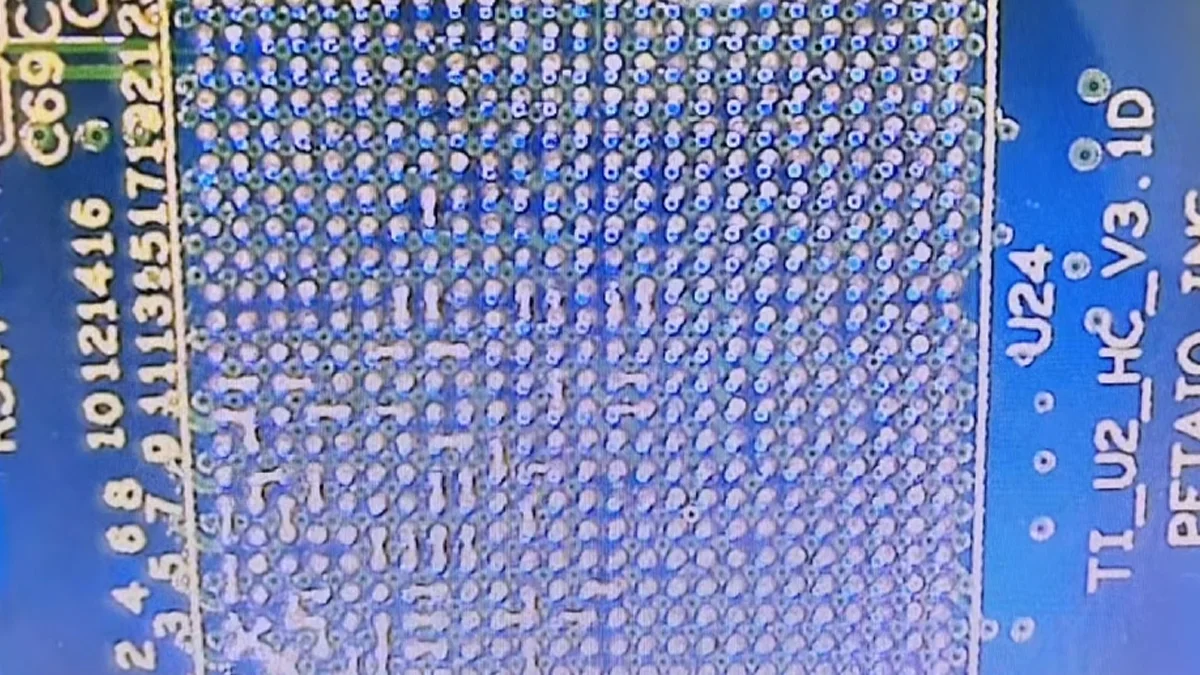
The solder balls are located underneath the component and become invisible during placement. Optical alignment displays the solder-ball and PCB-pad patterns together.
It supports PCBs from 65 × 65 mm to 415 × 370 mm.
The listed component range is 2 × 2 mm to 80 × 80 mm.
Yes. The optical system and controlled heating can be used for compatible QFN, CSP and other bottom-terminated packages.
The infrared preheater warms a larger PCB area before local reflow, reducing the temperature difference between the repair area and surrounding board.
The machine provides automatic desoldering and lifting operation after the programmed heating process.
The system uses optical alignment followed by controlled Z-axis placement.
No. Pad cleaning, solder preparation and inspection are separate rework steps performed before the replacement component is installed.
The machine performs component removal, alignment, placement and soldering. Component reballing requires the appropriate separate tooling and process.
Yes. Profiles can be stored and reused for repeated repair of the same PCB and component configuration.
It is strongly recommended for BGA, QFN and other hidden solder joints because external inspection cannot verify every connection beneath the component.
Yes. Customers can provide representative PCB assemblies, components and defect information for rework testing.
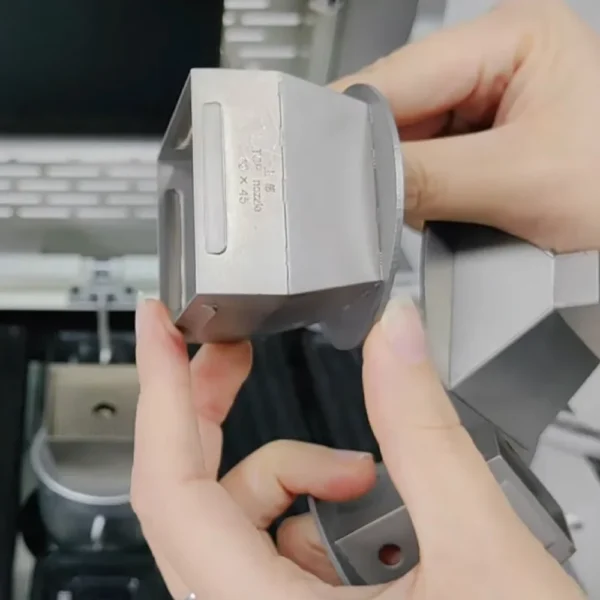
Custom nozzles can be supplied for different BGA and SMD package sizes.
Contact DEZ for PCBA cleaning machine, selective soldering machine, stencil cleaning machines, X-ray inspection, BGA rework, reflow ovens and SMT handling equipment.
Send your workpiece dimensions, production problem and required throughput to receive a free application review, equipment recommendation and project quotation. Free sample testing is available for qualified projects.
An equipment specialist will contact you within one hour during business hours.
Get a Free Recommendation and Request Sample Testing
Email: [email protected]
Phone: +86 138 2338 9052