Speak Directly With Our Equipment Team
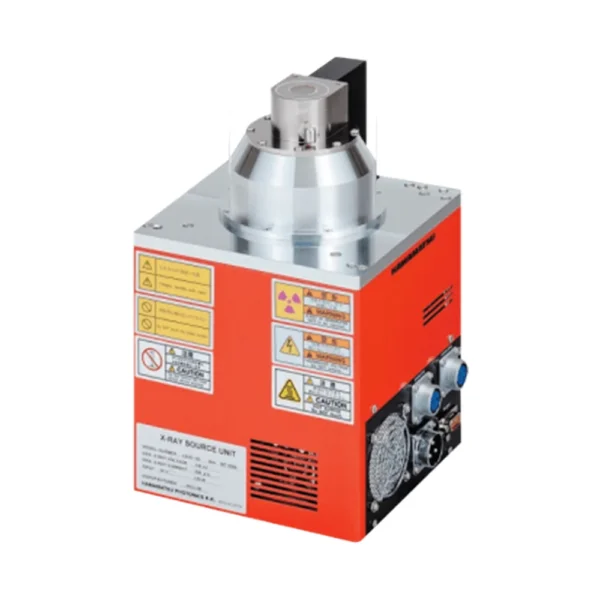
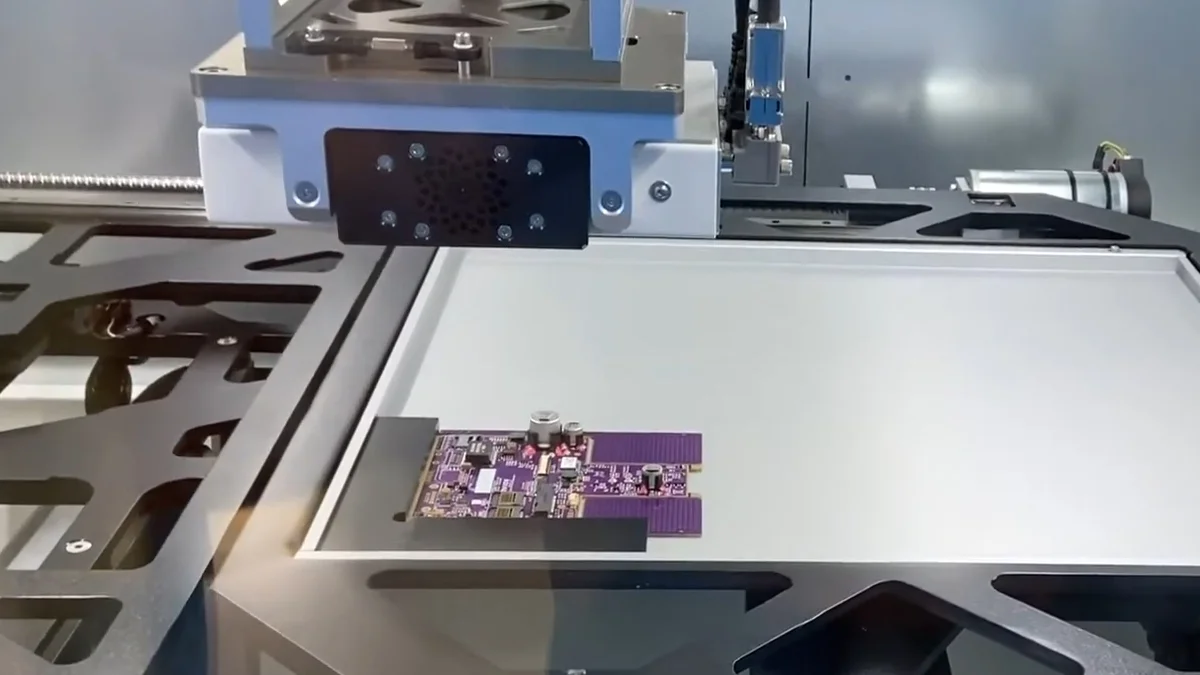
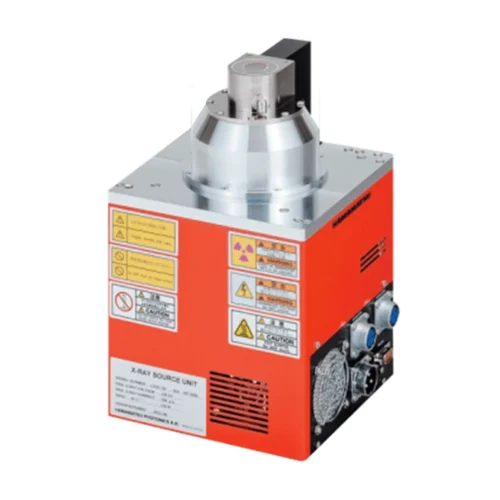
The L9421-02_TXPR1011E is a sealed 90 kV microfocus X-ray source for integration into PCB inspection, electronic component inspection, X-ray CT and inline nondestructive testing systems.
Its focal spot reaches 5 µm at 4 W, helping the inspection system produce sharp enlarged images of solder joints, component packages, internal connections and small structural features. The integrated high-voltage power supply and RS-232C control simplify installation and allow the source to be operated through the inspection system software.
| Specification | L9421-02_TXPR1011E |
|---|---|
| X-Ray Source Type | Sealed microfocus X-ray source |
| Tube Voltage Range | 20–90 kV |
| Tube Current Range | 0–200 µA |
| Maximum Output | 8 W |
| Focal Spot Size | 7 µm; 5 µm at 4 W |
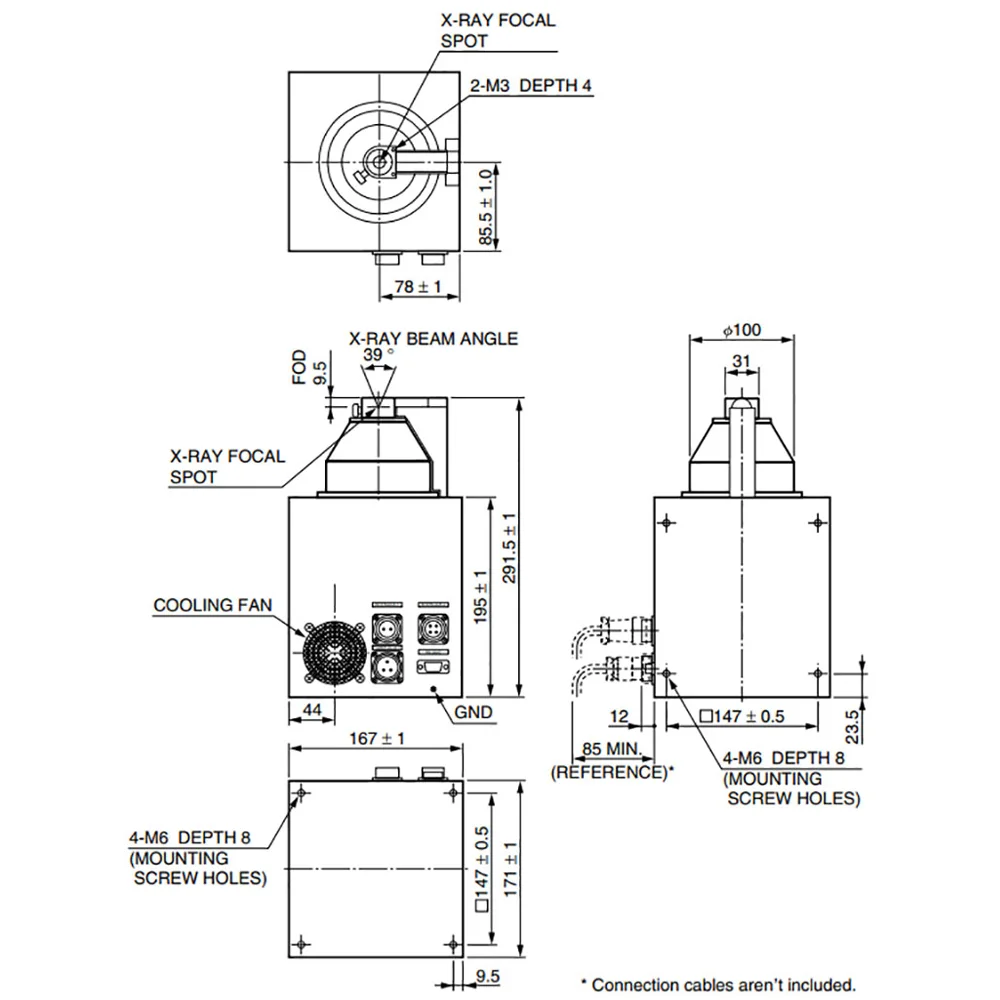
| X-Ray Beam Angle | 39° conical beam |
| Focus-to-Object Distance | 9.5 mm |
| External Control | RS-232C |
| Input Voltage | 24 V DC |
| Maximum Power Consumption | 96 W |
| Cooling Method | Convection cooling |
| Weight | Approximately 10 kg |
Inspection systems require geometric magnification to reveal small soldering and internal assembly details. A large focal spot produces image blur as magnification increases, making small voids, cracks, bridges and internal connections more difficult to evaluate.
The L9421-02 provides a focal spot of 5 µm at 4 W. Combined with a short 9.5 mm focus-to-object distance, it allows the inspected part to be positioned close to the source for higher geometric magnification and clearer imaging of small electronic features.
The operating voltage can be adjusted from 20 to 90 kV to match PCBAs, semiconductor packages, connectors, plastic components and compatible metal parts with different thicknesses and material densities.

| Tube Voltage | 90 kV |
|---|---|
| Type | Sealed type |
| Tube Voltage Operational Range | 20 kV to 90 kV |
| Maximum Output | 8 W |
| X-ray Focal Spot Size | 7 μm (5 μm at 4 W) |
| X-ray Beam Angle (Coned) | 39 degree |
| Focus to Object Distance (FOD) | 9.5 mm |
We have worked with
No. It is the X-ray-generating component of an inspection system. A detector, motion system, shielding cabinet, control software and safety interlocks are also required.
The specified focal spot is 7 µm at normal rated operation and 5 µm when operating at 4 W. The smaller spot provides sharper images, while higher output may be required for greater penetration or shorter exposure.
Yes. A 90 kV microfocus source is commonly used for PCBAs, BGA packages, electronic components and relatively thin industrial parts. Thick, dense or highly absorbing products may require a 110 kV, 130 kV or higher-power source.
The source generates the X-rays required to form the image. Actual defect visibility also depends on the detector resolution, geometric magnification, exposure settings, mechanical stability and image-processing software.
Yes. The high-voltage power supply and control function are integrated into the source unit.
Yes. The RS-232C interface supports external control of the X-ray source. Communication compatibility and command integration must be confirmed during system development.
Common causes include excessive focal spot size at higher output, insufficient geometric magnification, detector resolution limits, mechanical vibration, object movement and incorrect exposure settings. Reducing output to the 5 µm focal-spot operating condition may improve detail when penetration remains sufficient.
Increase the tube voltage or current within the permitted range and adjust the exposure time. If the product is too thick or dense for 90 kV and 8 W, a higher-voltage or higher-output source should be selected.
Replacement requires confirmation of installation dimensions, FOD, beam angle, electrical input, RS-232C commands, connectors, cooling conditions and shielding geometry. Equal tube voltage alone does not guarantee direct compatibility.
The L9421-02 uses convection cooling. The equipment enclosure must still provide the operating temperature and ventilation conditions specified by the manufacturer.
Yes. It must be installed inside a properly designed X-ray-shielded enclosure with door interlocks, emergency controls and leakage testing that comply with local radiation regulations.
Provide the inspected object, material, maximum thickness, smallest defect to be detected, required inspection speed, detector model, detector size, pixel pitch, field of view and intended source-to-detector distance.
Contact DEZ for PCBA cleaning machine, selective soldering machine, stencil cleaning machines, X-ray inspection, BGA rework, reflow ovens and SMT handling equipment.
Send your workpiece dimensions, production problem and required throughput to receive a free application review, equipment recommendation and project quotation. Free sample testing is available for qualified projects.
An equipment specialist will contact you within one hour during business hours.
Get a Free Recommendation and Request Sample Testing
Email: [email protected]
Phone: +86 138 2338 9052