We gebruiken cookies om je de beste ervaring op onze website te geven.
Spreek direct met ons apparatuur-team
Vertel ons wat je nodig hebt om te reinigen, solderen of inspecteren. We zullen geschikte apparatuur aanbevelen op basis van je PCB-grootte, proces en productiecapaciteit.
Directe fabrikantsupport
Binnen 1 werk uur
Krijg advies over apparatuurselectie, monsteronderzoek en configuratie rechtstreeks van DEZ SMT.
Je informatie wordt alleen gebruikt om op je aanvraag te reageren.
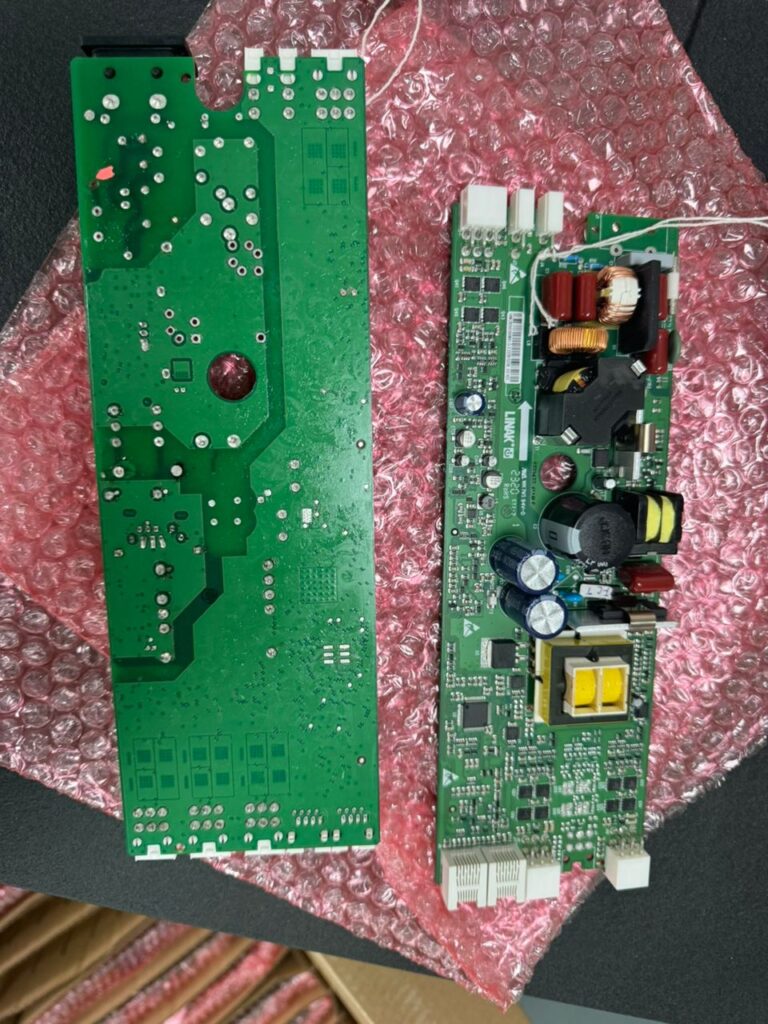
A customer sent assembled circuit boards to DEZ for a PCBA flux residue cleaning test. Visible rosin flux residue remained around components, solder joints and across the PCB surface after soldering.
The condition did not meet the end customer’s delivery requirements. The manufacturer therefore needed a controlled process that could remove the residue from the assembled boards without relying on manual wiping.
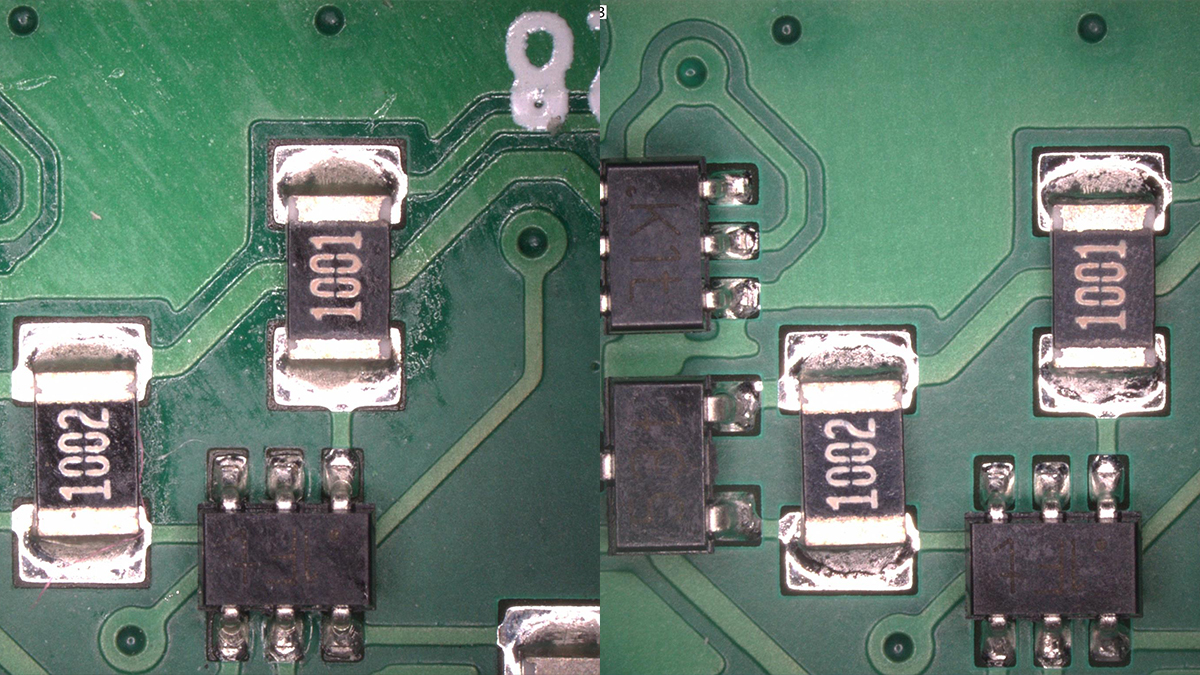
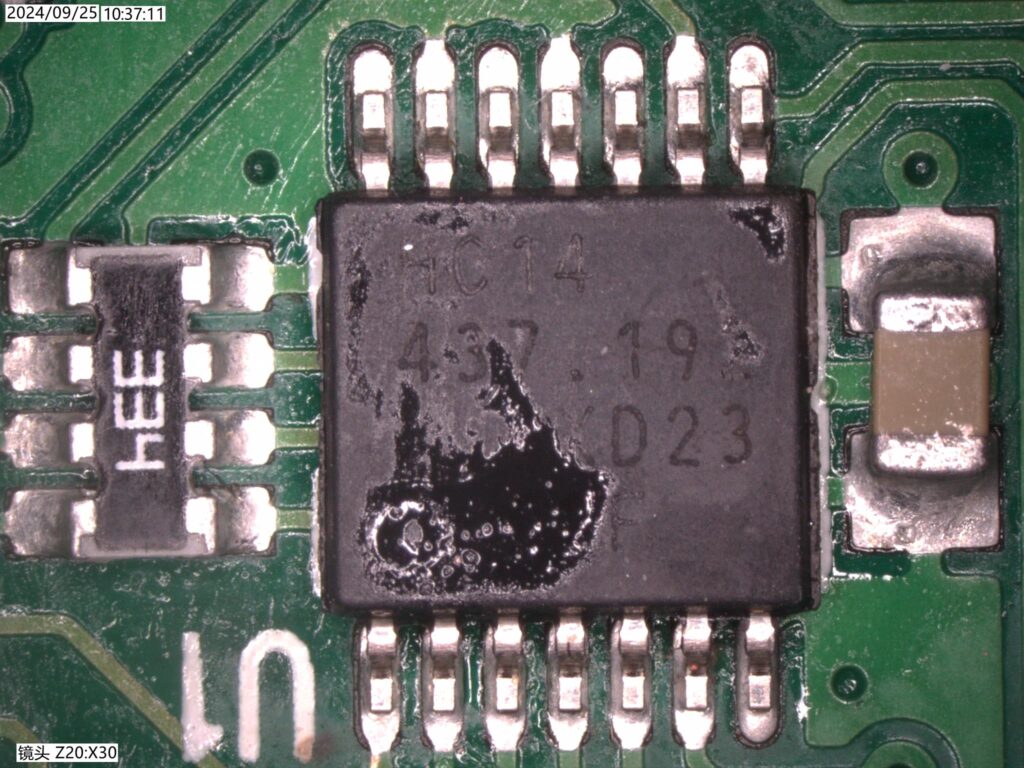
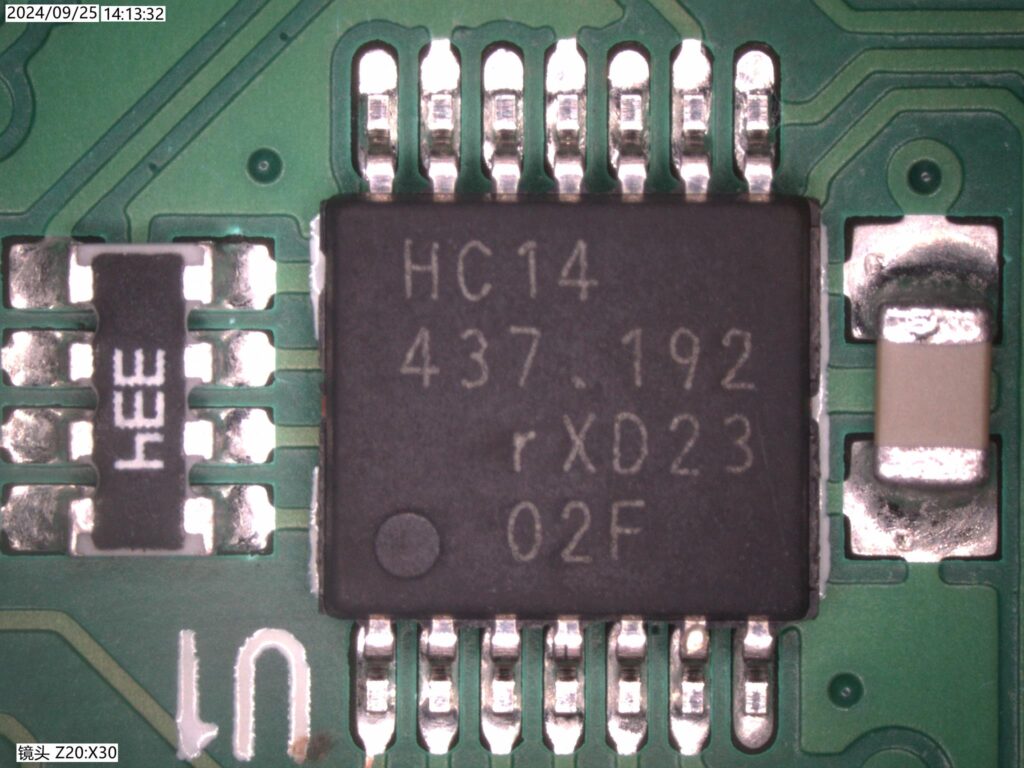
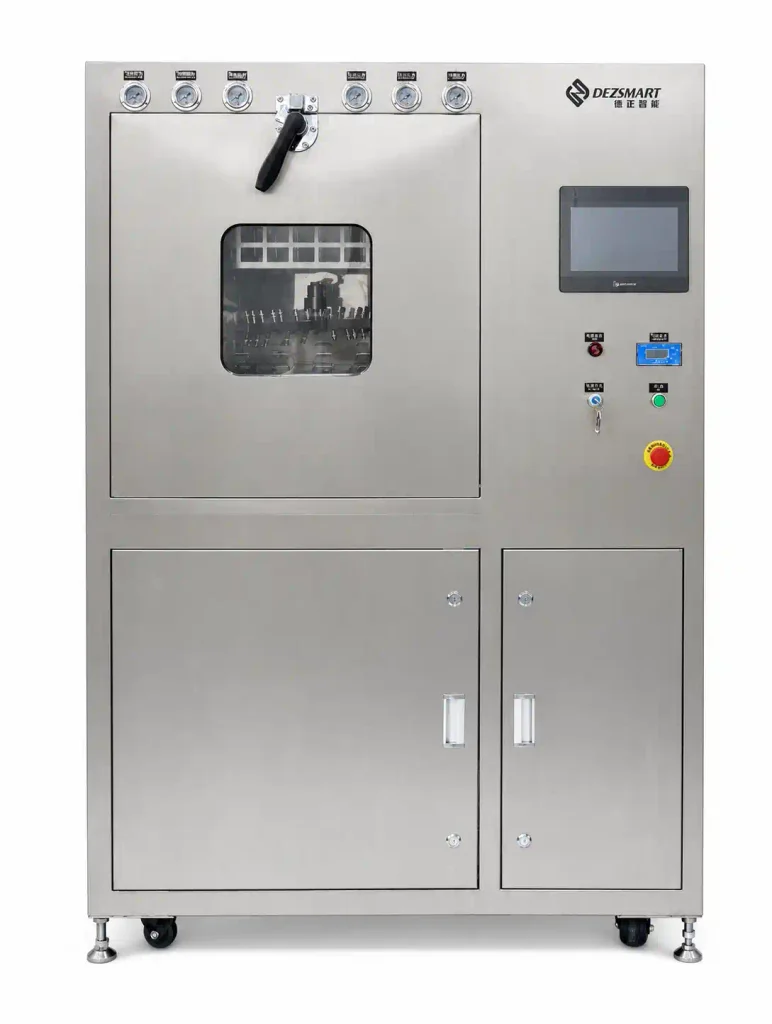
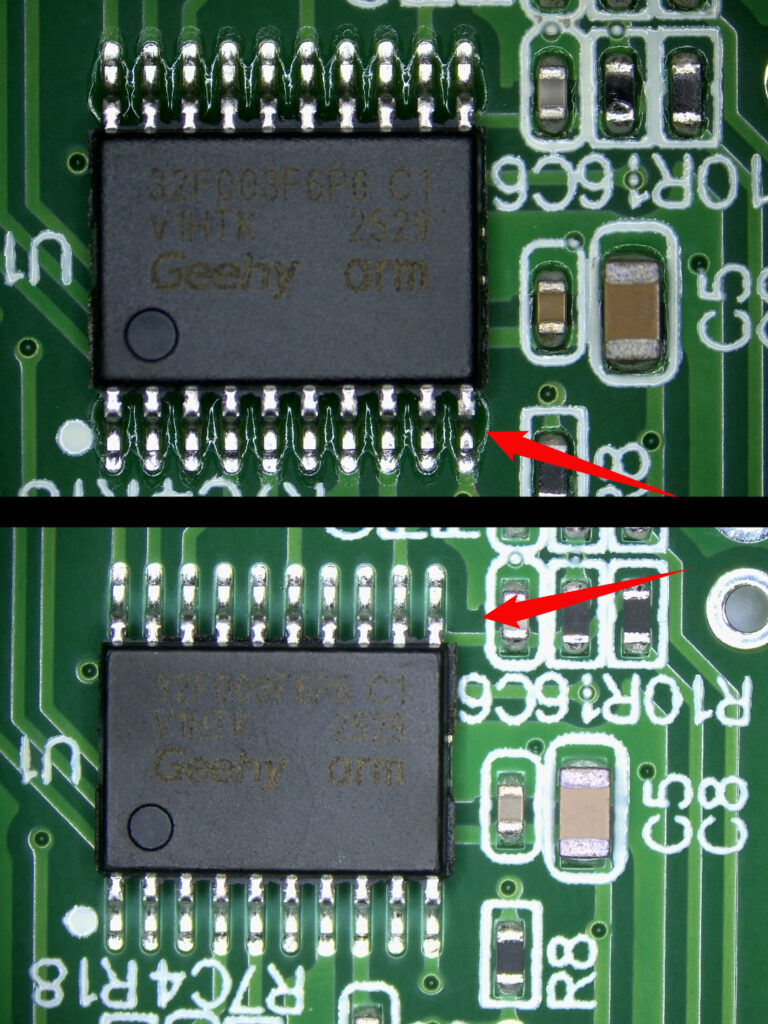
DEZ evaluated the customer’s actual PCBAs and completed the cleaning test using the DEZ-C743 offline batch cleaning process. Before-and-after microscope images showed a clear reduction in visible residue.
Inhoudsopgave
Project Summary
Project Item
Details
Werkstuk
Assembled PCBAs
Board construction
SMT and through-hole components
Verontreiniging
Visible rosin flux residue
Customer problem
PCBAs did not meet the end customer’s delivery requirements
Cleaning equipment
DEZ-C743
Reinigingsmethode
Offline batch sproeireiniging
Volledig proces
Chemische was, DI-water spoelen en hete-lucht drogen
Evaluation method
Visual inspection and microscope comparison
Resultaat
Visible residue was significantly reduced
Visible Rosin Residue Caused Customer Rejection
The submitted PCBAs contained visible residue around component leads, solder joints and densely populated areas.
Microscope inspection revealed glossy deposits across an integrated-circuit package and the surrounding solder-mask surface. Additional residue could be seen between nearby components and around soldered areas.
Although the PCBAs had completed assembly, their surface condition did not meet the end customer’s acceptance requirements. Manual wiping was not an appropriate production solution because it could not consistently reach around component leads or remove contamination from complex areas.
The manufacturer needed a repeatable cleaning process that included washing, rinsing and drying.
Why Flux Residue Must Be Evaluated
Flux removes surface oxides and supports solder wetting during reflow, wave, selective or manual soldering. The residue remaining after soldering must be evaluated according to the flux chemistry, assembly design and product requirements.
Visible residue can affect:
Final appearance
Visuele inspectie
Electrical testing
Conformal-coating preparation
Customer acceptance
Long-term product reliability
Not all flux residue produces the same risk. However, depending on its chemical composition, moisture exposure and electrical conditions, soluble contamination may contribute to electrical leakage, corrosion or electrochemical migration.
For assemblies operating in humid, high-voltage or long-service-life environments, uncontrolled contamination may increase the possibility of insulation degradation or electrical shorts.
This is particularly relevant to automotive electronics, aerospace and defence equipment, new-energy systems, medical electronics and industrial controls. These products often require defined cleanliness and process validation before delivery or final assembly.
Customer Sample Cleaning Evaluation
The customer supplied actual production PCBAs for testing. This allowed DEZ to evaluate the contamination and board construction before establishing the cleaning process.
The evaluation considered:
PCBA-afmetingen
Maximale componenthoogte
Location of the residue
Component density
Areas with restricted liquid access
Flux and cleaning-agent compatibility
Basket loading orientation
Washing and rinsing requirements
Drying conditions
Required acceptance result
Testing the actual assembly is important because cleaning performance depends on more than the machine model. Flux chemistry, component layout, surface condition and liquid access all affect the final result.
Why the DEZ-C743 Was Selected
The customer required complete cleaning of assembled boards rather than brushing one accessible solder-side surface.
De DEZ-C743 offline PCBA batchreiniger processes multiple assemblies in a two-level basket. Chemical spray washing, DI-water rinsing and hot-air drying are completed inside the same enclosed chamber.
This process was suitable for the customer’s samples because:
Residue was present around components and across the PCB surface
Both washing and controlled rinsing were required
The PCBAs needed to be dried after cleaning
Multiple boards could be processed in one batch
The customer did not require continuous inline production
Different PCBA models could be processed using separate settings
The customer’s PCBAs were arranged in the two-level basket. Spray positions above, between and below the loading levels directed heated cleaning liquid towards the assemblies.
The cleaning chemistry dissolved and separated compatible rosin flux residue from component surfaces, solder joints and the PCB solder mask.
DI-Water Rinsing
After washing, DI water rinsed away dissolved contamination and remaining cleaning-agent residue.
The rinse stage is necessary because washing alone can leave dissolved flux or cleaning chemistry on the assembly. DI water is used for rinsing; it does not replace the main cleaning chemistry when the flux is not water-soluble.
Heetluchtdrogen
The cleaned PCBAs remained inside the chamber for hot-air drying. There was no need to transfer wet boards between separate washing, rinsing and drying stations.
Cleaning Test Results
The customer sample test achieved the main visual objective:
Large visible rosin deposits were removed
Component surfaces appeared cleaner
Residue around component leads was significantly reduced
The PCB solder-mask surface showed a clear visual improvement
Washing, rinsing and drying were completed in one machine
Multiple PCBAs could be processed in the same batch
The result provided a basis for establishing a production-cleaning process
The test results apply to the submitted PCBAs, contamination, cleaning chemistry and process settings. A different flux formulation or assembly construction may require different cleaning parameters.
Supporting Reliable PCBA Production
Controlled PCBA cleaning is not only a cosmetic process. When cleaning is required by the product specification, it helps prepare the assembly for inspection, electrical testing, conformal coating or final delivery.
For automotive electronics, aerospace and defence equipment, new-energy systems and other reliability-focused products, the cleaning requirement should be defined before mass production. Representative sample testing helps confirm whether the proposed process can reach the contamination and achieve the required result.
The DEZ-C743 provides an offline solution for manufacturers that need batch washing, DI-water rinsing and drying without installing a continuous inline cleaning system.
Send Your PCBAs for Cleaning Testing
Send DEZ representative PCBAs with the actual post-solder residue. Please include:
PCBA-afmetingen
Maximale componenthoogte
Flux type or technical data sheet
Souderproces
Foto's van vervuiling
Batch quantity
Productievolume
Required visual or ionic-cleanliness result
DEZ will evaluate the contamination, cleaning process, basket loading method and suitable equipment configuration.